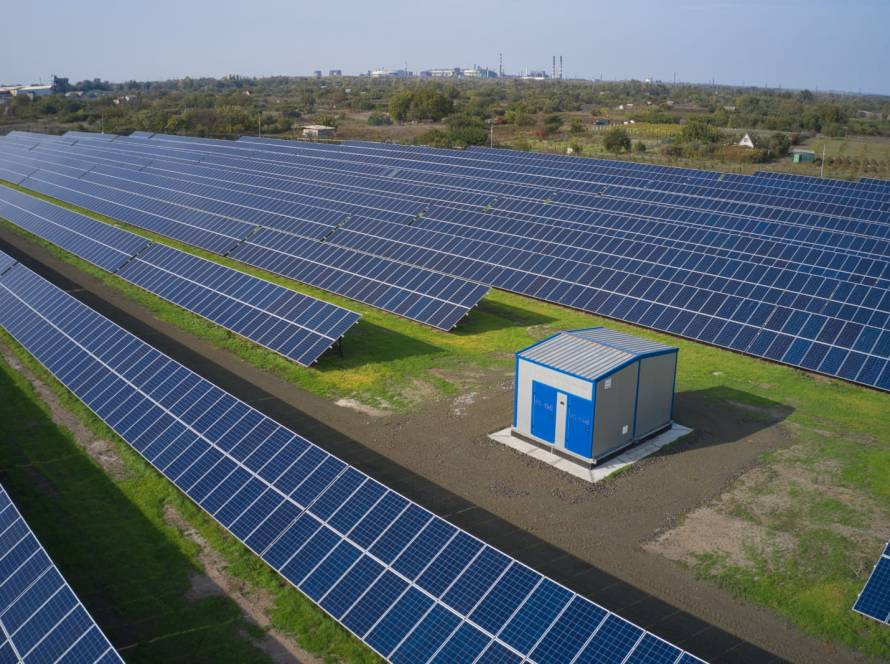
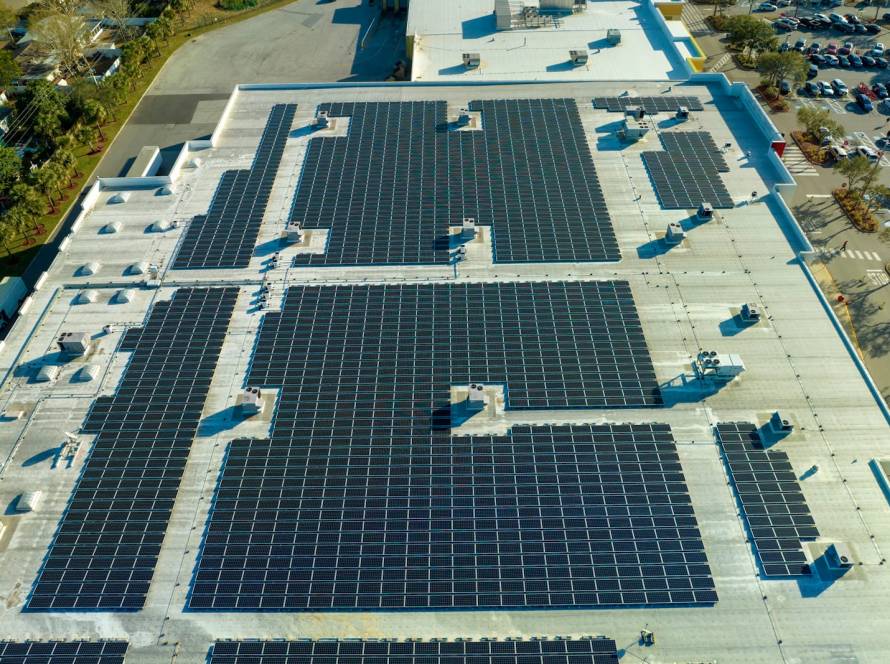
For office complexes looking for better control over electricity costs, solar solutions can provide a practical route towards lower grid consumption and greater long-term energy certainty. The decision is not simply whether to install solar, however. Property owners also need to choose between conventional grid-tied commercial solar and a hybrid system that combines solar PV with battery energy storage. Each approach solves a slightly different problem, and the right choice depends on electricity consumption, tariff exposure, grid reliability and business continuity requirements.
The financial pressure behind that decision continues to grow in South Africa. Electricity tariffs for directly supplied customers rose by an average of 12.74% in the 2025/26 financial year, followed by another approved average increase of 8.76% from April 2026. For an office complex consuming large amounts of electricity during normal working hours, these increases strengthen the case for producing more power on-site. However, batteries are not automatically necessary. Understanding what grid-tied and hybrid systems actually deliver is the first step towards making a sound investment.
What Are Commercial Solar Solutions for Office Complexes?
Commercial solar solutions generally use solar PV panels to generate electricity that can be consumed directly by an office complex. In a grid-tied configuration, the solar system works alongside the existing electricity supply. Solar generation serves the building’s demand whenever sufficient sunlight is available, while electricity from the grid fills any shortfall. Where regulations and infrastructure permit, excess electricity may also be exported rather than curtailed.
This setup can work particularly well for office properties because their electricity demand often overlaps with solar-generation hours. Computers, lighting, ventilation, air conditioning, lifts, kitchens, access systems and other building services typically operate most heavily during the working day. Instead of buying all that electricity from the grid, the property can generate a portion of it on-site. Eversolar indicates that appropriately designed commercial grid-tied installations may achieve payback periods of roughly three to six years, although actual returns depend on energy consumption, tariffs, system size and funding structure.
Solar is also a long-term infrastructure investment rather than a short-term energy fix. International energy modelling commonly assumes an economic lifetime of around 25 years for solar PV generation. This makes accurate design particularly important. An office complex needs to consider not only today’s electricity bill, but also expected tenant growth, future building improvements, additional loads and how its electricity needs might change over the decades in which the PV system remains operational.
How Hybrid Solar Systems Work
Hybrid solar systems add battery energy storage to the basic solar PV installation while retaining a connection to the electricity grid. During daylight hours, solar electricity can supply immediate building demand and charge the batteries when additional generation is available. The stored electricity can subsequently be used when solar output decreases, electricity prices rise or the grid becomes unavailable.
This changes the role of solar from straightforward daytime generation into a more flexible energy-management resource. A hybrid system can automatically manage the relationship between solar PV, batteries and the grid according to predetermined priorities. For example, an office complex could prioritise solar consumption during the day, preserve a defined level of stored energy for emergency backup and discharge additional battery capacity during expensive tariff periods.
Battery storage does, however, have a different lifecycle from the solar array itself. While solar PV is commonly modelled over approximately 25 years, commercial lithium battery systems often carry warranties closer to 10 years, depending on the technology and operating conditions. This difference matters when assessing total lifecycle costs. A hybrid system may deliver far more functionality than grid-tied solar, but property owners should budget for battery performance, replacement and maintenance over the full life of the solar asset.
Commercial Solar Solutions Focus Primarily on Cost Reduction
For many office complexes, the first objective of investing in commercial solar solutions is straightforward: reduce the amount of electricity purchased from the grid. Grid-tied PV addresses this objective efficiently because solar electricity can be consumed as it is produced. Where daytime electricity demand is high, a substantial proportion of generated power may be used directly without needing to pass through a battery first.
That becomes increasingly relevant as electricity prices rise. Official tariff decisions introduced an average 12.74% increase for directly supplied customers in April 2025 and a further average increase of 8.76% in April 2026. Although individual office complexes may pay different tariffs depending on their supplier and tariff category, the direction of travel makes reducing exposure to purchased electricity an important commercial consideration.
Key cost-reduction opportunities include:
- Generating electricity during normal office operating hours
- Reducing the amount of energy purchased from the grid
- Matching PV output closely to predictable daytime demand
- Limiting unnecessary investment in battery capacity
- Using available roof, carport or suitable ground space productively
- Improving long-term energy-cost predictability
- Potentially exporting surplus generation where permitted
Grid-tied systems are therefore particularly attractive where the grid remains sufficiently dependable and most electricity consumption occurs during daylight hours. The absence of large-scale batteries reduces the number of major components required and can allow a greater proportion of the initial investment to be directed towards electricity generation.
Cost savings still depend heavily on correct sizing. Oversizing a system without sufficient daytime demand can result in surplus generation that cannot always be used economically, while undersizing leaves avoidable grid consumption in place. A detailed load profile, tariff analysis and assessment of at least 12 months of electricity bills should therefore come before selecting the number of panels or inverter capacity.
Hybrid Solar Solutions Add Energy Resilience
Hybrid solar solutions become more compelling when an office complex needs to protect operations as well as reduce electricity costs. By incorporating battery storage, the system can maintain selected building functions when grid electricity is interrupted. This is particularly important for multi-tenant properties where even relatively short interruptions can affect security, communications, access systems and tenant productivity.
Resilience should not automatically mean backing up the entire building. Air conditioning, multiple lifts and other large loads can rapidly increase the required battery and inverter capacity. A better starting point is to identify which systems are genuinely critical and determine how long each one must operate independently. That allows the storage system to be engineered around operational priorities rather than simply installing the largest battery the project budget can accommodate.
Typical critical loads may include:
- Security and surveillance systems
- Access control
- Emergency and essential lighting
- Network and internet infrastructure
- Servers and communications equipment
- Selected lifts or mobility infrastructure
- Essential tenant equipment
- Fire, safety and building-management systems
Battery capacity can then be matched to the required backup duration. Commercial hybrid systems can be configured for anything from relatively short bridging periods to several hours of operation, depending on the critical load and available storage. The important measurement is not simply battery size in kilowatt-hours, but how that usable capacity compares with the actual power required by essential equipment.
This approach can also prevent unnecessary capital expenditure. Rather than designing a battery system to run every socket, light and HVAC unit during an outage, property managers can separate essential from non-essential circuits. The result can be a more targeted hybrid installation that protects business continuity while maintaining a commercially realistic project cost.
Batteries Can Do More Than Provide Backup Power
Backup power is only one reason batteries are becoming relevant to commercial solar solutions. Storage can also change when an office complex draws electricity from the grid. Solar power produced when building demand is relatively low can be stored and used later, increasing the amount of self-generated electricity that remains on-site instead of being curtailed or exported.
This becomes particularly useful where electricity tariffs vary according to time of use. South Africa’s tariff structures increasingly differentiate between capacity, energy and time-related costs. During the 2025/26 tariff restructuring, the ratio between high-demand peak and low-demand off-peak time-of-use prices was adjusted from approximately 8:1 to 6:1 for applicable tariffs. That type of price variation gives businesses another reason to understand when they consume electricity rather than focusing only on total monthly kilowatt-hours.
Batteries can also support peak shaving by supplying part of the building’s demand when consumption suddenly rises. This can reduce maximum grid demand and may help manage demand-related electricity charges where applicable. For large office parks, mixed-use commercial developments and properties with changing occupancy throughout the day, the financial case for battery storage can therefore include tariff optimisation alongside outage protection.
Consider the Higher Cost and Complexity of Hybrid Solar
Hybrid systems contain more infrastructure than conventional grid-tied installations. In addition to the PV panels and inverters, a commercial hybrid project requires batteries, energy-management controls, suitable protection equipment and electrical infrastructure capable of managing different energy sources safely. The engineering challenge also increases because the system needs to coordinate solar production, grid supply, battery charging and battery discharge.
The additional cost needs to be weighed against measurable value. An office complex that suffers significant financial or operational losses during interruptions may have a strong reason to invest in storage. The same applies where tariffs create opportunities for peak shaving or energy shifting. By contrast, a building with reliable grid supply and strong daytime consumption may achieve a better financial result by directing more capital towards PV generation instead of batteries.
Lifecycle modelling is important here. A solar asset may operate for around 25 years, while batteries can require replacement sooner. Property owners should therefore compare the total cost of ownership rather than only the initial quotation. Battery replacement, maintenance, system expansion, energy savings, avoided outage costs and future tariff increases all influence whether hybrid solar creates sufficient additional value.
How to Choose the Right Solar Solution for an Office Complex
Choosing between grid-tied and hybrid solar solutions should begin with data rather than equipment. A solar design based only on roof size or the property’s maximum electricity demand can miss important details about when energy is actually consumed. Twelve months of bills provide a useful baseline, but interval data can offer an even clearer picture by showing demand throughout individual days.
Property owners should also distinguish between energy consumption and resilience requirements. The system that produces the greatest annual electricity saving is not necessarily the same system that provides the strongest backup capability. These objectives need to be defined separately before being brought together within one technical and financial model.
Assess the following before selecting a system:
- At least 12 months of electricity consumption
- Daytime and after-hours load patterns
- Peak electricity demand
- Current tariff structure
- Critical loads requiring backup
- Required backup duration
- Available roof, ground and parking space
- Structural limitations
- Grid availability and reliability
- Potential future EV charging
- Planned tenant or property expansion
- Available capital and preferred financing model
The tariff environment makes this analysis increasingly important. South Africa’s approved average electricity-price increase for directly supplied customers was 12.74% in 2025/26 and 8.76% for 2026/27. Even where individual tariffs differ, future grid costs can materially alter the financial case for additional PV capacity, storage or more sophisticated energy management.
Future demand deserves equal attention. Solar PV can remain productive for decades, so a system designed only around the building’s present occupancy may become constrained later. Additional tenants, new HVAC equipment, building extensions, EV charging and changes in operating hours should be incorporated into the design where they can reasonably be anticipated.
Where Solar Carports Can Expand Generation Capacity
Office complexes often have extensive parking areas, making solar carports a practical way to expand solar solutions where roof space is limited. Instead of requiring additional land, engineered canopies support PV modules above existing parking bays. The same area can therefore provide both electricity generation and shaded parking.
Solar carports can be particularly useful on properties where roof structures cannot accommodate enough panels to meet the desired generation target. They may operate as part of grid-tied or hybrid systems and can also place solar generation close to future EV charging infrastructure. As electric mobility grows, designing parking and electrical infrastructure with future charging demand in mind can avoid unnecessary retrofitting.
The structures must nevertheless be treated as engineered infrastructure. Foundations, drainage, wind loading, cable routes, vehicle clearance and electrical protection all need to be considered. Given the roughly 25-year economic life commonly assumed for solar PV, structural quality matters over a much longer period than a typical cosmetic property upgrade.
Why Ongoing Maintenance Matters for Commercial Solar Solutions
Commercial solar solutions are expected to operate for many years, which means their financial performance depends on more than the quality of the initial installation. Panels, inverters, batteries, cables, protective equipment and monitoring infrastructure all need to continue operating correctly. Small performance losses that remain undetected can accumulate into meaningful reductions in generation over the life of the asset.
This is particularly important when the investment case assumes decades of production. International energy modelling uses an economic lifetime assumption of approximately 25 years for solar PV. A system expected to operate over that period needs regular inspection, monitoring and technical support rather than being treated as a fit-and-forget asset.
Ongoing support should cover areas such as:
- Remote performance monitoring
- Preventative inspections
- Electrical connection checks
- Inverter condition and performance
- Battery health and operating parameters
- Firmware updates where required
- Fault diagnosis and corrective repairs
- Panel and system performance reviews
- Safety and compliance checks
- Expansion or retrofit requirements
Preventative maintenance helps identify developing faults before they lead to major production losses or downtime. Corrective maintenance provides a structured response when components do fail. Hybrid systems introduce additional considerations because batteries and energy-management equipment must continue communicating and operating correctly if the expected backup and tariff-management functions are to remain available.
Performance should also be reviewed against the original system expectations. Changes in occupancy, electricity demand or operating hours may mean that a system designed several years earlier can be further optimised. Maintenance can therefore include upgrades, additional storage, expansion or changes to energy-management settings rather than simply repairing broken equipment.
How Eversolar Provides Full-Service Solar Solutions
At Eversolar, we provide full-service commercial and industrial solar solutions rather than treating solar as a standalone equipment installation. Our capabilities include grid-tied, hybrid and off-grid solar PV, Battery Energy Storage Systems, solar carports and renewable-energy wheeling. We support clients across commercial property, industrial operations, agriculture, mining, property development and REIT portfolios, allowing each project to be designed around the operational realities of its sector.
We manage projects through a seven-stage turnkey process covering feasibility and assessment, project finance, engineering and design, procurement, installation and grid connection, commissioning and handover, and ongoing support. During delivery, our four-point quality-control framework focuses on technical verification, commercial compliance, project-record approval and management sign-off before major stages progress. This structured approach helps us maintain accountability across the full EPC lifecycle rather than dividing responsibility between multiple disconnected providers.
Our support continues after commissioning through monitoring, preventative maintenance, corrective maintenance, technical assistance, system optimisation, upgrades and expansion. We can also work with different funding requirements through upfront CAPEX investment, Power Purchase Agreements and Rent-to-Own structures. This gives businesses greater flexibility when balancing available capital against long-term energy savings, resilience and sustainability objectives.
Choosing Between Commercial and Hybrid Solar Solutions
Choosing between grid-tied commercial solar and hybrid solar solutions ultimately depends on what an office complex needs its energy investment to achieve. If the main priority is reducing daytime grid consumption and electricity supply is sufficiently reliable, a grid-tied system can provide a simpler route to savings. Where backup power, peak-demand management, energy shifting or greater operational resilience is important, a hybrid system can justify the additional investment in storage.
With average electricity tariff increases of 12.74% in 2025/26 followed by 8.76% in 2026/27 for directly supplied customers, controlling long-term energy exposure remains an important consideration for commercial property owners. The right decision starts with understanding actual consumption, critical loads, tariffs, available space, future growth and financial objectives. Get in touch with us at Eversolar to discuss your office complex. We can assess your energy requirements, engineer an appropriate solution, explore flexible funding options and provide the ongoing technical support needed to protect its performance over the long term.
FAQs About Solar Solutions
What Are the Best Solar Solutions for Office Complexes?
The best solar solutions for office complexes depend on electricity use, available space, grid reliability and backup requirements. Grid-tied solar is often suitable for offices with strong daytime demand because generated power can be used immediately, reducing electricity purchased from the grid. Hybrid systems add battery storage, which can support critical loads during outages and help manage peak demand. Solar carports can also increase generation where roof space is limited. Before choosing a system, review at least 12 months of electricity data, identify critical loads, assess future expansion plans and compare the financial case for batteries against simpler grid-tied solar.
Are Hybrid Solar Systems Better Than Grid-Tied Solar for Offices?
Hybrid solar systems are not automatically better than grid-tied systems for every office complex. Grid-tied solar is usually simpler and more cost-effective when the main goal is reducing daytime electricity costs and the grid is reasonably reliable. Hybrid solar becomes more attractive when backup power, peak shaving or energy shifting is important. Batteries can keep selected systems running during outages and reduce reliance on expensive grid electricity at certain times. However, they add cost, complexity and maintenance requirements. The right choice depends on the property’s load profile, tariff structure, resilience needs, available budget and expected return over the system’s lifecycle.
How Much Battery Storage Does an Office Complex Need?
The amount of battery storage an office complex needs depends on which loads must remain operational and how long backup is required. Rather than trying to power the entire building, many businesses focus on critical systems such as security, access control, servers, internet infrastructure and emergency lighting. Battery capacity is measured in kilowatt-hours, while inverter capacity determines how much power can be supplied at one time. A load study should identify peak demand, essential circuits and expected outage duration. Oversizing batteries can increase costs unnecessarily, while undersizing them may provide insufficient backup when the building needs it most.
Can Solar Solutions Reduce Electricity Costs for Office Buildings?
Yes, solar solutions can reduce electricity costs for office buildings by replacing part of the electricity normally purchased from the grid. Office complexes are often well suited to solar because their highest demand usually occurs during daylight hours, when panels are producing energy. Grid-tied systems can directly offset daytime consumption, while hybrid systems may also store excess solar power for later use. Savings depend on system size, consumption patterns, tariffs and available installation space. An energy assessment is essential because a system that is too large or too small may deliver weaker returns than one designed around actual building demand.
Do Commercial Solar Solutions Require Ongoing Maintenance?
Yes, commercial solar solutions require ongoing maintenance to protect performance, safety and long-term value. Solar panels, inverters, batteries, cabling and protection equipment can all develop faults or experience performance losses over time. Preventative maintenance helps identify problems before they cause significant downtime, while monitoring can reveal unusual drops in generation. Hybrid systems need additional attention because battery health, firmware and energy-management controls affect backup and charging performance. Maintenance may include inspections, electrical checks, inverter testing, battery assessments, fault repairs and system optimisation. Regular support also makes it easier to adapt the installation as building demand changes or expands over time.