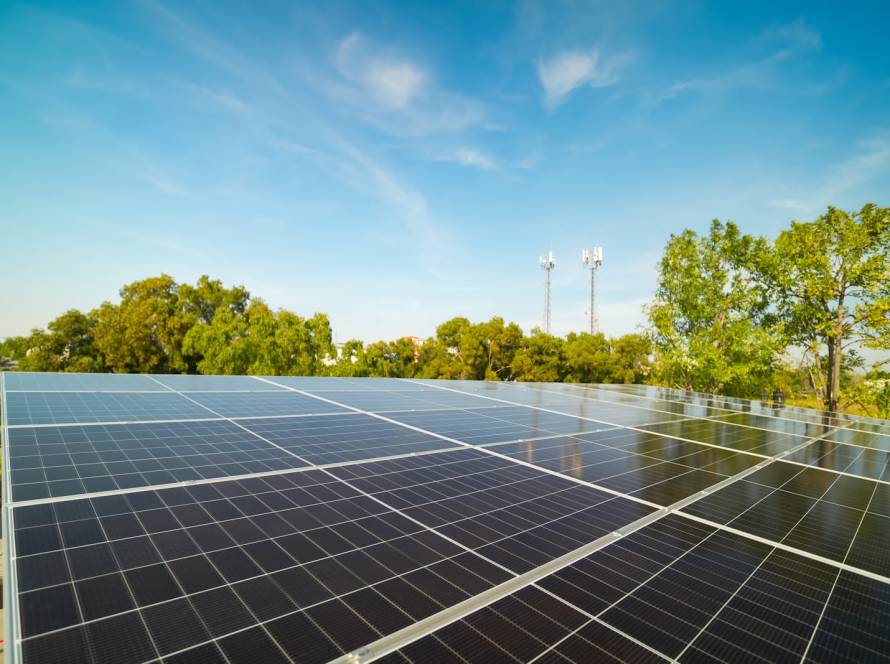
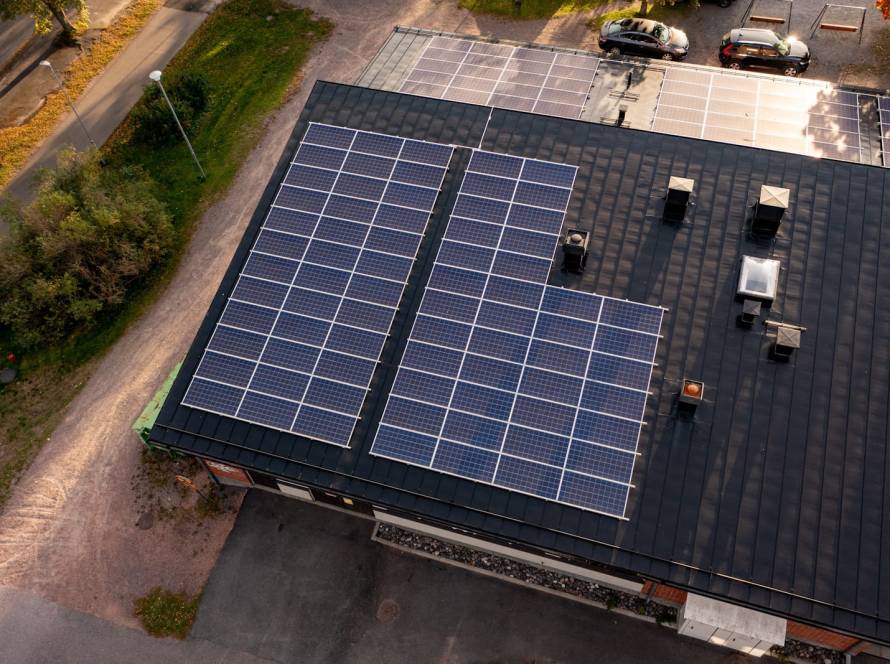
For South African businesses, reliable electricity has a direct impact on productivity, operating costs and business continuity. This is why many organisations are comparing commercial solar solutions with diesel generators rather than simply accepting backup fuel costs as unavoidable. Solar PV, battery storage and generators solve different problems, so the strongest option depends on how and when a business consumes electricity.
Diesel generators can provide dependable power while fuel is available, whereas solar PV can reduce the amount of electricity a business needs to buy over many years. Adding battery energy storage can also extend the usefulness of solar beyond daylight hours. The real comparison therefore needs to consider capital costs, operating expenses, maintenance, resilience and the site’s actual energy profile.
Why Businesses Compare Commercial Solar Solutions With Diesel
Diesel generators remain valuable because they provide dispatchable electricity regardless of sunlight or weather. This is particularly useful for businesses with critical machinery, refrigeration, IT infrastructure or production processes that cannot simply stop when grid electricity becomes unavailable.
The difficulty comes when generators operate regularly rather than occasionally. One South African cost comparison estimated that a 7 kVA diesel generator operating for around 60 hours per month could consume more than R2,500 in monthly fuel under Stage 2 load shedding and more than R4,500 under Stage 4, based on diesel prices at the time. Larger commercial generators can naturally consume considerably more.
Commercial solar works differently because there is no fuel bill attached to every hour of PV generation. Solar panels commonly carry performance warranties of around 25 years, which changes the financial calculation considerably. The question is therefore not simply whether solar costs more to install, but which system provides better value over its useful operating life.
Compare the Upfront Cost With Lifetime Costs
Diesel generators usually have a lower initial purchase cost than a complete Solar PV and battery system. This can make them attractive when a business needs backup electricity quickly and has limited capital available. However, the purchase price represents only one part of the cost.
Commercial solar generally requires more capital at the beginning because the project can include panels, inverters, electrical infrastructure, mounting systems and battery storage. The benefit is that a much larger proportion of the energy cost is fixed upfront rather than being linked to continual fuel consumption.
Businesses should compare costs such as:
- Initial equipment and installation
- Diesel consumption over the expected operating period
- Scheduled servicing and replacement components
- Solar PV maintenance and inspections
- Inverter and battery replacement requirements
- Fuel storage and delivery
- Expected electricity savings
- Financing costs
- Expected equipment lifespan
A generator that is inexpensive to buy can become expensive if it operates for hundreds of hours every year. Every additional operating hour brings additional fuel consumption and mechanical wear. A business should therefore calculate the expected annual runtime before deciding which option is cheaper.
Solar projects should also be assessed over their full lifecycle. With panel warranties commonly extending to around 25 years, the useful life of the PV system can be much longer than a short-term backup calculation suggests. Inverters, batteries and other components have different replacement cycles, so these should be built into the financial model from the beginning.
Commercial Solar Solutions Can Reduce Fuel Dependence
Fuel is one of the biggest ongoing expenses associated with generator use. The business does not only pay for diesel itself. It may also need to arrange delivery, secure storage, fuel monitoring and protection against contamination or theft.
Commercial solar solutions reduce this exposure because normal PV generation does not require purchased fuel. If battery storage is included, some of the electricity generated during daylight hours can also be stored and used when solar generation falls or grid electricity disappears.
Reduced generator dependence can mean:
- Fewer litres of diesel purchased
- Less exposure to changing fuel prices
- Fewer fuel deliveries
- Lower fuel-storage requirements
- Reduced generator operating hours
- Less mechanical wear
- Less noise around the site
- Lower direct combustion emissions
The biggest savings are often available where a generator has shifted from emergency backup to frequent operation. A generator that previously ran for 60 hours per month, for example, would accumulate 720 operating hours over a year if usage stayed constant.
Reducing those operating hours does not mean the generator needs to disappear. Solar PV and BESS can handle a greater portion of routine electricity requirements while the generator remains available for unusually long outages or emergencies. This turns diesel into a final backup layer instead of the site’s everyday energy strategy.
Consider Energy-Cost Predictability
Diesel creates a variable operating cost because expenses change according to fuel prices and runtime. A relatively quiet month may require little backup generation, while a period of prolonged electricity interruptions can suddenly increase fuel expenditure.
Solar shifts much of that uncertainty towards a planned capital or financing cost. Commercial solar systems are commonly evaluated over periods of 15 to 25 years, allowing businesses to compare long-term generation costs against expected grid electricity and diesel expenditure.
Important variables to model include:
- Current electricity consumption
- Historical generator runtime
- Diesel consumption per hour
- Current fuel expenditure
- Daytime electricity demand
- Expected Solar PV generation
- Battery capacity
- Expected electricity tariff changes
- Maintenance and component replacement
- Project financing costs
The value of predictability becomes particularly important for high-energy users. Manufacturing facilities, shopping centres, agricultural operations and industrial properties can consume significant amounts of electricity every day, so relatively small changes in the cost per unit can become substantial over several years.
Businesses should therefore model several scenarios rather than relying on one forecast. Comparing low, medium and high electricity-price or generator-runtime scenarios can show how sensitive the investment is to changing conditions. This creates a stronger financial case than simply comparing today’s diesel price with today’s electricity tariff.
Compare Maintenance Requirements
Diesel generators contain engines and many moving mechanical components. Regular use therefore creates maintenance requirements that do not exist in the same form with Solar PV. Oil, filters, cooling systems, starter batteries and mechanical components all require attention.
Solar panels have no moving parts during normal electricity production. This reduces mechanical maintenance, but it does not mean a commercial system can be installed and ignored. Inverters, cabling, batteries, protection equipment and mounting structures still need inspection and technical oversight.
Generator maintenance can involve:
- Oil changes
- Air and fuel-filter replacement
- Cooling-system checks
- Starter-battery inspections
- Fuel-system maintenance
- Load testing
- Lubrication
- Engine repairs
Commercial solar maintenance can involve:
- Solar-panel inspections and cleaning
- Electrical connection checks
- Inverter inspections
- Battery monitoring
- Performance analysis
- Protection-system testing
- Fault investigation
- Preventative maintenance
The amount of generator maintenance generally increases with operating hours. This creates another reason to reduce unnecessary generator runtime. A machine used only for occasional emergency backup experiences a very different duty cycle from one running several hours on multiple days every week.
Solar assets also need long-term planning. Panels may operate for 25 years or longer, while inverters and battery systems have different service lives. Businesses should therefore choose a provider that can continue monitoring, maintaining and upgrading the system rather than focusing only on the initial installation.
Think About Reliability and Backup Duration
Diesel’s major advantage is its ability to continue producing electricity as long as the equipment remains operational and fuel is available. This is difficult to replace completely at sites where power must be available 24 hours a day, regardless of weather or grid conditions.
Solar PV generation changes throughout the day, while battery storage has a finite energy capacity. A 3 MWh battery, for example, cannot provide unlimited backup. How long it lasts depends entirely on whether the connected loads demand 300 kW, 1 MW or another amount of power.
This is why system sizing matters. Eversolar’s Marlo Marlothii project, for example, combines approximately 1.116 MWp of Solar PV with 3.096 MWh of battery storage. Commercial systems need this same relationship between generation, storage and consumption to be properly engineered rather than sized using a simple monthly electricity total.
Solar and Diesel Do Not Have to Be Either-Or Choices
For many businesses, the strongest approach is not to completely remove the generator. Solar PV, battery storage, the grid and diesel generation can each perform a different role within the same energy strategy.
A generator operating for 60 hours every month would run for around 720 hours in a year. If Solar PV and BESS allowed the business to reduce that requirement by half, the generator would avoid roughly 360 operating hours annually. Actual savings depend on the load and system design, but the principle shows why hybrid energy strategies can be valuable.
The generator can therefore remain available for emergencies while solar handles a larger share of normal daytime consumption and batteries provide short-term resilience. This approach reduces fuel dependence without requiring the organisation to sacrifice the dispatchable backup that diesel provides.
Match the Energy System to Your Load Profile
A successful energy project starts with understanding when electricity is actually being used. Two businesses with the same monthly electricity bill can require very different solar and battery systems if one consumes mainly during daylight hours while the other operates continuously.
An office, shopping centre or warehouse with high daytime consumption may be able to use a large percentage of Solar PV production directly. A factory, cold-storage facility or 24-hour industrial operation may need significantly more battery capacity or generator support to cover overnight demand.
Businesses should assess:
- Hourly electricity consumption
- Peak demand
- Daytime and overnight loads
- Critical equipment
- Existing generator capacity
- Historical generator runtime
- Roof and ground space
- Battery autonomy requirements
- Future expansion plans
- Planned new machinery or electrical loads
Real projects illustrate how widely commercial requirements can vary. Eversolar projects range from a 1.2 MW installation for Spargs to a 13.5 MW project for Ford, while the Trade Route Mall project combines 7.2 MW of solar capacity with 11 MWh of battery storage.
These differences are why standardised packages are rarely ideal for large businesses. Proper energy modelling allows PV generation, inverter capacity, battery storage and backup generation to be matched to actual operations instead of installing equipment that is either too small or unnecessarily expensive.
Commercial Solar Solutions Can Improve Business Resilience
Energy resilience is about maintaining important operations rather than simply keeping every electrical load switched on. During an outage, businesses can prioritise refrigeration, production equipment, security, IT systems or other critical infrastructure while temporarily removing lower-priority loads.
Eversolar’s Trade Route Mall installation illustrates the scale at which this can be achieved. The project combines approximately 7.2 MW of Solar PV with 11 MWh of battery storage, showing that modern commercial energy systems can provide substantial generation and stored capacity rather than functioning as small backup installations.
Battery storage also allows energy to be managed more strategically. Instead of relying purely on instantaneous solar production, businesses can store excess generation and use it when demand rises or grid electricity becomes unavailable. This makes resilience part of everyday energy management rather than something considered only during an outage.
Consider the Environmental Impact
Diesel generators produce direct combustion emissions every time they operate. They also create noise, which can become a significant consideration when generators are positioned near employees, offices, customers or neighbouring properties.
Solar PV generates electricity without burning fuel during normal operation. At industrial scale, this can represent substantial generating capacity. A 13.5 MW Solar PV installation, for example, shows how renewable generation can move well beyond small rooftop applications and contribute meaningfully to a large organisation’s electricity requirements.
Environmental benefits should still be considered alongside operational needs rather than in isolation. A business may retain diesel for emergency redundancy while drastically reducing how often it is used. This approach allows renewable generation to support sustainability objectives without compromising the resilience requirements of critical operations.
Look Beyond Rooftop Solar
Commercial solar does not have to be limited to conventional rooftop panels. Some businesses have insufficient roof area, structural limitations, shading or future development plans that make rooftop generation unsuitable.
Solar carports can turn existing parking areas into generating infrastructure while still providing their original function. Large projects also demonstrate why businesses may need several megawatts of capacity. Eversolar’s portfolio includes installations ranging from approximately 1.116 MWp to 13.5 MW, illustrating how quickly commercial energy requirements can move beyond small roof areas.
Energy wheeling offers another option where sufficient renewable electricity cannot be produced on site. Electricity can be generated at a different location and supplied through the electricity network to the user. Combining rooftop systems, carports, battery storage and wheeled renewable energy can therefore create a much broader energy strategy.
Consider How Commercial Solar Solutions Are Funded
Large Solar PV and BESS systems can require substantial capital, particularly when projects move into the multi-megawatt range. A system such as a 7.2 MW Solar PV installation combined with 11 MWh of storage is clearly a different financial undertaking from purchasing a small backup generator.
However, buying the complete system upfront is not the only option. Businesses can consider CAPEX ownership, Power Purchase Agreements or Rent-to-Own structures. The appropriate model depends on cash flow, investment priorities, property tenure and how the organisation prefers to account for energy expenditure.
Financing should therefore form part of the feasibility study rather than being considered after the technical design is finished. With Solar PV assets commonly planned around operating periods extending towards 25 years, the financing structure can have a major influence on the project’s lifetime financial performance.
What Eversolar Offers You
At Eversolar, we provide full-service renewable-energy solutions for commercial and industrial organisations across multiple sectors. We work with businesses to understand their consumption, infrastructure, operational priorities and long-term energy requirements before designing the project.
Our capabilities extend beyond Solar PV installation. We can combine generation, battery storage, energy management and alternative renewable-energy procurement into a broader strategy designed around the site’s actual needs.
We can support you with:
- Grid-tied Solar PV systems
- Hybrid Solar PV systems
- Off-grid solutions
- Battery Energy Storage Systems
- Solar carports
- Solar wheeling
- EPC project delivery
- Feasibility and load analysis
- Engineering and procurement
- Construction and commissioning
- Ongoing operations and maintenance
- System monitoring and optimisation
- CAPEX financing structures
- Power Purchase Agreements
- Rent-to-Own options
Our experience includes projects ranging from approximately 1.116 MWp of Solar PV with 3.096 MWh of storage to commercial projects of 7.2 MW with 11 MWh of BESS and Solar PV installations reaching 13.5 MW. This experience helps us approach commercial energy projects as engineered infrastructure rather than standardised solar packages.
We also remain involved after commissioning. Through ongoing technical support, preventative maintenance, monitoring and optimisation, we help clients protect the performance of their energy assets throughout their operating lives. Systems can also be expanded or upgraded as electricity requirements change.
Partner with the Experts
Choosing between diesel and commercial solar solutions requires more than comparing purchase prices. Diesel provides valuable dispatchable backup, but frequent generator operation creates continuing fuel and maintenance costs. Solar PV and battery storage require greater planning and investment upfront, yet panels can remain productive for around 25 years while reducing dependence on purchased electricity and diesel.
For many businesses, the most practical answer is a carefully engineered combination of technologies rather than choosing only one. At Eversolar, we can analyse your energy profile, existing infrastructure and resilience requirements before developing a solution that supports your operational and financial priorities. Get in touch with us to explore how we can help you reduce diesel dependence, improve energy security and build a more sustainable commercial power strategy.
FAQs About Commercial Solar Solutions
Are Commercial Solar Solutions Cheaper Than Diesel Generators?
Commercial solar solutions can be cheaper than diesel generators over the long term because solar does not require fuel every time electricity is produced. Diesel generators usually cost less upfront, but businesses must keep paying for diesel, servicing, oil, filters, repairs and fuel storage. Solar PV systems require a larger initial investment, especially when battery storage is included, yet operating costs are generally lower. The best comparison should consider total ownership costs over several years. Businesses should assess installation costs, generator runtime, fuel consumption, maintenance, battery replacement, financing and expected electricity savings before deciding which option offers better value overall.
Can Solar Completely Replace a Diesel Generator?
Solar can replace a large share of diesel generator use, but it may not always replace a generator completely. Solar PV only produces electricity when sunlight is available, while batteries have limited storage capacity. A diesel generator can continue operating as long as it remains functional and fuel is available. For many commercial sites, the strongest approach is a hybrid system using solar for daytime generation, batteries for stored energy and a generator for extended outages or high demand. This reduces fuel consumption and generator runtime while preserving backup power for situations when solar and batteries cannot meet demand alone.
Do Commercial Solar Solutions Need Battery Storage?
Battery storage is not essential for every commercial solar system, but it becomes important when a business wants backup power, peak shaving or greater energy independence. A grid-tied solar system can reduce daytime electricity purchases without batteries, making it suitable for sites with strong daytime demand and reliable grid access. Batteries allow excess solar energy to be stored and used later, including during outages or periods of higher electricity prices. The correct battery size depends on critical loads, outage duration, energy consumption and budget. Businesses should model these factors rather than choosing storage capacity based only on monthly electricity use.
How Much Can a Business Save by Switching From Diesel to Solar?
The amount a business can save depends on its electricity profile, diesel use, system size, financing and local energy costs. Businesses with daytime consumption can use more solar electricity directly, which can improve project economics. Savings increase where generators currently operate for many hours because every hour displaced can reduce fuel and maintenance costs. Battery storage can create additional value through backup power, peak shaving and better use of solar generation. However, there is no universal savings percentage. A detailed feasibility study should compare historical electricity bills, generator runtime, fuel expenditure and expected solar production before financial projections are made.
How Should Businesses Compare Solar Solutions With Diesel Generators?
Businesses should compare Solar PV, batteries and diesel generators using operating requirements rather than equipment price alone. Important factors include hourly electricity demand, peak loads, daytime and overnight consumption, generator runtime, critical equipment, outage duration, available roof or ground space and expansion plans. They should also compare fuel costs, servicing, battery replacement, financing and expected system life. Solar may provide the lowest routine energy cost, while diesel can remain valuable for extended emergency backup. In many cases, a hybrid strategy provides a strong balance between operating cost, resilience and reliability because each technology is used where it performs best.