For many South African businesses, reducing electricity costs and improving energy security have become important priorities when planning for long-term operational stability. One of the first questions decision-makers ask is what size solar system is needed to support their commercial building. The answer depends on far more than the physical size of the property, as every facility has unique electricity demands, operating schedules, site conditions and future energy requirements.
Selecting the correct system capacity requires a balanced assessment of energy consumption, peak demand, available installation space, battery storage requirements and long-term business objectives. A well-designed commercial solar solution can improve operational continuity, maximise energy savings and provide a stronger return on investment for many years.
Why There Is No One-Size-Fits-All Commercial Solar System
Every commercial property has a different electricity consumption pattern. A warehouse may use most of its power during working hours, while a hotel may continue consuming significant electricity overnight. A manufacturing facility may operate heavy machinery in short bursts, whereas an office building may have a steady daytime demand driven by air conditioning, computers and lighting.
The answer to what size solar system is suitable therefore depends on how the business operates, rather than the building’s floor area alone. Electricity consumption, operating hours, business activities, available roof or ground space, backup requirements and expected future expansion all influence the final design.
- Electricity consumption: Buildings with higher daily and annual electricity use generally require greater solar generation capacity, provided the site has enough usable installation space.
- Operating hours: Businesses that operate mainly during daylight hours can consume more solar power directly, while evening and overnight operations may require battery storage or continued grid support.
- Business activities: Machinery, refrigeration, air conditioning, pumps, lighting and computer systems all create different load patterns that affect system design.
- Available installation space: Roof area, ground space, parking structures and structural limitations can restrict the number of panels that can be installed.
- Future expansion plans: Additional equipment, production lines, employees, electric vehicle chargers or building extensions may increase electricity demand over time.
- Energy security requirements: Businesses that need reliable backup power may require a different combination of solar panels, inverters and batteries from those focused only on reducing daytime costs.
These factors must be considered together because no single measurement provides a complete picture of a building’s energy requirements. A large roof does not necessarily justify a large solar array if the business has low daytime consumption, while a smaller roof may need to be used as efficiently as possible where electricity demand is high.
A carefully matched system can improve self-consumption, reduce unnecessary capital expenditure and support reliable operation. By evaluating the building’s physical conditions alongside its load profile and business objectives, the design can provide meaningful savings without creating excessive unused generation.
Analysing Current Electricity Consumption
A commercial solar assessment normally begins with a detailed review of electricity usage. Businesses should examine at least twelve months of electricity bills because consumption can change considerably between seasons. Cooling systems may increase summer demand, while production schedules, agricultural cycles or holiday trading periods may create other fluctuations.
Electricity bills reveal monthly consumption, but interval data from a suitable meter can show when power is being used throughout the day. This information is necessary when calculating what size solar system can meaningfully reduce grid consumption without regularly producing more electricity than the building can use.
Understanding Peak Demand Versus Total Energy Use
Total electricity consumption and peak demand describe two different aspects of a building’s energy use. Total consumption is measured in kilowatt-hours and represents the amount of electricity used over a period. Peak demand is measured in kilowatts and represents the highest level of power required at a particular moment.
A building may have moderate overall consumption but still experience sharp demand peaks when multiple machines, pumps, refrigeration systems or air-conditioning units operate simultaneously. When deciding what size solar system to install, designers must consider whether solar generation will coincide with these periods and whether batteries or load-management measures are required.
How Roof Space Affects What Size Solar System Can Be Installed
Available installation space places a practical limit on solar capacity. Large, unobstructed roofs can accommodate more panels, while smaller roofs may contain vents, skylights, air-conditioning equipment, service walkways and shaded areas that reduce the usable surface.
Roof orientation, pitch, structural condition and surrounding obstructions must also be assessed. In South Africa, north-facing roof areas generally offer strong annual solar production, although east and west-facing arrays can be useful where businesses have morning or afternoon demand. These physical conditions help determine what size solar system can be installed safely and productively.
- Usable roof area: The total roof size is not the same as the usable area because space must be reserved around edges, access routes, vents, skylights and other equipment.
- Roof orientation: North-facing surfaces generally provide strong annual generation, while east and west-facing arrays can spread production more evenly across the working day.
- Roof pitch: The angle of the roof affects panel orientation, mounting requirements and expected generation throughout the year.
- Structural capacity: The roof must safely support the additional weight and wind loads created by panels, mounting equipment and related infrastructure.
- Shading: Trees, surrounding buildings, signs and rooftop equipment can reduce generation and limit where panels should be installed.
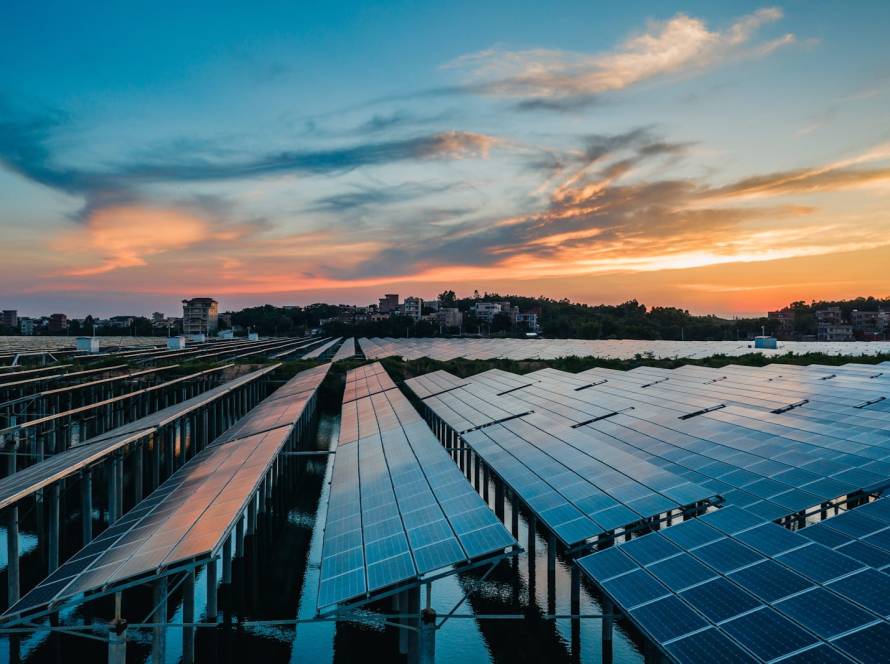
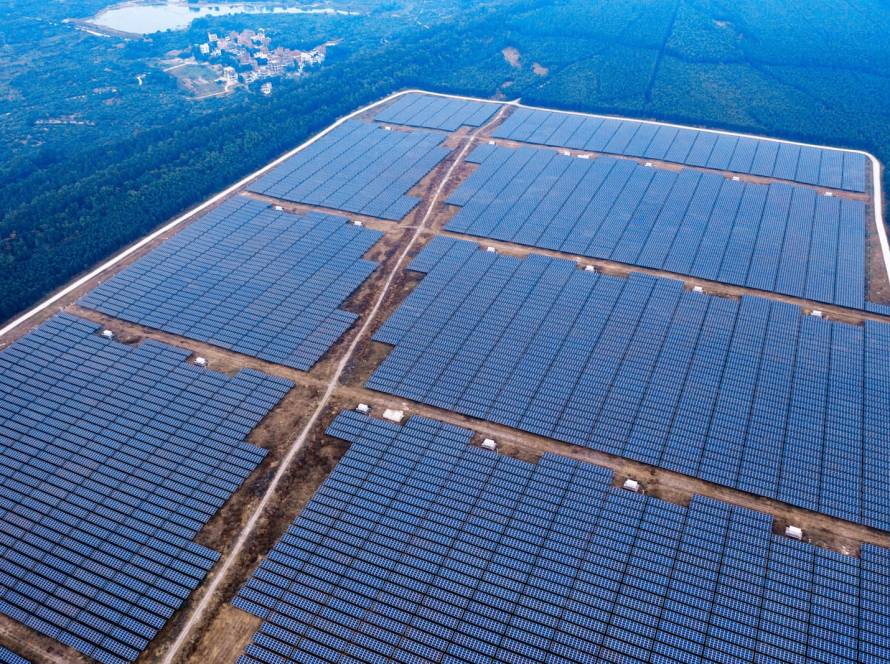
- Alternative installation areas: Ground-mounted systems and solar parking structures can expand capacity where rooftop space is insufficient or unsuitable.
The arrangement of panels must also allow safe access for inspection, cleaning, roof maintenance and emergency work. Filling every available section of a roof without considering these practical requirements can complicate future maintenance and create unnecessary operational risks.
Where several installation areas are available, the system can be distributed across different roof sections, parking structures or open land. This approach may increase total capacity, improve the daily generation profile and allow the business to make more effective use of the property.
Considering Roof Strength, Shading and Site Conditions
Commercial solar panels, mounting structures, cables and related equipment add weight to a building. A structural assessment may therefore be required, particularly on older properties, lightweight roofs or buildings that have undergone alterations. The condition of the waterproofing and roof covering should also be considered before installation.
Shading can reduce generation even when only part of the array is affected. Nearby buildings, trees, signage and rooftop equipment can all influence performance. When roof conditions restrict what size solar system is practical, ground-mounted arrays or solar parking structures may offer alternative installation space.
Choosing Between Partial and Full Energy Offset
A partial-offset system is designed to reduce a portion of the electricity purchased from the grid, usually by supplying power during daylight operating hours. This approach often provides a strong financial case because the business uses the solar electricity as it is produced, limiting excess generation.
A higher-offset system aims to cover a much larger share of annual consumption, but it may require more panels, additional electrical infrastructure and battery storage. A business considering what size solar system to select should balance its desired level of energy reduction against available capital, daytime demand and the value of excess electricity.
How Different Industries Affect What Size Solar System Is Needed
Warehouses often have large roofs and relatively predictable daytime consumption, which can make them well suited to substantial solar installations. Their loads may include lighting, ventilation, office areas, security systems, conveyor equipment and battery charging for material-handling machinery.
Factories, shopping centres, offices, farms and hospitality properties operate differently. Manufacturing sites may have heavy production loads, shopping centres require extensive cooling and tenant power, farms may rely on seasonal pumping, and hotels use electricity throughout the night. These operational differences explain why what size solar system is appropriate can vary considerably between buildings of a similar size.
The Role of Battery Storage in System Sizing
Solar panels generate electricity during daylight hours, while commercial buildings may continue using power after sunset or during interruptions to the grid supply. Battery storage allows part of the daytime generation to be stored and used later, improving energy availability outside normal solar production hours.
The required battery capacity depends on whether the business wants short-term support for critical equipment or extended backup for a wider range of operations. Batteries can also absorb excess generation, meaning what size solar system is appropriate may change when storage forms part of the design.
Identifying Critical and Non-Critical Loads
Not every electrical load needs to operate during a power interruption. Critical loads may include security systems, essential lighting, servers, communication equipment, refrigeration, payment systems or machinery that cannot shut down safely. Non-critical loads may be disconnected to preserve battery capacity.
Separating these loads helps prevent an unnecessarily expensive design. Instead of backing up the entire building, the system can prioritise essential operations. This distinction plays an important role in determining what size solar system and battery bank are needed to support the business effectively.
- Safety systems: Emergency lighting, alarms, access control and essential ventilation may need to remain operational to protect employees, visitors and property.
- Communication and information systems: Servers, networking equipment, telephones and internet infrastructure may be necessary for continued business operations.
- Refrigeration and temperature control: Cold rooms, freezers and climate-controlled storage may require continuous power to prevent spoilage or product damage.
- Essential machinery: Some equipment must remain operational or shut down in a controlled manner to avoid safety risks, production losses or mechanical damage.
- Administrative equipment: General office lighting, printers and non-essential workstations may be temporarily disconnected when battery capacity must be preserved.
- High-consumption non-essential loads: Certain air-conditioning units, water heaters, decorative lighting or optional machinery can often be excluded from backup circuits.
A detailed load schedule helps the business rank equipment according to operational importance. This process allows designers to calculate the power required at any moment, estimate how long essential systems must remain operational and avoid allocating battery capacity to equipment that can safely be switched off.
Critical-load planning should also account for equipment start-up requirements because some motors, pumps and refrigeration systems draw significantly more power when they begin operating. Correctly identifying these demands improves system reliability and reduces the risk of inverters or batteries being overloaded during an interruption.
Considering Future Business Growth
A commercial solar system should not be designed only around present electricity use. Business growth can increase demand through additional machinery, extended shifts, expanded office space, new refrigeration equipment, larger workforces or electric vehicle charging facilities.
Allowing space in the electrical design for future expansion can make later upgrades simpler and more economical. When considering what size solar system to install, businesses should discuss realistic growth plans so that inverters, distribution boards, cable routes and installation areas can accommodate additional capacity where practical.
How Budget Influences Commercial Solar System Size
Available capital affects the scale and configuration of a solar project. A larger system may provide greater long-term electricity savings, but it also requires a higher initial investment. Battery storage, structural work, electrical upgrades and specialised mounting systems can further influence the total project cost.
Businesses assessing what size solar system they can afford may choose to install the project in phases. A phased design can provide immediate savings while allowing additional panels, inverters or batteries to be added as financial resources and electricity requirements change.
Planning a Phased Solar Installation
A phased installation requires careful planning from the beginning. Installing a small system without considering later expansion may result in components that cannot support additional capacity. The business may then need to replace inverters, cables or distribution equipment sooner than expected.
A properly planned first phase should identify the eventual target capacity, even when the full system cannot be installed immediately. This approach helps ensure that decisions about what size solar system to install initially do not create unnecessary technical or financial limitations later.
The Importance of a Professional Solar Energy Assessment
A professional assessment examines the relationship between electricity consumption, demand patterns, solar production and site conditions. It may include a review of utility bills, interval consumption data, roof condition, shading, electrical infrastructure, structural requirements and the business’s financial objectives.
This process reduces the risk of installing a system that is too small to deliver meaningful savings or too large for the building’s daytime consumption. Reliable calculations provide a clearer answer to what size solar system can deliver practical performance, safe operation and long-term value.
- Electricity bill analysis: Historical bills help establish annual consumption, seasonal patterns, tariff structures and demand charges.
- Load-profile assessment: Interval data shows when electricity is used and whether demand aligns with daytime solar generation.
- Site inspection: Roof areas, open ground, parking structures, shading and access conditions are examined before the layout is developed.
- Structural review: The building’s roof and supporting structure are assessed to determine whether they can safely carry the proposed installation.
- Electrical assessment: Existing switchgear, distribution boards, transformers, connection points and cable routes are reviewed for compatibility.
- Battery and backup planning: Critical loads, required backup duration and peak power needs are identified where storage forms part of the solution.
- Financial evaluation: Expected savings, funding structure, operational objectives and future expansion requirements are considered before the final recommendation.
A professional assessment brings these technical and financial findings together in one coordinated design. It helps ensure that panel capacity, inverter capacity, battery storage and electrical infrastructure work as a complete system rather than as separately selected components.
The assessment also creates a clear basis for comparing project options and planning phased expansion. Businesses can make decisions with a better understanding of expected system performance, installation limitations, operational benefits and the responsibilities involved in maintaining the asset over time.
Estimating the Return on Different System Sizes
A commercial solar investment should be evaluated over its expected operating life rather than only by its upfront price. Important considerations include annual electricity savings, projected tariff changes, equipment performance, maintenance requirements, financing costs and the proportion of generated electricity used on site.
The largest available installation does not automatically produce the best return. A well-matched system may perform more effectively because the building consumes a greater share of the electricity directly. Financial modelling helps businesses compare what size solar system offers the most suitable balance between initial investment and long-term savings.
Avoiding Under-Sizing and Over-Sizing
An undersized system may provide some savings but fail to address the building’s most important energy requirements. It may also leave insufficient generation for charging batteries, supporting growth or reducing expensive periods of daytime consumption.
An oversized system can produce electricity that the business cannot use, particularly during weekends, shutdown periods or low-demand seasons. Careful load analysis ensures that what size solar system is selected reflects realistic consumption rather than the maximum number of panels that can fit on the property.
What Different Solar System Options Do Eversolar Offer?
At Eversolar, we design and deliver integrated Solar PV and battery energy storage solutions for commercial and industrial facilities across Southern Africa. Our Solar PV systems are available in grid-tied, off-grid and hybrid configurations, allowing us to match each project to the site’s load profile, operating requirements and energy objectives. We also provide scalable battery energy storage systems that support backup power, peak-demand reduction, energy cost management, energy arbitrage and improved operational continuity. Where on-site generation is not suitable, our renewable energy wheeling solutions allow businesses to access solar-generated electricity at remote facilities without installing panels directly on the property. These options give organisations greater flexibility when deciding what size solar system or broader energy solution is most appropriate for their operations.
We manage every project through a full turnkey EPC delivery model covering feasibility assessments, site analysis, system engineering, procurement, construction, grid connection, commissioning and operational handover. Our solutions can be delivered through financed structures, including power purchase agreements and Rent-To-Own models. We support agricultural, mining, commercial, industrial, property development and REIT clients with systems tailored to applications such as irrigation, cold storage, processing equipment, production facilities, retail centres, offices and large property portfolios. Our ongoing services include remote performance monitoring, preventive maintenance, rapid technical support and system optimisation, helping us protect long-term asset performance and support future expansion.
Choosing the Right Commercial Solar Solution
Determining what size solar system for a commercial building requires careful consideration of electricity consumption, peak demand, available installation space, operational priorities, future expansion plans and financial objectives. Taking the time to evaluate these factors together helps ensure that the final system delivers reliable performance, meaningful cost savings and long-term value rather than simply installing the largest system that will fit on the available space.
Every commercial facility has different energy requirements, making a professional assessment an important part of the planning process. Contact us at Eversolar to discuss your energy requirements and arrange a professional commercial solar assessment. We will evaluate your site, analyse your electricity usage and design a tailored solar and battery solution that supports your operational goals, improves energy resilience and delivers long-term value for your business.