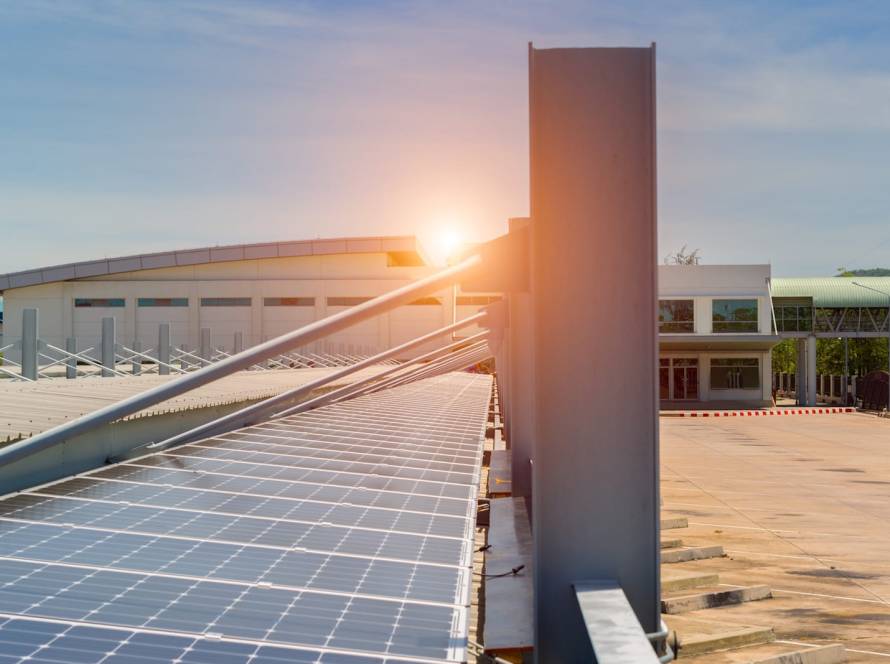
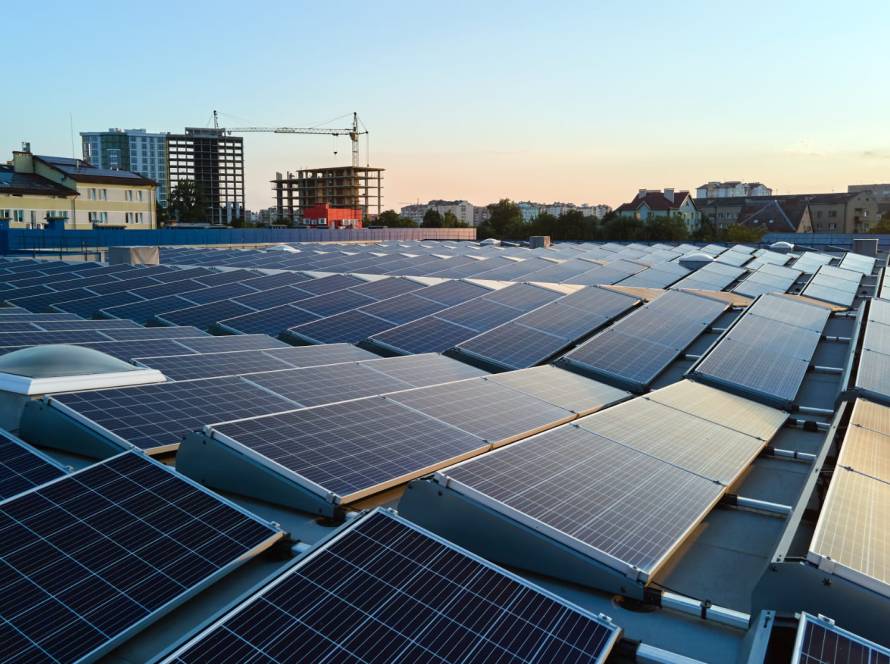
Solar carports for commercial properties give businesses a practical way to turn existing parking space into productive energy infrastructure. Instead of relying only on rooftop space, a business can install solar panels above parking bays, generate electricity during the day and provide shaded parking at the same time. This is especially relevant in South Africa, where most areas receive more than 2,500 hours of sunshine a year and average solar radiation ranges from 4.5 to 6.5 kWh per square metre per day.
The attraction is not limited to renewable energy. A properly planned solar carport can reduce grid electricity consumption, support battery storage and EV charging, improve the parking experience and make better use of property that already exists. For commercial property owners, developers and investment portfolios, the opportunity is therefore to turn an everyday operational space into an asset that supports both energy and property objectives.
Why Solar Carports for Commercial Properties Make Sense
Large commercial parking areas often occupy valuable space without generating a direct financial return. Solar carports for commercial properties change that by using the space above vehicles for electricity generation without removing the parking bays below. They can be particularly useful where rooftops are too small, unsuitable for PV panels or required for ventilation, plant equipment and other building infrastructure.
The financial argument is becoming harder to ignore. South Africa’s approved electricity tariff increase for the 2025/26 financial year was 12.74%, followed by an approved 5.36% increase for 2026/27. Generating more electricity onsite can therefore help commercial properties reduce their exposure to rising energy costs.
- Use existing parking areas without purchasing additional land.
- Generate electricity close to where it is consumed.
- Reduce daytime grid electricity purchases.
- Provide shade and weather protection for vehicles.
- Increase available solar capacity when roof space is limited.
- Create infrastructure that can later support EV charging and battery storage.
The real value comes from combining these benefits. A parking canopy that also produces electricity can support lower operating expenses while improving the experience of employees, tenants and visitors. For retail, office and mixed-use properties, covered parking can also become a visible property amenity rather than simply a technical installation.
Commercial solar has also become far more economically competitive over time. Global data shows that the average levelised cost of newly commissioned utility-scale solar PV fell by around 90% between 2010 and 2024. Although individual carport project economics will differ, this wider cost trend helps explain why businesses increasingly view solar infrastructure as a commercial investment rather than only an environmental initiative.
Turning Parking Areas Into Multi-Purpose Infrastructure
A solar carport does more than hold PV modules. The supporting structure can accommodate lighting, CCTV, signage, electrical cabling, guttering and drainage infrastructure. This makes the carport an opportunity to improve several aspects of a parking area at once, particularly when the installation is included in a larger property upgrade.
Weather protection adds another practical benefit. Solar modules create shade that can reduce direct sunlight on parked vehicles, while properly designed roofing and drainage systems can offer additional protection from rain. This matters in commercial environments because the infrastructure is used daily by staff, tenants, customers and service providers.
The design should therefore begin with how the parking area actually works. Vehicle circulation, pedestrian movement, entrances, loading areas and the types of vehicles using the site all influence column positions, height and structural layout. Treating the carport as integrated property infrastructure rather than simply a location for panels usually produces a more useful long-term asset.
Solar Carports for Commercial Properties and EV Charging
EV charging is a natural extension of solar carports for commercial properties because vehicles are already parked beneath the electricity-generating structure. Chargers, distribution equipment and cabling can be incorporated into the design, reducing the need to retrofit infrastructure around an existing parking environment later.
The benefit is not necessarily that every unit of charging power comes directly from the panels at that exact moment. Rather, solar generation can contribute to the property’s wider electrical demand while charging takes place. A carefully designed system can consider building consumption, solar production, charger demand and, where appropriate, battery capacity together.
- Plan electrical capacity for future EV demand.
- Identify parking bays that are best suited to chargers.
- Consider fleet vehicles, employees, tenants and visitors separately.
- Allow space for additional chargers as adoption increases.
- Coordinate solar generation, charging demand and battery storage.
- Include safe cable routes and protective electrical equipment in the original design.
Forward planning matters because EV infrastructure can change the load profile of a commercial property. Installing chargers without considering existing maximum demand could create unnecessary pressure on the electrical system. Energy modelling should therefore establish when vehicles are likely to charge and whether load management, solar generation or storage can help control demand.
For properties with commercial fleets, office workers or long customer dwell times, the combination is particularly logical. Vehicles often remain parked for several hours, creating an opportunity for managed charging. Building sufficient flexibility into the original carport design can also reduce the cost and disruption associated with expanding the charging network later.
Combining Solar Carports With Battery Storage
Battery storage can extend the value of solar electricity beyond the hours when panels are producing at their highest level. Electricity generated during periods of lower demand can potentially be stored and used when consumption rises, while appropriately designed battery systems can also contribute to backup power and peak-demand management.
The economics of storage have changed substantially. International renewable-energy data shows that installed utility-scale battery storage costs fell by 93% between 2010 and 2024, from around US$2,571 (≈ZAR 46,278) per kWh to US$192 (≈ZAR 3,456) per kWh. This does not mean every commercial site automatically needs batteries, but it shows why storage has become an increasingly realistic part of renewable-energy planning.
The right solution depends on the property’s actual load profile. A business should identify how much electricity it consumes during solar-producing hours, when peak demand occurs and which systems must remain operational during interruptions. Battery capacity can then be designed around a specific objective instead of being added simply because storage is available.
What to Consider Before Installing a Solar Carport
A commercial carport must perform as both a structural system and an electricity-generating asset. Before design begins, the parking environment, electrical infrastructure and energy consumption should all be assessed. Structural engineering is especially important because the canopy must withstand local environmental conditions while safely carrying the PV system.
Solar potential is another important consideration. South Africa has an annual average global solar radiation level of roughly 220 W per square metre, compared with approximately 100 W per square metre in parts of Europe and the UK. Strong solar resources make the country well suited to PV, but individual sites still need to be assessed for orientation, shading and usable space.
- Available parking area and bay layout.
- Solar orientation and potential shading.
- Wind and structural loading.
- Column positioning and vehicle-door clearance.
- Vehicle and pedestrian traffic flows.
- Emergency and service-vehicle access.
- Existing electrical infrastructure and connection capacity.
- Drainage, guttering and water management.
- Future battery or EV charging requirements.
- Construction access and disruption to normal operations.
Drainage deserves particular attention. PV modules contain gaps and do not automatically create a fully waterproof roof. If weather protection is part of the project objective, the design may require suitable sheeting, gutters, channels and downpipes to manage water effectively and prevent unwanted runoff into pedestrian areas.
Future requirements should be considered before construction starts. A business that expects its electricity demand to grow, plans to add battery storage or anticipates EV adoption should allow for those changes in the initial engineering. Designing for expansion is normally easier than modifying a structure and electrical system that were built only for today’s requirements.
Designing Around the Property’s Energy Needs
No two commercial properties consume electricity in exactly the same way. An office building may have a strong daytime load, while a distribution facility, factory or mixed-use property could operate for much longer hours. Solar design should therefore start with interval electricity data and a clear understanding of how the property operates.
This matters because solar performs particularly well when generation and consumption occur at the same time. South Africa’s strong solar resource, with more than 2,500 sunshine hours per year across most areas, provides significant opportunity for daytime generation. The commercial objective is to match as much of that generation as practical with onsite demand.
System configuration should then follow the business case. A grid-tied solution may suit a property focused mainly on reducing daytime grid purchases, while a hybrid system incorporating batteries may be more suitable where resilience and load management are important. Good design is therefore about finding the right fit, not simply fitting the maximum possible number of panels.
Financial Options and Long-Term Returns
The cost of a commercial solar carport should be considered alongside the value it can produce over its full operating life. That includes electricity savings, protection against tariff increases, parking improvements and the potential value of energy resilience. With approved South African electricity increases continuing into the 2026/27 and 2027/28 periods, controlling long-term electricity exposure remains commercially relevant.
The wider solar market provides useful context. In 2024, solar PV had a global weighted-average levelised electricity cost of approximately US$0.043 per kWh (≈R0.77/kWh), while 91% of newly commissioned utility-scale renewable projects produced electricity more cheaply than fossil-fuel alternatives. A commercial carport has different structural and engineering costs, so site-specific modelling remains essential.
- Capital purchase: The business pays for and owns the system.
- Power Purchase Agreement: Electricity is purchased under an agreed commercial arrangement.
- Rent-to-Own: Payments are spread over an agreed period before ownership transfers.
- Portfolio planning: Larger property owners can assess projects across several sites rather than individually.
- Lifecycle costing: Maintenance, component replacement and system performance are included in financial planning.
The correct funding approach depends on available capital, cash-flow priorities and the expected ownership period of the property. A business with available capital may favour direct ownership, while another organisation may prioritise preserving capital for its core operations. The cheapest initial option is not automatically the option that creates the greatest long-term value.
Decision-makers should also measure more than simple payback. Internal rate of return, expected electricity savings, maintenance requirements, tariff assumptions and system degradation can all affect the financial result. A realistic model should use conservative assumptions so that the investment case remains useful even if operating conditions change.
Solar Carports for Property Developers and REITs
For property developers, solar carports can be incorporated into the development strategy from the beginning rather than added after completion. Early integration makes it easier to coordinate structural requirements, electrical capacity, landscaping, parking design and future EV infrastructure with the rest of the project.
This approach can also strengthen a property’s commercial proposition. Lower expected energy costs, improved resilience and covered parking can all contribute to the experience offered to future tenants. Rather than treating renewable infrastructure as an optional extra, developers can consider how it contributes to the building’s long-term operating performance.
Portfolio owners have an additional advantage because renewable-energy strategies can be considered across multiple properties. Standardised engineering principles, maintenance programmes and financing strategies can make deployment easier to manage at scale. The aim is not simply to install more solar, but to identify where investment can have the greatest impact on operating expenses, resilience and property performance.
Operations and Maintenance Matter
Commercial solar equipment is expected to operate for many years, so installation is only the beginning of the asset lifecycle. Preventative maintenance should include regular inspections of PV modules, electrical connections, inverters, structural components and, where installed, battery systems and charging infrastructure.
The scale of global solar deployment shows why long-term asset management matters. Around 452 GW of solar PV capacity was added globally during 2024 alone, representing more than three-quarters of that year’s new renewable capacity. As solar becomes a mainstream part of energy infrastructure, businesses need maintenance practices that treat these systems like any other critical commercial asset.
Performance monitoring, preventative maintenance, corrective repairs and planned upgrades can help protect the original investment. The objective is not simply to respond when something fails. It is to identify underperformance early, maintain safe operation and ensure the system continues supporting the financial assumptions on which the investment was based.
Why Partnering With Eversolar Benefits You
At Eversolar, we provide full-service renewable-energy solutions designed around the commercial and operational requirements of each site. Our experience spans commercial property, industrial facilities, agriculture, mining, property development and real estate portfolios. We combine Solar PV, battery storage, solar carports and full engineering, procurement and construction capabilities into an integrated energy solution.
We also look beyond installation. Every commercial renewable-energy asset needs structured project execution, quality assurance and ongoing technical support if it is going to perform consistently over its operating life. Our approach covers the project from initial assessment and engineering through installation, commissioning and ongoing operations and maintenance.
- Site assessment and energy analysis.
- Solar PV and solar carport design.
- Battery Energy Storage Systems.
- Engineering, procurement and construction.
- Project management and commissioning.
- Preventative and corrective maintenance.
- System upgrades and expansion.
- Flexible CAPEX, Power Purchase Agreement and Rent-to-Own options.
We can therefore develop an energy strategy around the client’s objectives rather than forcing the property into a standard package. Whether the priority is reducing electricity costs, improving resilience, preparing for EV charging or increasing renewable-energy capacity, we consider the complete operating environment before developing the solution.
Flexible financing makes that approach accessible to businesses with different capital priorities. Some organisations want to own their renewable-energy infrastructure from the outset, while others prefer to limit upfront expenditure. By combining financing choices with ongoing technical support, we help clients consider both the immediate project and its long-term commercial performance.
Making Solar Carports Part of a Smarter Energy Strategy
A commercial solar carport delivers the greatest value when it forms part of a broader energy plan. Solar generation, existing grid supply, battery storage, EV charging and the property’s electrical demand should be considered together. This allows each element to support the others rather than operating as disconnected infrastructure.
The long-term economics of renewable technology are also moving in favour of this more integrated approach. Between 2010 and 2024, the global weighted-average cost of electricity from newly commissioned utility-scale solar PV declined by around 90%, while installed battery costs fell by approximately 93%. These figures demonstrate how dramatically the economics of solar and storage have changed, even though every commercial project still requires its own financial assessment.
Businesses considering solar carports for commercial properties should therefore begin with data. Analyse electricity consumption, assess the parking environment, determine future EV requirements, identify resilience needs and compare financing structures. When those decisions are made before detailed engineering starts, the resulting carport is far more likely to become a useful long-term business asset.
Multipurpose Parking Areas with Solar Carports
Solar carports for commercial properties can transform ordinary parking areas into productive infrastructure that generates renewable electricity, protects vehicles and creates opportunities for battery storage and EV charging. In a country with more than 2,500 sunshine hours a year across most areas and continued electricity tariff pressure, using available property space more effectively can make strong commercial sense.
The strongest results come from combining good engineering with a clear understanding of the property’s operational and financial goals. At Eversolar, we can assess the opportunity, design and deliver the right solution, provide flexible financing options and continue supporting the system through ongoing operations and technical maintenance. Get in touch with us to explore how solar carports for commercial properties can support your energy, resilience and property goals.
FAQs About Solar Carports for Commercial Properties
What Are Solar Carports for Commercial Properties?
Solar carports for commercial properties are structures fitted with photovoltaic panels above parking bays. The panels generate electricity while the structure provides shade and weather protection for parked vehicles. Unlike rooftop solar, carports use the open space above existing parking areas, making them useful for sites with limited or unsuitable roof space. The electricity produced can help reduce daytime grid consumption and may also support battery storage or EV charging. For offices, warehouses, shopping centres and industrial sites, solar carports can therefore combine renewable energy generation with practical parking infrastructure without requiring additional land for a ground-mounted solar installation overall.
How Much Does a Commercial Solar Carport Cost?
The cost of a commercial solar carport depends on several factors, including the number of parking bays, structural requirements, solar capacity, site conditions and electrical infrastructure. Additional features such as battery storage, EV chargers, lighting, drainage and weatherproofing can also affect the final investment. Because every property has different energy needs and physical constraints, a site-specific assessment is essential before accurate pricing can be provided. Businesses should evaluate more than the upfront cost by considering expected electricity savings, maintenance, tariff increases and financing options. CAPEX purchases, Power Purchase Agreements and Rent-to-Own structures can provide different routes to implementation over time.
Are Solar Carports Suitable for Commercial Properties?
Yes. Solar carports can work well for commercial properties because solar generation usually occurs during the same daytime hours when many businesses consume the most electricity. They are especially useful for offices, retail centres, warehouses, factories and developments with large parking areas or limited rooftop space. However, suitability depends on factors such as available parking space, shading, panel orientation, structural conditions and the property's electricity profile. A professional assessment should also review grid connection capacity, vehicle movement, drainage and future expansion requirements. Analysing these factors helps determine the appropriate carport size, generation capacity and expected commercial value for the site.
Can Solar Carports Be Used for EV Charging?
Yes. Solar carports can be designed to support electric vehicle charging, making them an option for businesses preparing for increased EV adoption. Chargers can be installed beneath the canopy, while cabling and electrical equipment can be incorporated into the structure during construction. Solar generation can then contribute to the property's overall electricity demand while vehicles are charging. Businesses should consider expected charging volumes, existing electrical capacity, parking duration and future fleet requirements before installation. Battery storage and load management may also help manage charging demand. Planning for EV infrastructure early can make future expansion simpler, less disruptive and cost effective.