Commercial solar solutions are becoming a smart way for office complexes to cut energy costs, improve tenant confidence, and reduce exposure to rising electricity tariffs. For landlords, facilities managers, and property owners, solar is no longer just a sustainability feature. It is a practical infrastructure decision that can support better cash flow, stronger building performance, and long-term asset value.
Hybrid systems add another layer of control by combining solar PV with battery energy storage. This allows an office complex to store excess solar power, reduce peak demand charges, and keep key systems running during outages. Choosing between commercial solar solutions and hybrid solar depends on the building’s energy profile, budget, tenant needs, and appetite for resilience.
Why Office Complexes Are Rethinking Energy Strategy
Office complexes are energy-hungry buildings. Lighting, lifts, HVAC systems, access control, security, servers, tenant equipment, and shared spaces all rely on stable electricity. In South Africa, rising tariffs and grid instability have made this a serious operational issue, not just a monthly expense.
Commercial solar systems often deliver payback periods of around 3 to 6 years for grid-tied installations, depending on consumption, tariffs, system size, and financing structure. For office complexes with strong daytime demand, this can create a strong business case because solar generation usually aligns well with working hours.
The long-term value is also important. Solar panels are typically designed to produce electricity for around 25 years or more, while many lithium battery systems carry warranties of about 10 years. This means the right system can support an office complex for decades when properly designed, monitored, and maintained.
What Are Commercial Solar Solutions?
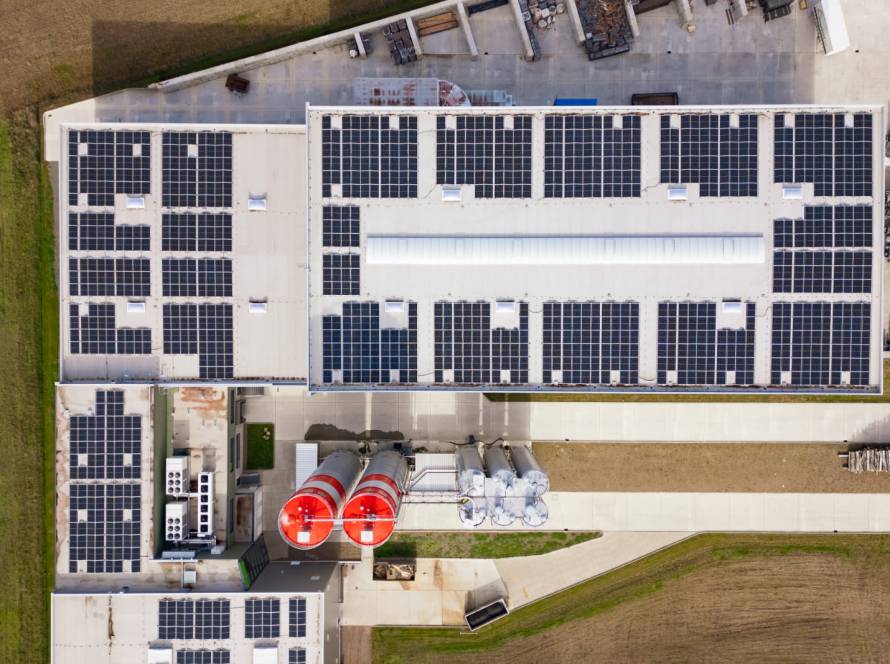
Commercial solar solutions are solar PV systems designed for business properties, including office parks, retail centres, warehouses, factories, mixed-use developments, and property portfolios. In office complexes, they are usually installed on rooftops, carports, or available ground space to generate electricity during the day.
These systems are often grid-tied, which means the building uses solar power when it is available and draws from the grid when solar generation is low. For office complexes with stable grid access and high daytime demand, this can be one of the most cost-effective ways to reduce electricity bills.
Key Features of Commercial Solar Solutions
- Solar panels generate electricity during daylight hours.
- Inverters convert DC power into usable AC power.
- The system offsets electricity bought from the grid.
- Surplus energy may be exported where regulations allow.
- Systems can be scaled as building energy needs grow.
- Ongoing monitoring helps track production, usage, and savings.
- Maintenance requirements are relatively low when quality components are used.
The biggest advantage of commercial solar solutions is their simplicity. They reduce grid reliance without the added cost and complexity of battery storage. This makes them suitable for office complexes focused mainly on cost savings, carbon reduction, and predictable long-term energy performance.
However, a standard grid-tied system does not usually provide backup power during outages unless it is paired with suitable storage and backup infrastructure. This is an important point for office complexes where tenants expect working lifts, secure access, stable internet, and safe parking areas during disruptions.
What Are Hybrid Solar Systems?
Hybrid solar systems combine solar PV with battery energy storage while staying connected to the electricity grid. This gives office complexes more flexibility because solar energy can be used immediately, stored for later, or supported by the grid when needed.
For buildings exposed to load shedding, high peak tariffs, or critical tenant operations, hybrid solar can be far more valuable than a basic grid-tied system. Instead of losing excess solar energy or relying fully on grid supply outside daylight hours, the building can store energy and use it strategically.
Key Features of Hybrid Solar Systems
- Solar PV produces electricity during the day.
- Battery storage captures excess solar energy.
- Stored power can be used during outages or peak tariff periods.
- Smart controls manage when energy is stored, used, or drawn from the grid.
- Critical loads can be prioritised during power interruptions.
- Systems can reduce diesel generator dependency.
- Energy use can be optimised around demand charges and tariff structures.
Hybrid systems are especially useful for protecting essential building services. These may include security systems, access control, emergency lighting, selected lifts, internet infrastructure, server rooms, and shared operational equipment.
The trade-off is cost and complexity. Batteries, hybrid inverters, control systems, and backup design all increase the initial investment. The system must be carefully sized so that it supports the right loads for the right amount of time without overspending on unnecessary storage capacity.
Commercial Solar Solutions vs Hybrid Solar Systems for Office Complexes
At Eversolar, we design and deliver solar energy systems for commercial, industrial, agricultural, mining, property development, and REIT sectors. For office complexes, we assess the building’s load profile, available installation space, tenant requirements, operational risks, and financial goals before recommending a grid-tied, hybrid, or off-grid configuration.
We provide full-service solar solutions, including feasibility studies, engineering, procurement, installation, commissioning, monitoring, maintenance, and ongoing technical support. We also offer flexible financing options such as Power Purchase Agreements and Rent-To-Own Solar, helping clients adopt high-performance energy infrastructure without unnecessary pressure on capital budgets.
How We Help Office Complexes Choose the Right System
- We assess electricity bills, demand patterns, and daytime consumption.
- We evaluate rooftop, carport, or ground-mounted installation potential.
- We identify critical loads that may need backup during outages.
- We compare grid-tied and hybrid system performance.
- We model long-term savings, payback, and financing options.
- We design systems for compliance, safety, and scalability.
- We provide after-sales support, monitoring, maintenance, and technical assistance.
For office complexes focused mainly on reducing monthly electricity spend, grid-tied commercial solar solutions are often the right entry point. They offer strong savings, lower complexity, and reliable performance when the grid is available.
For office complexes that need operational continuity, better peak demand management, and energy storage, hybrid solar is usually the stronger long-term solution. It gives building owners more control over when and how energy is used, which can improve tenant satisfaction and protect the building’s reputation.
Key Factors to Consider Before Choosing a System
The first factor is energy demand. A small office building may use tens of thousands of kilowatt-hours per year, while larger commercial buildings can use far more depending on HVAC demand, tenant density, operating hours, and shared infrastructure. Since commercial systems can range from about 20 kW to several megawatts, accurate sizing is essential.
The second factor is backup requirement. If the building only needs to reduce electricity costs, a grid-tied system may be enough. If outages affect tenants, security, lifts, or business continuity, battery storage becomes more valuable. Hybrid systems are especially useful where peak shaving and backup power both matter.
The third factor is financial strategy. CAPEX ownership may suit property owners that want full asset control, while financed options can help preserve cash flow. Since commercial solar can often pay back in roughly 3 to 6 years, the best option is usually the one that balances upfront cost, tenant value, system lifespan, and long-term energy savings.
Practical Steps for Office Complex Owners
Office complex owners should start with a proper energy assessment. This should include at least 12 months of electricity bills, peak demand data, tariff structure, building operating hours, tenant usage patterns, and the financial impact of outages.
The next step is to define the outcome. A system designed only for savings will look different from one designed for backup power. Clear priorities help avoid overspending on unnecessary batteries or underinvesting in resilience where tenants expect uninterrupted services.
Action Checklist Before Investing
- Review 12 months of electricity usage and demand charges.
- Identify the building’s highest energy-consuming systems.
- Check roof, carport, or ground space for solar potential.
- Assess shading, structural capacity, and electrical infrastructure.
- Decide which loads must stay powered during outages.
- Compare grid-tied, hybrid, and off-grid options.
- Model payback, tariff savings, and financing routes.
- Plan for monitoring, cleaning, maintenance, and future expansion.
Once the assessment is complete, the system design should be matched to the building’s real behaviour. This means choosing the right solar array size, inverter type, battery capacity, monitoring platform, and maintenance plan.
Office complexes should also think ahead. Tenant demand, EV charging, HVAC upgrades, and building expansions can all increase future electricity use. A scalable system makes it easier to grow capacity later without major reinvestment.
Building Smarter, Brighter Office Energy Futures
Commercial solar solutions and hybrid solar systems both offer meaningful benefits for office complexes, but they are not designed to solve exactly the same problem. Grid-tied commercial solar is best for reducing electricity costs, improving sustainability performance, and creating predictable long-term savings. Hybrid solar is best for office complexes that also need battery backup, peak demand control, and stronger protection against unreliable grid supply.
At Eversolar, we help clients choose the right system through engineered Solar PV and BESS solutions, full EPC delivery, flexible financing, and long-term technical support. Get in touch with us to explore how we can design a smarter, more resilient energy solution for your office complex.