Commercial solar has become an increasingly practical investment for businesses seeking greater control over operating costs and long-term energy reliability. Selecting grid-tied, hybrid or off-grid solar is not simply about generating renewable electricity, but about choosing a system that aligns with daily operations, future growth plans and the level of energy resilience required. A carefully planned installation can improve efficiency, reduce dependence on purchased electricity and support more predictable operating expenses over many years.
Every business consumes electricity differently, making it important to evaluate energy usage, critical equipment, operating hours and expansion plans before investing. By understanding how each solar configuration functions, organisations are better positioned to choose a solution that delivers lasting financial and operational value.
Why Commercial Solar Requires Careful Planning
A commercial solar installation should begin with a detailed assessment of how the property uses electricity. Monthly bills provide a useful starting point, but they do not always show when energy is consumed or which equipment creates the highest demand. Operating schedules, seasonal changes, machinery start-up requirements and evening consumption must also be considered. A detailed understanding of daily energy demand allows businesses to invest in equipment that aligns with their operational profile rather than purchasing a system that is either undersized or unnecessarily expensive.
Planning also extends beyond electricity usage. Businesses should evaluate roof condition, available installation space, structural capacity, future expansion plans and the expected lifespan of the facility itself. Considering these factors before installation creates a stronger foundation for long-term performance and helps ensure the solar system continues delivering value as operational requirements evolve over time.
Before selecting grid-tied, hybrid or off-grid solar, a business should identify its essential and non-essential loads. Servers, security systems, refrigeration, production controls and communication equipment may need to remain operational during an interruption, while other equipment can be temporarily switched off. This distinction helps prevent unnecessary oversizing and supports a more practical system design.
Understanding Grid-Tied, Hybrid or Off-Grid Solar
Every commercial solar installation is designed around the same objective of generating renewable electricity, but the way that electricity is supplied, stored and managed differs significantly between system configurations. Understanding these differences before investing allows businesses to make informed decisions that align with their operational priorities, financial objectives and long-term energy strategy. Rather than assuming one solution suits every organisation, it is important to evaluate how each system functions within the context of the business’s unique electricity requirements.
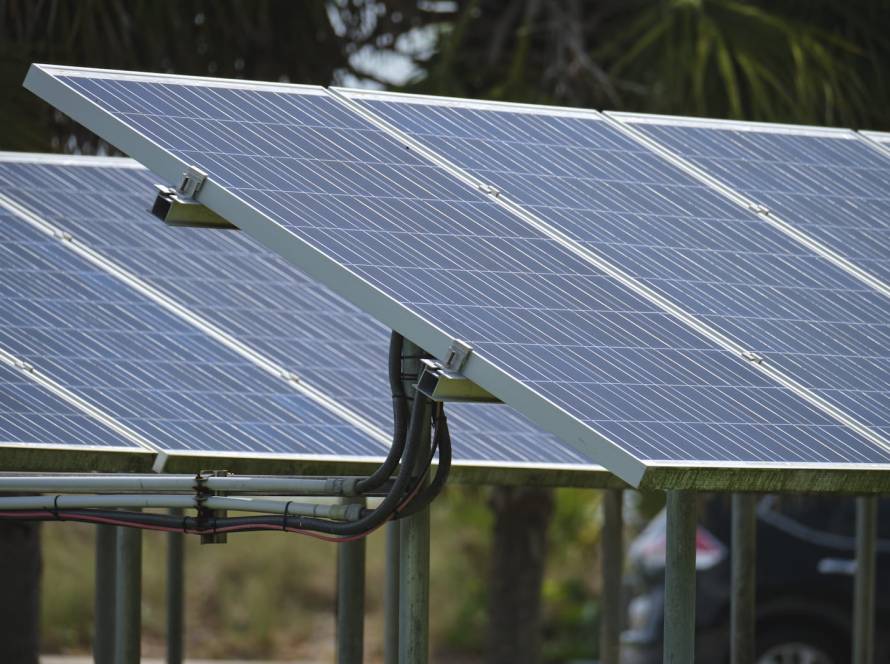
The foundation of every solar installation includes photovoltaic panels that capture sunlight and convert it into electricity, together with inverters that convert the generated power into usable alternating current for commercial equipment. Depending on the system configuration, battery storage, grid connectivity and backup generation may also form part of the installation. Each component plays a specific role in determining how electricity is produced, distributed and used throughout the business.
- Grid-Tied Solar Systems: Grid-tied systems connect directly to the utility network and use solar panels and inverters to supply electricity to the business during daylight hours. When solar production is lower than demand, electricity is imported from the grid. Where approved, surplus electricity may be exported through the appropriate metering arrangements. These systems generally operate without large battery banks, making them a cost-effective option for businesses with reliable grid access.
- Hybrid Solar Systems: Hybrid systems combine solar panels, battery storage and a grid connection. Solar electricity can power the business directly while also charging batteries for later use. During power interruptions or periods of high electricity demand, stored energy can supply selected essential loads. This configuration provides greater flexibility by combining energy savings with improved operational resilience.
- Off-Grid Solar Systems: Off-grid systems operate independently of the utility network and rely entirely on solar generation, battery storage and, where necessary, backup generators. These systems are commonly installed in remote locations where connecting to the grid is impractical or prohibitively expensive. Careful system sizing is essential to ensure reliable electricity throughout changing weather conditions and varying operational demands.
Although every solar installation generates electricity from the sun, the level of energy independence, storage capacity and reliance on the utility network differs considerably between these configurations. Understanding these differences helps businesses avoid selecting a system based purely on upfront cost and instead focus on long-term operational suitability.
Businesses should also remember that the most advanced system is not automatically the most appropriate one. A carefully designed solution should reflect daily consumption patterns, operational risks, available infrastructure and future growth plans. Investing time in understanding how each configuration functions provides a stronger foundation for achieving reliable long-term performance.
How Grid-Tied Solar Benefits Commercial Businesses
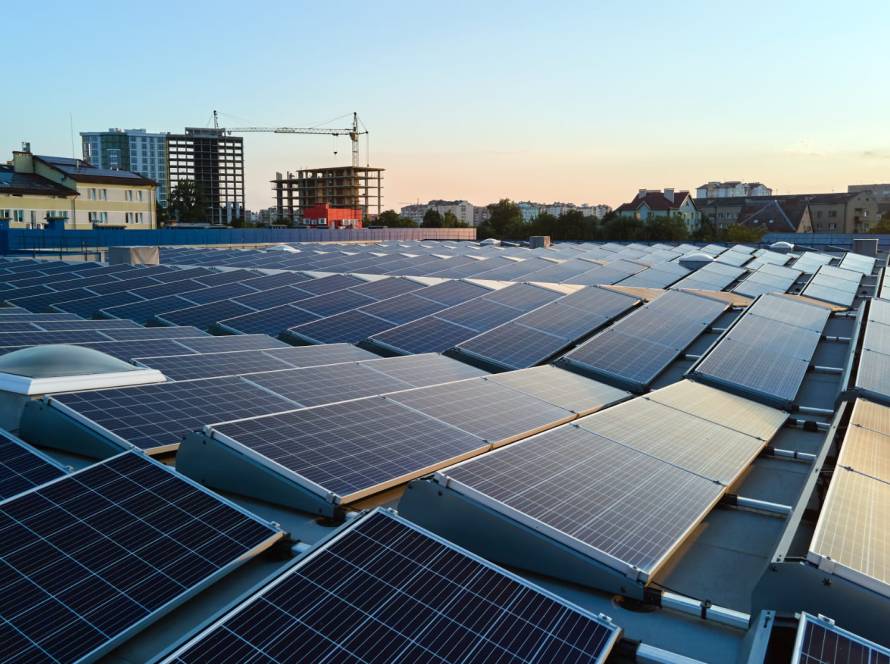
Grid-tied solar is often well suited to warehouses, office buildings, factories, schools and retail properties that have reliable utility access and substantial daytime electricity consumption. Because the business uses solar energy as it is generated, it can reduce the amount of electricity purchased during normal operating hours.
The main advantage of grid-tied, hybrid or off-grid solar comparisons is that they show how grid-tied installations can deliver savings without the cost of a large battery bank. These systems are generally simpler to operate and maintain, although panels, inverters, cabling, switchgear and mounting structures still require inspection and preventative maintenance throughout their working life.
When Grid-Tied, Hybrid or Off-Grid Solar Must Support Continuity
For many businesses, maintaining operations during an unexpected power interruption is just as important as reducing electricity costs. Manufacturing plants, warehouses, retail facilities, agricultural operations and commercial offices often rely on continuous access to electricity for production, communications, security and customer service. Even relatively short interruptions can affect productivity, disrupt workflows and increase operational costs if critical systems suddenly become unavailable.
Business continuity planning should therefore be considered alongside financial savings when evaluating a commercial solar investment. Instead of focusing solely on how much electricity can be generated, organisations should determine which equipment must continue operating during an outage and how long those systems need to remain powered. This approach allows backup capacity to be designed around genuine operational requirements rather than attempting to power every electrical load unnecessarily.
- Protect Critical Business Operations: Hybrid and off-grid systems can be configured to support essential equipment such as servers, communication systems, security infrastructure, refrigeration, lighting and selected production equipment when normal grid power becomes unavailable.
- Prioritise Essential Loads: Separating essential and non-essential circuits allows battery capacity to be used more efficiently. This reduces unnecessary system oversizing while ensuring the equipment most important to daily operations remains functional.
- Improve Operational Resilience: Battery storage allows businesses to continue operating through short-term interruptions, helping maintain productivity, protect sensitive equipment and reduce costly downtime.
- Support Safe Shutdown Procedures: In manufacturing and industrial environments, stored energy can provide sufficient power to safely shut down machinery, protecting both equipment and products from damage caused by sudden power loss.
Hybrid installations do not necessarily need to supply electricity to every circuit within a facility. By carefully identifying priority loads, businesses can achieve an effective balance between investment costs and operational resilience while ensuring essential services continue functioning during interruptions.
A well-designed continuity strategy considers not only the duration of potential outages but also how quickly operations need to recover afterwards. Selecting the appropriate level of backup allows businesses to protect revenue, improve reliability and maintain customer confidence without investing in unnecessary storage capacity.
Why Some Businesses Choose Off-Grid Solar
Off-grid systems are commonly used where an electricity connection is unavailable, unreliable or too expensive to extend to the site. Remote farms, lodges, telecommunications facilities, pumping stations, mining operations and rural commercial properties may all benefit from producing and managing their own electricity.
For businesses evaluating grid-tied, hybrid or off-grid solar, the off-grid option requires the most detailed planning because there is no utility supply available as an automatic fallback. Designers must account for daily consumption, maximum simultaneous demand, motor start-up loads, seasonal changes and periods of limited sunlight. Battery storage is essential, while a generator may provide additional support during maintenance, unusually high demand or prolonged poor weather.
Comparing Grid-Tied, Hybrid or Off-Grid Solar Costs
The cost of a commercial solar installation should always be evaluated over its entire operational lifespan rather than focusing only on the initial purchase price. While upfront investment is an important consideration, businesses should also account for electricity savings, maintenance requirements, equipment replacement, financing options and expected operational performance. A system with a higher initial investment may ultimately provide greater long-term value if it delivers improved reliability, lower operating costs and stronger protection against future energy price increases.
Every commercial property has different electricity requirements, meaning installation costs vary according to energy demand, roof size, equipment selection, battery capacity and project complexity. Careful financial planning helps businesses understand the total cost of ownership while ensuring that the selected system supports both operational objectives and future growth without creating unnecessary expenditure.
- Grid-Tied Systems: These generally have the lowest upfront cost because they do not require large battery banks. Investment is primarily focused on solar panels, inverters, mounting structures, electrical infrastructure and system monitoring, making them an attractive option for businesses with reliable grid access.
- Hybrid Systems: Hybrid installations require additional investment in battery storage, advanced inverters, energy management equipment and backup distribution. While the initial cost is higher, businesses benefit from greater energy resilience, improved self-consumption and the ability to maintain selected operations during interruptions.
- Off-Grid Systems: Off-grid installations usually involve the highest capital investment because they require larger solar arrays, substantial battery storage and often backup generation. These systems are engineered to operate independently of the utility network and therefore require additional redundancy and careful system sizing.
- Total Cost of Ownership: Businesses should compare maintenance requirements, equipment lifespan, battery replacement, financing, future expansion, operational savings and long-term reliability rather than selecting a system based solely on the lowest quotation.
Although installation cost is important, it should always be weighed against the operational benefits delivered over many years. A well-designed solar system can continue producing value long after the initial investment has been recovered, making lifetime performance a far more meaningful measure than purchase price alone.
A comprehensive financial assessment should also consider the cost of business interruptions, future electricity price increases and expected operational growth. When these factors are included, organisations are better positioned to select a solar solution that delivers both immediate and long-term commercial value.
Is Battery Storage Necessary for Every Business?
Battery storage is not automatically required for every commercial solar project. A company with dependable utility access, strong daytime consumption and a primary objective of reducing electricity purchases may achieve better value from a system that supplies power directly to its operating loads.
The role of batteries becomes clearer when grid-tied, hybrid or off-grid solar options are evaluated against the cost of downtime. Storage may be valuable when interruptions affect production, refrigeration, customer service or security. Batteries can also store surplus daytime generation for use later, but their capacity, power output, cycle life, efficiency and expected degradation must be assessed carefully.
Choosing the Right Solar System for Your Industry
Every industry consumes electricity differently, making it essential to match the solar system to operational requirements rather than adopting a standard solution. Factors such as operating hours, peak demand, seasonal activity, equipment type and tolerance for downtime all influence which configuration will deliver the greatest value. Understanding these differences allows businesses to invest in systems that improve both financial performance and operational reliability.
Industry-specific planning also helps ensure the installation remains suitable as the business grows. Future expansion, increased production capacity, additional facilities or changing electricity consumption patterns should all be considered during the initial design process so that the system can continue meeting operational requirements without requiring extensive modifications.
- Manufacturing: Factories often benefit from strong daytime solar generation that offsets production-related electricity consumption. Hybrid storage can protect critical machinery, production controls and sensitive equipment during interruptions.
- Warehousing and Logistics: Large roof areas make warehouses ideal for commercial solar installations. Battery storage can support security systems, scanning equipment, refrigeration, communications and essential lighting where required.
- Office Buildings and Education: Offices and educational facilities generally consume significant electricity during daylight hours, making grid-connected solar particularly effective for reducing operating costs while providing optional backup for essential services.
- Agriculture: Farms may require different solar configurations across the same property. Packhouses, irrigation systems, processing facilities, workshops and cold storage often have different operational requirements that influence system selection.
- Retail, Hospitality and Healthcare: Businesses operating beyond normal daylight hours may benefit from battery storage to support refrigeration, lighting, communications, customer services and critical equipment while maintaining operational continuity.
Selecting grid-tied, hybrid or off-grid solar should always be based on the way a business operates rather than on assumptions about which technology is considered the most advanced. The ideal system is one that aligns with actual energy consumption, operational priorities and future expansion plans.
Working with experienced commercial solar specialists also helps ensure industry-specific requirements are incorporated into the design from the beginning. A carefully planned installation can improve efficiency, strengthen business resilience and continue delivering value as operational needs evolve over time.
Scalability and Future Business Growth
A commercial solar system should be planned around future demand as well as current electricity consumption. New production lines, longer operating hours, facility expansions, additional refrigeration, electric vehicle charging and increased staff numbers can all change the property’s energy requirements.
A business considering grid-tied, hybrid or off-grid solar should therefore ask whether the proposed inverters, batteries, distribution equipment and panel layout can support later expansion. Reserving roof space, selecting compatible equipment and allowing sufficient electrical capacity during the initial design can make future upgrades more practical and less disruptive.
Compliance, Installation and Long-Term Performance
Commercial solar installations must be designed and installed according to the electrical and connection requirements that apply to the property. Grid-connected systems may require approval, suitable protection equipment, compliant inverters, approved metering and professional sign-off before they can operate in parallel with the network.
Regardless of whether the business selects grid-tied, hybrid or off-grid solar, long-term performance depends on installation quality and ongoing support. Monitoring should be used to identify underperforming panels, inverter faults or unusual consumption patterns. Planned inspections, equipment cleaning where necessary and clear maintenance responsibilities help protect the expected savings and operational value of the installation.
Case Study: A Distribution Company Evaluates Its Solar Options
A building materials distribution company operates from a large warehouse in a sunny industrial area of Gauteng. Most of its electricity is consumed during the day by lighting, loading equipment, office systems, security infrastructure and an automated stock-control system. Management believes solar could lower operating costs, but it is unsure which configuration would provide the most practical balance between savings and reliability.
The company begins comparing grid-tied, hybrid or off-grid solar by reviewing a full year of electricity bills, operating schedules and equipment requirements. It identifies the stock-control servers, access systems, security equipment, network connections and selected warehouse lighting as critical loads. The roof structure is inspected, future expansion plans are considered, and the business estimates how long these essential systems should remain operational during an interruption.
The assessment shows that a completely off-grid system would require unnecessary battery capacity because the warehouse already has a usable grid connection. A standard grid-tied installation would provide strong daytime savings but would not protect essential systems during an outage. The company therefore chooses a hybrid configuration that offsets daytime consumption while providing enough stored energy to support critical operations and allow work to continue safely.
What Does Eversolar Offer for Grid-Tied, Off-Grid and Hybrid Solar?
Our grid-tied solar solutions are designed to help businesses reduce electricity costs while remaining connected to the utility network. We provide complete turnkey EPC delivery, beginning with feasibility studies and site assessments before progressing through engineering, procurement, installation and commissioning. Our commercial solar PV systems are tailored for factories, warehouses, office buildings, retail facilities and other commercial environments, allowing businesses to generate their own electricity, optimise consumption and export surplus energy where permitted. We also support a wide range of sectors, including commercial properties, industrial operations, agriculture, mining, property developers and real estate investment trusts. To ensure long-term performance, we provide comprehensive after-sales support, remote monitoring, preventative maintenance and flexible financing options through Power Purchase Agreements and Rent-To-Own Solar, giving our clients a dependable and scalable renewable energy solution.
Our off-grid and microgrid solutions are engineered for businesses that require complete energy independence or operate in remote locations where grid access is unavailable or unreliable. We design and install customised solar off-grid systems and microgrid systems that combine high-quality solar PV technology with robust Battery Energy Storage Systems to deliver reliable, resilient power in demanding environments. These systems are particularly suited to mining operations, industrial facilities, agricultural applications and remote commercial sites that require continuous electricity without depending on the utility network. Through our full EPC delivery process, we manage every stage from feasibility and design to commissioning, while our ongoing monitoring, maintenance and flexible financing options help ensure reliable long-term operation. Our off-grid solutions are built to provide scalable power, improve operational resilience and reduce dependence on traditional energy sources.
Our hybrid solar solutions combine commercial solar PV with advanced Battery Energy Storage Systems to deliver both electricity savings and greater operational resilience. We design hybrid systems that allow businesses to store excess solar energy for use during peak tariff periods or unexpected outages while maintaining the flexibility of a grid connection. Our solutions are tailored for factories, warehouses, office buildings, retail facilities, agricultural operations, mining sites and other energy-intensive businesses that require stable and reliable power. By integrating durable components, intelligent energy storage and complete EPC delivery, we create systems that maximise self-consumption, improve energy security and support future business growth. We also provide comprehensive after-sales service, preventative maintenance, remote monitoring and financing options, ensuring that every hybrid installation continues to perform efficiently throughout its operational life.
Finding the Best Solar System for Your Operations
Choosing a grid-tied, hybrid or off-grid solar solution should always begin with a clear understanding of how the business operates rather than assuming one system is universally better than another. The right installation is one that supports operational continuity, aligns with electricity consumption patterns, accommodates future growth and delivers reliable long-term value while remaining appropriate for the organisation’s budget and objectives.
At Eversolar, we work closely with businesses to assess their energy requirements before recommending a commercial solar solution. Our experienced team designs systems that balance performance, reliability and scalability, helping organisations invest confidently in renewable energy that continues delivering value well into the future. Contact us to discuss the right commercial solar solution for your business.