Mine power solutions are becoming a serious priority for mining operations that need reliable, affordable and cleaner electricity. Mining sites depend on steady power for crushers, mills, conveyors, pumps, ventilation, processing plants and safety systems. When supply is unstable, production stops, costs rise and equipment can be placed under strain.
Across South Africa and the wider region, mines are moving away from full dependence on diesel or unreliable grid supply. Solar PV, battery energy storage systems and microgrids now give mines a practical way to reduce energy risk, control operating costs and support long-term sustainability targets without compromising production.
Why Mine Power Solutions Matter for Modern Mining Operations
Mining is a high-demand, high-pressure industry where power failures can quickly become expensive. Electricity can account for a large share of operating costs, with several industry sources placing mining power costs anywhere from 15% to 40% of total operating budgets. For energy-intensive sites, even a small reduction in electricity spend can improve margins.
Reliable mine power solutions are also about safety and continuity. If a ball mill stops unexpectedly, restart and clean-up can take time. If pumps, fans or dewatering systems lose power, the impact can move beyond lost production and create operational risk.
- Reduce exposure to load shedding and weak-grid supply
- Lower diesel consumption and fuel transport costs
- Support continuous operation of critical mining equipment
- Improve power quality for heavy-load machinery
- Stabilise long-term energy costs
- Support ESG targets and carbon reduction commitments
- Improve resilience at remote or off-grid sites
The key lesson is that mining energy can no longer be treated as a basic utility expense. It has become a strategic part of production planning. Mines that invest in stronger power infrastructure are better placed to protect output, reduce downtime and manage energy costs over the life of the operation.
The Shift from Diesel Dependence to Renewable Mine Power Solutions
Diesel generation has been useful for mines because it is familiar, flexible and can be deployed almost anywhere. The problem is that diesel is expensive to transport, costly to maintain and exposed to price volatility. In remote regions, fuel logistics can become a major operational burden, especially where roads are long, unreliable or weather-affected.
Real-world mining energy data shows why the shift is happening. Hybrid microgrids in remote mining locations have been reported to reduce fuel costs by up to 40%. Other mine energy studies show Solar PV and BESS combinations can lower energy costs by more than 50% in certain use cases, depending on site conditions, fuel costs and system design.
The move away from diesel is not about removing backup power overnight. It is about using diesel more intelligently. In a hybrid system, Solar PV supplies low-cost daytime energy, BESS manages peaks and stability, and generators run only when needed. This cuts unnecessary runtime, reduces maintenance and keeps backup power available for genuine resilience.
How Solar PV Supports Mine Power Solutions
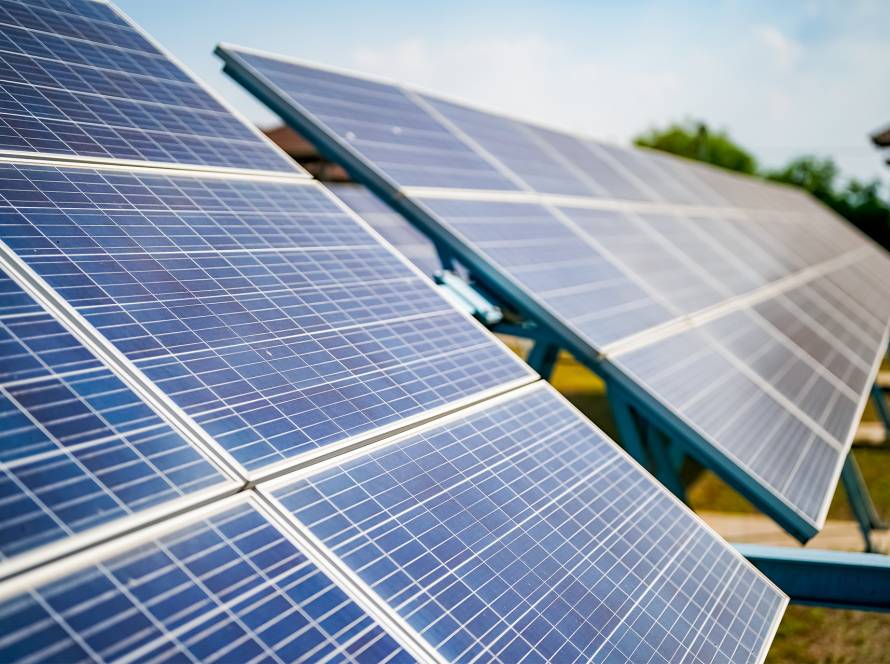
Solar PV is well suited to mining because many sites have strong solar resources, high daytime demand and available land. Ground-mounted solar arrays can be installed on unused land, buffer zones or rehabilitated areas, turning low-productivity space into a long-term energy asset.
A real South African mining solar project shows the scale of the opportunity. A 10 MW solar plant using 26,640 modules across 20.1 hectares was built to supply around 30% of a mine’s daytime power needs. It was expected to avoid roughly 26,000 tonnes of CO₂ per year and deliver major daily electricity savings.
- Use ground-mounted Solar PV for high-output energy generation
- Match system size to daytime production demand
- Use unused or rehabilitated mine land where suitable
- Integrate solar with BESS for greater self-consumption
- Add tracking or optimised tilt where the business case supports it
- Design for dust, heat, access and long-term maintenance
- Plan for future expansion as production demand grows
Solar PV gives mines more control over energy costs. Once installed, it can provide predictable electricity for 20 years or more. That matters in an industry where rising tariffs, diesel costs and grid instability can make long-term planning difficult.
Why BESS Is Essential for Reliable Mine Power Solutions
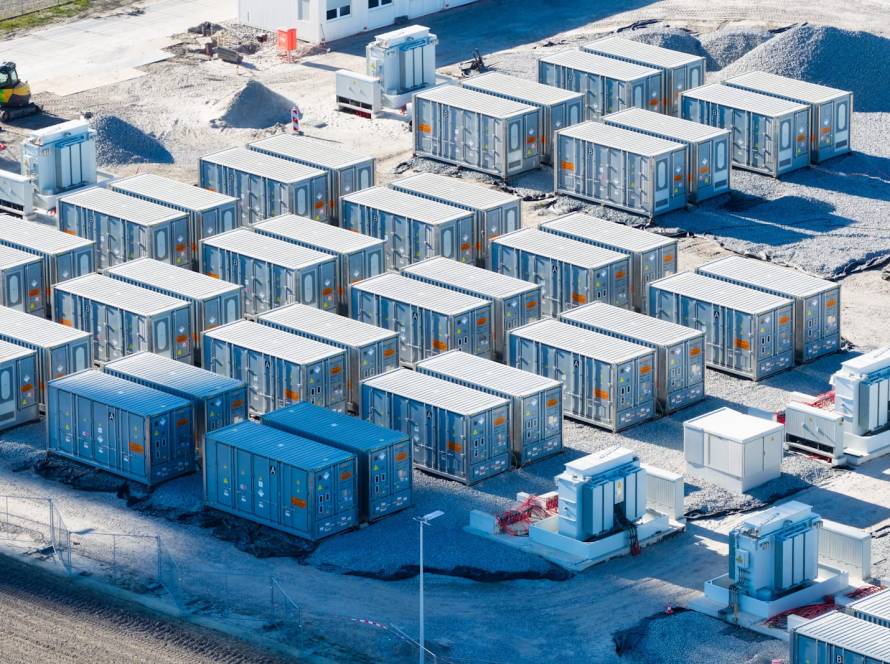
Battery energy storage systems make renewable power far more useful for mines. Solar output changes during the day, but mining operations need steady, reliable energy. BESS stores surplus energy when generation is high and releases it when demand rises, solar drops or the grid fails.
BESS also improves power quality. Mining equipment often creates sudden load changes, especially during the start-up of large motors, crushers, pumps and mills. Battery systems can respond in milliseconds, helping to regulate voltage and frequency before instability affects production.
In practical terms, BESS can reduce generator runtime, lower peak demand charges and protect sensitive electrical systems. It can also provide backup power during outages and support black-start capability in more advanced microgrid designs. For remote mines, that means stronger energy security and less dependence on fuel deliveries.
How Microgrids Bring Mine Power Solutions Together
A microgrid is a local power system that can operate with the grid or independently. In mining, it may combine Solar PV, BESS, diesel or gas generators, wind where suitable, and smart controls. The aim is to keep power stable while using the lowest-cost energy source available at the time.
Large mining microgrid projects show how far the model has developed. Some systems now combine tens of megawatts of Solar PV with large battery storage capacity. One planned mining microgrid includes more than 50 MW of PV and over 100 MWh of storage, showing that microgrids are no longer small backup systems.
The value of a microgrid lies in coordination. Solar can reduce daytime fuel or grid use. BESS can manage peaks, outages and power quality. Generators can operate more efficiently instead of running constantly at low load. This creates a more resilient power system that is cleaner, cheaper and better matched to mining operations.
Key Benefits of Solar PV, BESS and Microgrids for Mines
The strongest benefit is cost control. Solar reduces grid and diesel consumption. BESS reduces peak demand and improves generator efficiency. Microgrids coordinate these assets so the mine can use energy more intelligently throughout the day.
The second major benefit is resilience. Mining operations need continuous supply, especially for safety-critical and process-critical loads. A well-designed hybrid system can reduce downtime, support backup power and keep production running through grid instability.
- Lower diesel and grid electricity use
- Reduced exposure to fuel price volatility
- More predictable long-term energy costs
- Improved power quality for heavy equipment
- Backup power during outages and load shedding
- Lower carbon emissions and stronger ESG performance
- Scalable infrastructure for expanding production
- Better use of available land and on-site energy resources
These benefits are not theoretical. Mining solar and storage projects have shown payback periods of under five years in some cases, while hybrid systems have offset millions of litres of diesel and reduced tens of thousands of tonnes of CO₂. The right design can turn energy from a risk into a competitive advantage.
Designing Mine Power Solutions for Harsh Mining Environments
Mining sites are tough on energy infrastructure. Dust, heat, vibration, heavy electrical loads and long cable routes all affect performance. A system that works well in a commercial setting may not be suitable for a mine unless it is engineered for harsher conditions.
Good design starts with data. Mines should review hourly load profiles, peak demand, critical loads, available land, solar yield, grid constraints, diesel usage and future expansion plans. A 54 MW solar model for a platinum mine in South Africa showed potential long-term savings of more than R5.6 billion in electricity costs and R563 million in carbon tax over 20 years, which shows how valuable proper modelling can be.
Maintenance access also matters. Solar arrays must be easy to clean in dusty conditions. Batteries need safe placement, thermal management and monitoring. Electrical integration must account for large motor starts and voltage fluctuations. Strong mine power solutions are built around the real operating conditions of the site, not just the installed capacity.
Best Commercial Solar Systems Designed for High Energy Demand Industries in South Africa
At Eversolar, we design and deliver full-service renewable energy solutions for high energy demand industries across South Africa and Southern Africa. Our solutions include Solar PV systems, BESS, turnkey EPC services, off-grid and microgrid systems, and solar energy wheeling. We work across mining, industrial, agricultural, commercial, property development and REIT sectors.
We engineer every system around the client’s load profile, operational constraints, site conditions and long-term sustainability goals. For mining clients, this means durable Solar PV, battery-integrated systems and microgrid-ready infrastructure that can reduce diesel dependence, improve power stability and support uninterrupted operations.
- Feasibility studies and site assessments
- Load profiling and energy modelling
- Solar PV system design and installation
- BESS integration and energy optimisation
- Off-grid and hybrid microgrid solutions
- Turnkey EPC delivery from design to commissioning
- PPA, Rent-to-Own and outright purchase options
- Remote monitoring, preventive maintenance and technical support
- System optimisation, upgrades and long-term asset support
We also understand that capital planning matters. That is why our flexible financing options help clients adopt renewable energy without placing unnecessary pressure on budgets. Our role does not end at handover. We provide ongoing support, technical maintenance and performance monitoring to help each system deliver value over its full lifecycle.
Practical Steps for Planning Mine Power Solutions
The first step is to understand the mine’s energy demand. This includes daily and seasonal consumption, production shifts, peak demand, critical equipment, outage risks and future growth. Without this information, it is easy to oversize, undersize or misalign the system.
The second step is to choose the right energy mix. A remote mine may need Solar PV, BESS and backup generation in an off-grid microgrid. A grid-connected mine may use Solar PV and BESS behind the meter. A business with limited site space may consider wheeling renewable electricity from an off-site generator.
The third step is to test the commercial case. Mines should compare capital cost, diesel savings, tariff savings, maintenance savings, carbon benefits and downtime reduction. Real-world examples show that mining solar projects can reach payback within 4 to 6 years, depending on system size, financing, tariff structure and fuel displacement.
Financing and Commercial Models for Mine Power Solutions
The cost of Solar PV, BESS and microgrids can be significant, especially for large mines. However, the right financing model can make adoption easier. Mines do not always need to fund the full system upfront.
Commercial models should match the mine’s financial strategy, risk appetite and long-term operating plan. Some businesses want full ownership and maximum long-term savings. Others prefer predictable monthly costs or long-term energy price certainty.
- Outright purchase for full asset ownership
- Power Purchase Agreements for no upfront capital and long-term price certainty
- Rent-to-Own structures with fixed payments and eventual ownership
- Hybrid models combining on-site generation and grid supply
- Wheeling models for access to off-site renewable energy
- Operations and maintenance agreements for long-term performance
- Expansion planning for future production growth
A strong commercial structure should reduce risk, not add complexity. Mines should look for models that support cost certainty, performance accountability and long-term operational value.
The Future of Mine Power Solutions in South Africa
South African mining operations face pressure from load shedding, rising tariffs, diesel costs and carbon expectations. At the same time, mining needs more electricity as operations modernise and equipment becomes more electrified. This makes energy planning a board-level issue, not just a facilities issue.
Large renewable mining projects are already proving the case. A R1 billion solar investment in the North West was planned to deliver up to 40 MW of photovoltaic power to a major mining operation and create around 200 construction jobs. Projects like this show that renewable energy is becoming part of mainstream mining infrastructure.
The next phase will be more integrated. Mines will combine Solar PV, BESS, microgrids, smart controls, backup generation and wheeling to suit different site needs. The goal will not be one perfect technology. It will be a practical power strategy that improves reliability, reduces cost and supports cleaner production.
Building Better Mine Power Solutions for Long-Term Performance
Mine power solutions must do far more than supply electricity. They must support production, protect equipment, reduce operating costs, improve energy security and help mines respond to a changing energy landscape. Solar PV, BESS and microgrids give mining operations a practical way to build cleaner and more resilient power systems.
At Eversolar, we help businesses plan, finance, build and maintain renewable energy infrastructure that is designed for real operating conditions. If your mining operation is ready to reduce energy risk, improve resilience and take control of long-term power costs, get in touch with us to discuss a tailored Solar PV, BESS or microgrid solution.
FAQs About Mine Power Solutions
What Are Mine Power Solutions?
Mine power solutions are energy systems designed to supply reliable electricity to mining operations. They can include Solar PV, battery energy storage systems, diesel or gas generators, grid supply and microgrids. The aim is to keep critical mining equipment running while reducing energy costs, emissions and supply risks. Modern mines need stable power for crushers, mills, pumps, ventilation, lighting and processing plants. By combining renewable generation with storage and backup power, mines can improve uptime, reduce diesel dependence and gain better control over long-term operating costs, especially in remote or weak-grid locations where power interruptions are common.
How Does Solar Energy for Mining Work?
Solar energy for mining works by converting sunlight into electricity through Solar PV panels installed on-site or accessed through off-site wheeling arrangements. On mining sites, solar is often ground-mounted because mines usually have large areas of unused or rehabilitated land. The electricity generated can power processing plants, conveyors, pumps, offices, workshops and other daytime loads. When paired with BESS, excess solar energy can be stored and used during peak demand, outages or low-generation periods. Solar can also work alongside generators or grid supply, creating a hybrid system that improves reliability while reducing diesel use and electricity costs.
Can Solar PV Power a Mine Continuously?
Solar PV can supply a major share of a mine’s electricity demand, especially during daylight hours, but it usually needs to be combined with BESS, backup generation or grid supply to support continuous 24/7 operations. Mining loads are demanding and production often runs outside solar generation hours. Batteries help by storing excess daytime energy and releasing it when solar output drops. Generators or grid supply can provide further backup when required. A properly designed hybrid or microgrid system gives mines the best balance between renewable energy use, energy security, power quality and operational continuity in demanding mining conditions.
Why Do Mines Use Battery Energy Storage Systems?
Mines use battery energy storage systems to improve reliability, reduce energy costs and make better use of renewable power. BESS stores electricity when generation is high or tariffs are lower, then discharges it during peak demand, outages or expensive tariff periods. It also helps stabilise voltage and frequency, which is important for heavy mining equipment that creates sudden load changes. In hybrid mine power systems, batteries can reduce generator runtime, lower fuel consumption and provide backup power during grid instability. This makes BESS especially valuable for remote mines, off-grid sites and operations exposed to load shedding or weak supply.
What Is a Mining Microgrid?
A mining microgrid is a localised power system that can operate independently or alongside the main grid. It usually combines several energy sources, such as Solar PV, BESS, diesel or gas generators, wind where suitable, and smart energy controls. The microgrid manages these assets so the mine can use the most efficient and reliable power source at the right time. For remote or weak-grid mines, microgrids improve energy independence and reduce reliance on diesel deliveries. They also support better power quality, backup supply, renewable integration and long-term cost control, making them a practical option for modern mining operations.
What Are the Main Benefits of Solar Energy for Mining?
The main benefits of solar energy for mining include lower electricity costs, reduced diesel consumption, improved energy security and lower carbon emissions. Solar PV gives mines a predictable source of energy for decades, helping reduce exposure to rising tariffs and fuel price volatility. When paired with BESS and microgrid controls, solar can support continuous operations, reduce peak demand costs and improve resilience during outages. It also helps mining companies meet ESG targets and show measurable progress on sustainability. For remote sites, solar reduces the need for frequent fuel transport, making operations safer, cleaner and more cost efficient.