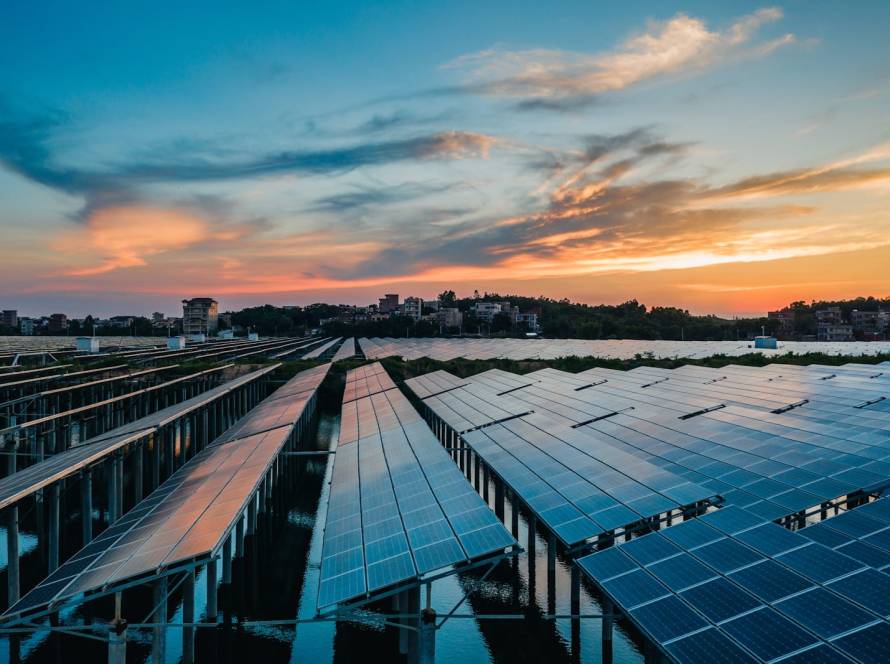
South African farms are changing the way they think about power, water, productivity, and long-term resilience, all thanks to solar for agriculture solutions. For many farmers, the first conversation starts with irrigation because water pumping is one of the most practical and visible uses of solar energy on a farm.
But the bigger opportunity is not only about replacing one pump or reducing one electricity bill. Solar PV, battery storage, hybrid systems, off-grid power, cold storage support, processing equipment, and long-term energy planning all form part of solar for agriculture. This shift is helping farms move from short-term energy fixes to more complete, reliable, and cost-controlled farm energy solutions.
Why South African Farms Are Turning to Solar Energy
South African agriculture is under pressure from rising electricity costs, unreliable supply, and the need to keep essential operations running without disruption. As early as 2018, agriculture already accounted for around 10% of installed PV systems in South Africa, with estimated investment of R630 million to R960 million and roughly 60 MWp of installed capacity. At the time, growth was projected at about 10% per year.
The business case is especially strong for farms and agribusinesses with consistent energy demand. Cooling facilities, packhouses, irrigation systems, processing lines, poultry houses, dairies, and refrigeration all need dependable power. When electricity is unreliable, the risk is not only an inconvenience. It can mean crop losses, spoiled produce, missed production windows, and higher operating costs from diesel backup.
This is why solar for agriculture is becoming a strategic investment rather than a nice-to-have upgrade. With South Africa’s strong sunlight, farms can generate clean power on-site and use it where it matters most. A well-designed system can reduce grid dependence, improve operational reliability, lower long-term energy costs, and support more sustainable farming practices.
Solar Irrigation as Part of Solar for Agriculture Solutions
Solar irrigation pumps can play an important role in solar for agriculture, but they should be seen as one part of a wider farm energy strategy. Irrigation is often a major energy load, especially when water is pumped from boreholes, dams, tanks, or pressure systems. Solar-powered pumping can help reduce reliance on grid electricity or diesel while improving water access during key production periods.
Eversolar’s approach goes beyond powering pumps. The real value lies in designing a complete solar solution around the farm’s full energy profile, including irrigation, cold storage, refrigeration, processing equipment, lighting, ventilation, security, and backup power. When solar irrigation pumps are integrated into a broader Solar PV and battery system, farms gain better cost control, resilience, and operational reliability.
Where solar-powered irrigation fits into a complete farm energy system
- Supports boreholes, dams, tanks, and backup water systems.
- Reduces reliance on Eskom, municipal supply, or diesel.
- Helps manage daytime water pumping more cost-effectively.
- Works alongside cold storage, refrigeration, processing, and other critical loads.
- Supports livestock watering and crop irrigation.
- Forms part of a scalable energy solution that can grow with the farm.
Proper system design is essential. Pump sizing should consider flow rate, borehole yield, pumping head, daily water needs, seasonal demand, pipe runs, storage capacity, and how irrigation fits into the farm’s wider energy use.
In many cases, storing pumped water during the day can improve efficiency. But the bigger value of solar for agriculture comes when irrigation is planned as part of a complete energy solution that supports the whole farm, not just the pump.
Looking Beyond Solar Irrigation Pumps
Irrigation matters, but farms rarely have only one energy problem. Many operations need power across multiple sites, loads, and times of day. A dairy may need cooling and milking support. A poultry operation may need lighting, ventilation, and temperature control. A packhouse may need stable energy for sorting, refrigeration, and processing.
Globally, irrigation already supports about 40% of food production on only 20% of arable land, which shows how important water and energy are to food security. At the same time, around 35% to 40% of global irrigated agriculture is groundwater-fed. This creates a clear opportunity for solar, but also a responsibility to manage water carefully.
A complete farm energy strategy looks at the whole operation, not just the pump. That includes grid-tied solar for cost savings, hybrid systems with batteries for resilience, off-grid systems for remote sites, and energy wheeling for larger multi-site operations where suitable. The aim is simple: reliable energy where the farm needs it, with better cost control over the long term.
Agrivoltaics and Smarter Land Use
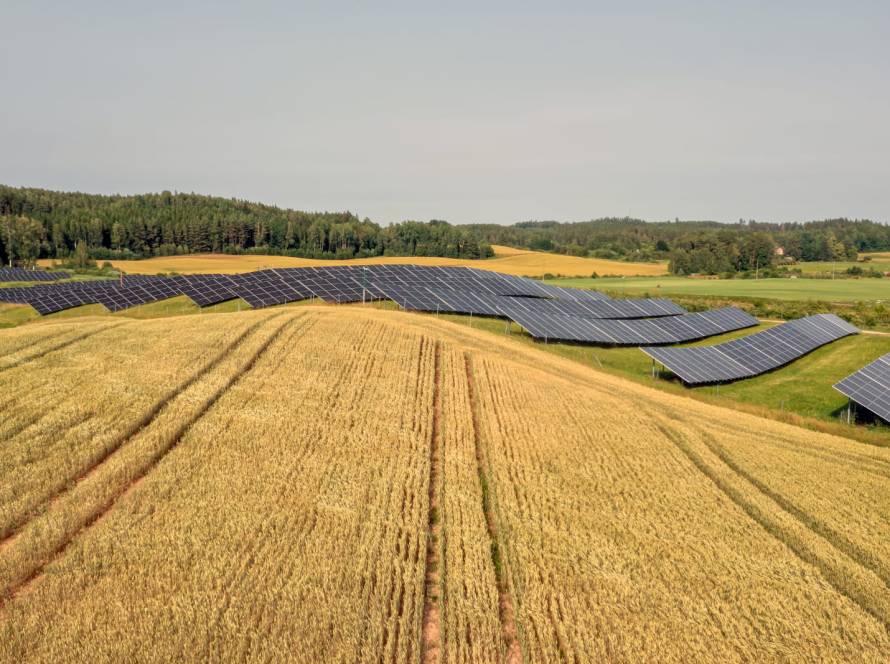
Agrivoltaics is one of the most interesting developments in solar for agriculture because it allows farmers to use the same land for food production and energy generation. Instead of treating solar and farming as competing land uses, agrivoltaics places panels above crops, grazing areas, or between productive spaces.
This can help farms improve land productivity while creating an additional energy or revenue benefit. In suitable applications, elevated panels may help reduce heat stress, provide partial shading, and support soil moisture retention, which may reduce irrigation pressure. It is not suitable for every crop or farm layout, but where it works, it can help farms manage land, water, and energy more efficiently.
Where agrivoltaics can add value
- Crop shading in hot or exposed growing areas.
- Reduced soil moisture loss under suitable panel layouts.
- Dual-use land planning for crops, grazing, or pollinator habitats.
- Improved resilience against heat and extreme weather.
- On-site renewable power without removing land entirely from production.
- Additional income potential from energy generation.
- Better use of land on farms with limited expansion space.
- Stronger alignment with sustainable farming and ESG goals.
The success of agrivoltaics depends on good design. Panel height, spacing, orientation, crop type, machinery access, irrigation layout, and maintenance routes all need to be planned carefully. A poor layout can create operational issues, while a well-planned system can support both farming and energy generation.
For South African farms, agrivoltaics should be viewed as one option within a broader solar for agriculture strategy. It may work well for certain crops, grazing models, or estates, but it should always be assessed against real farm operations, seasonal workflows, and long-term productivity goals.
Matching Solar Systems to Real Farm Loads
Accurate system design starts with understanding the farm’s load profile. This means looking at what equipment runs, when it runs, how much power it needs, and which loads are critical. Irrigation, refrigeration, cold rooms, pumps, processing machinery, ventilation, lighting, and security systems may all have different energy patterns.
Real-world data matters here. If a farm only designs around average electricity use, it may miss peak demand costs or fail to protect essential loads during outages. Solar generation also changes throughout the day and across seasons, so the system must be matched to practical farm operations rather than a rough monthly estimate.
This is where solar for agriculture needs proper engineering. Grid-tied systems are useful for farms with reliable grid access and strong daytime loads. Hybrid systems add storage for better resilience and peak demand management. Off-grid systems are suited to remote sites where grid access is unavailable or unreliable. The right option depends on the farm’s operations, risk tolerance, budget, and growth plans.
The Role of Battery Storage in Farm Energy Resilience
Battery Energy Storage Systems, often called BESS, are becoming central to modern solar for agriculture because they allow farms to store solar energy and use it when it is needed most. While solar panels generate during the day, many farm loads continue after sunset or need backup during outages.
Battery storage can help farms reduce peak demand charges, protect critical equipment, and improve energy independence. It is especially useful for cold storage, refrigeration, processing, security systems, lighting, and high-value operations where downtime can lead to financial loss.
What battery storage can support on farms
- Backup power during grid outages.
- Reduced peak demand and energy charges.
- Greater use of self-generated solar energy.
- Protection for refrigeration and cold storage.
- More stable power for processing and packaging.
- Improved reliability for dairy, poultry, and livestock operations.
- Better energy planning across multiple loads.
- Scalable support as farm energy demand grows.
Battery storage is not always required for every irrigation setup. If the goal is simply to pump water during the day into tanks, then stored water may be enough. But for broader farm operations, batteries can turn solar from a daytime cost-saving tool into a resilience system that supports critical loads.
The strongest results come from designing Solar PV and BESS together. This allows farms to decide which loads need backup, how long they must run, when batteries should charge, and how the system should behave during outages or peak tariff periods. That is where solar for agriculture becomes a practical business continuity tool.
Managing Water Responsibly with Solar Irrigation Pumps
Solar-powered pumping can reduce diesel use and improve irrigation access, but it must be managed responsibly. Research on renewable energy in irrigation warns that cheaper pumping can increase groundwater use if farms do not monitor water demand and borehole limits. In areas where groundwater is already under pressure, this can become a serious long-term risk.
This is important because groundwater-fed irrigation is growing globally, and falling water tables can affect both farm productivity and surrounding communities. In a Punjab, Pakistan case study, more than 80% of participating farmers said groundwater levels had declined over the previous decade, and 72% believed solar pumps could worsen groundwater depletion compared with diesel pumps if not managed properly.
Responsible solar for agriculture planning should include borehole yield testing, water demand estimates, tank capacity, irrigation scheduling, pressure management, and pump protection. Controls such as dry-run protection, tank level sensors, and properly sized pumps can help reduce waste. Solar should make farms more resilient, but not at the expense of long-term water security.
Where Complete Solar for Agriculture Delivers Value
Complete farm energy systems deliver value across the whole operation. In agriculture, solar can support irrigation, cold storage, refrigeration, dairy systems, poultry houses, greenhouses, processing plants, pump stations, and packhouses. These are exactly the kinds of high-demand applications where reliable power affects productivity and profitability.
The value is both financial and operational. Lower energy bills improve cost control, while reduced diesel use lowers fuel exposure and maintenance requirements. Reliable power also protects perishable goods, supports animal welfare, and keeps production processes running during grid instability.
There is also a sustainability benefit. Farms that reduce fossil fuel dependence can lower their carbon footprint and support environmental goals. For buyers, partners, and end customers who care about responsible production, solar for agriculture can strengthen a farm’s reputation as well as its operations.
Eversolar’s Services and Expertise in Agricultural Solar
At Eversolar, we help farms and agribusinesses move beyond once-off solar installations towards properly planned energy infrastructure. We design and deliver Solar PV, BESS, and turnkey EPC solutions for agricultural operations across Southern Africa, with systems built around real farm requirements such as irrigation, cold storage, refrigeration, and processing.
We also support farms with flexible funding models, including PPA, Rent-to-Own Solar, and CapEx options. Our approach is focused on long-term performance, operational continuity, safety, and lifecycle value, helping agricultural clients reduce energy costs while building resilience against grid instability.
How we support solar for agriculture
- Feasibility assessment and energy load analysis.
- Custom Solar PV system design for farm operations.
- Grid-tied, hybrid, and off-grid system options.
- Battery storage for backup power and peak demand management.
- Turnkey EPC delivery from design to commissioning.
- Renewable energy wheeling support where suitable.
- Preventative maintenance and rapid technical support.
- Long-term monitoring, optimisation, and lifecycle care.
We manage projects with structured delivery processes, quality control, and proper handover into operations and maintenance. This matters because farms need systems that perform reliably long after installation, not just on the first day of commissioning.
Our goal is to make solar for agriculture practical, scalable, and aligned with how farms actually work. By combining engineering, delivery, financing, and long-term support, we help agricultural businesses turn energy challenges into a stronger operational advantage.
Operations, Maintenance, and Long-Term Performance
A solar system is a long-term asset, so performance depends on more than the original installation. Good design, precise installation, quality components, proper commissioning, and ongoing care all influence how well the system performs over its lifecycle. Many solar energy systems are expected to operate for 25 years or more, so maintenance planning should be part of the investment from the start.
For farms, maintenance is especially important because energy failures can affect water supply, cooling, processing, and animal care. Preventative inspections, hardware checks, firmware updates, battery care, performance monitoring, and rapid fault response help reduce downtime and protect return on investment.
This is why long-term support is a key part of solar for agriculture. A farm’s energy needs may change as production expands, new equipment is added, or seasonal demand shifts. A well-maintained and well-monitored system can be optimised, upgraded, or expanded over time, helping the farm stay efficient and resilient.
How Farmers Can Start Planning a Solar Energy Strategy
The first step is to understand the farm’s real energy use. Farmers should gather electricity bills, generator fuel costs, pump specifications, irrigation schedules, cold storage requirements, processing loads, and peak demand information. This creates the foundation for a system that is based on facts rather than guesswork.
The second step is to separate critical loads from flexible loads. A cold room, dairy system, or poultry ventilation system may need backup power, while some irrigation or processing tasks may be shifted to better solar production times. This kind of planning helps decide whether the farm needs grid-tied solar, a hybrid system, battery storage, or an off-grid solution.
The third step is to think beyond the immediate problem. A farm may start with irrigation, but future needs could include more storage, additional pumps, electric vehicles, new processing lines, or expanded refrigeration. The best solar for agriculture strategy allows room for growth while keeping costs, safety, compliance, and maintenance under control.
From Solar Irrigation Pumps to Energy Independence
Solar-powered irrigation still has an important role to play, especially where farms need reliable water access and lower operating costs, but the bigger opportunity lies in complete solar for agriculture solutions that support the whole agricultural operation.
At Eversolar, we work with farms and agribusinesses to design reliable, scalable, and cost-effective solar energy systems that support long-term performance. If your farm is ready to reduce energy costs, improve resilience, and take a more strategic approach to solar for agriculture, get in touch with us and we will help you explore the right Solar PV, BESS, EPC, and funding options for your operation.