Dirty solar panels may not look like a major problem from the ground, but they can quietly reduce the value of a solar investment month after month. Good PV panel maintenance helps protect output, limit avoidable faults and keep a system producing reliable energy over its full working life.
Solar PV systems are designed to last for decades, with many panels expected to operate for around 25 years or more. Still, low maintenance does not mean no maintenance. Dust, pollen, bird droppings, leaves and grime can block sunlight from reaching the photovoltaic cells, which means less electricity, weaker savings and a slower return on investment.
Why Dirty Solar Panels Cost More Than They Seem
Dirty panels do not usually fail overnight. Instead, the cost builds slowly through lower energy production, higher grid reliance and weaker system performance. Research on PV soiling shows that energy loss from dirt is one of the most important yield factors after sunlight itself, especially in dry, dusty or high-exposure environments.
The Hidden Costs Include:
- Lower daily energy generation from the same installed system
- More reliance on grid electricity or backup power
- Reduced return on the original solar investment
- Higher risk of hotspots where dirt creates localised shading
- Possible warranty concerns if maintenance requirements are ignored
- More expensive corrective work if small issues are left too long
A structured approach to PV panel maintenance turns this from a hidden cost into a manageable operating task. Instead of waiting for output to fall sharply, system owners can use regular inspections, cleaning and performance checks to keep energy losses under control.
The Main Causes Of Dirty Solar Panels
Dust is one of the most common causes of solar panel soiling. In dry regions, on farms, near construction areas or around industrial sites, fine particles settle on the glass surface and reduce light absorption. Studies and industry guidance show that soiling losses can vary widely by climate, with annual losses of around 5% in some measured locations and far higher losses where dust, pollution or low rainfall are persistent.
Bird droppings are another major issue because they create concentrated shading. Unlike loose dust, droppings often stay in place after light rain. A small dirty patch may seem harmless, but it can reduce the output of part of the panel and may contribute to hotspot formation. Leaves, pollen, insects and wind-blown debris can have a similar effect, particularly when they collect along panel edges or corners.
Panel angle also matters. Panels tilted at around 10 degrees or more tend to benefit more from rainfall because water can run off and carry light dirt with it. Flat or very low-angle panels are more likely to hold water. Once that water evaporates, it can leave dirt, mineral marks and concentrated grime behind. That is why PV panel maintenance should always be based on site conditions, not guesswork.
How Dirt Affects Solar Output And System Health
Solar panels need direct sunlight to work well. When dirt blocks part of the panel, the system receives less usable light and produces less electricity. Some maintenance sources note that dirty panels can lose up to 15% to 30% of their output, depending on the type of dirt, the site and how long the build-up is left untreated.
Dirt can affect the system by causing:
- Lower energy production during peak sunlight hours
- Uneven panel performance across the array
- Hotspots caused by shaded or blocked cells
- Corrosion risks where moisture and dirt collect around connections
- Faster wear on affected components
- Misleading assumptions about system underperformance
Effective PV panel maintenance protects more than the panel surface. It also supports the long-term health of the wider system, including wiring, mounting structures, inverters, isolators, breakers and monitoring equipment.
When Solar Panels Should Be Cleaned
Most solar panels should be cleaned at least once or twice a year, but many sites need more frequent cleaning. Some residential guidance recommends two to four cleanings per year, while commercial and industrial sites may need a schedule based on dust levels, rainfall, bird activity and energy performance trends.
The best time to clean is usually early in the morning or later in the afternoon, when panels are cooler. This reduces the risk of thermal stress caused by sudden temperature changes. Cleaning hot panels can also cause water to evaporate quickly, leaving streaks and mineral residue behind.
The clearest sign that cleaning is needed is visible build-up, such as dust, bird droppings, leaves, pollen or water marks. Another sign is a drop in energy production without another obvious cause. A practical PV panel maintenance routine should combine fixed cleaning intervals with performance monitoring, so panels are cleaned when the system needs it, not only when the calendar says so.
How To Clean Solar Panels Safely And Correctly
Solar panels should be cleaned gently. Clean water, a soft brush, a sponge or a long-handled cleaning head are usually enough for light soiling. For stubborn grime, warm water with a mild cleaning solution can help, but abrasive materials and harsh chemicals should be avoided because they can scratch the surface or leave residue that reduces efficiency.
High-pressure washing should also be avoided unless a qualified professional confirms that the method is safe for the system. Pressure can damage seals, edges and layered panel components. Once water enters areas it should not reach, electrical faults and long-term degradation become more likely.
Safety is just as important as cleanliness. Rooftop systems can be dangerous to access, and solar installations include electrical components that should not be handled casually. The system should be safely isolated before any close contact with panels, wiring or related components. For larger commercial sites, professional PV panel maintenance is usually the safer and more reliable option.
What To Inspect During Pv Panel Maintenance
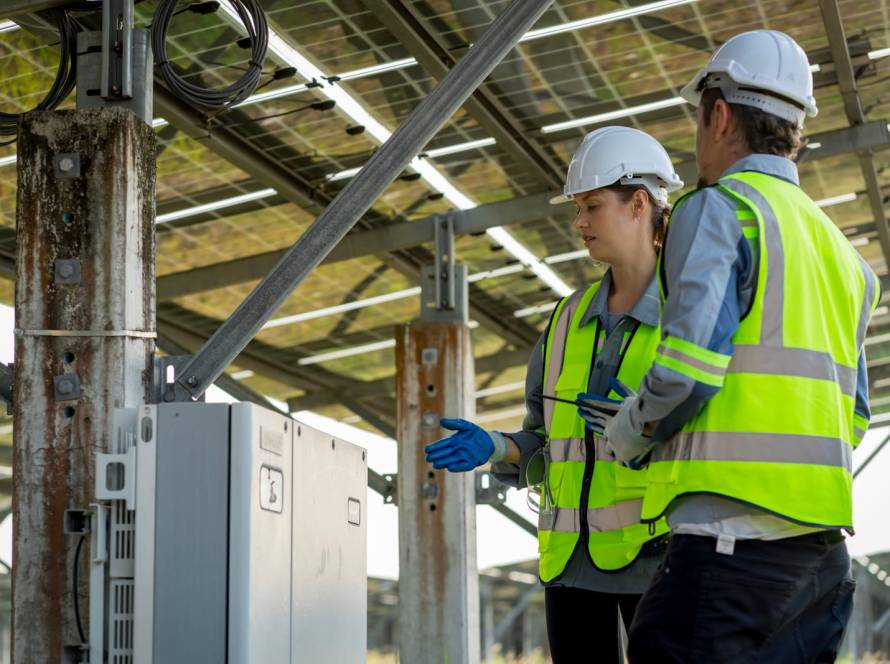
Cleaning alone is not enough. A proper inspection should check the visible condition of the panels, the surrounding roof or ground area, and the parts of the system that support safe energy production. The goal is to catch early warning signs before they become expensive faults.
A useful inspection should include:
- Cracked, damaged or misaligned panels
- Loose fittings, clamps or mounting components
- Dirt, bird droppings, leaves and water marks
- New shading from trees, buildings or equipment
- Signs of animal nesting under or around panels
- Corrosion on racking, frames or enclosures
- Loose, hanging or damaged cabling
- Water pooling on rooftops or around ground-mounted systems
- Inverter alerts, unusual readings or recorded faults
- Damaged isolators, breakers, junction boxes or seals
Good PV panel maintenance also includes professional electrical checks. A qualified technician can assess wiring, earthing, inverter performance, junction boxes, fuses, isolators and system output in a way that a visual inspection cannot.
Why Professional Maintenance Is Often The Better Option
The more complex the system, the more valuable professional support becomes. Commercial and industrial solar PV systems are not just panels on a roof. They are energy assets connected to daily operations, production schedules, cost control and resilience planning. If performance slips by even a few percentage points, the financial impact can become meaningful across a large system.
There is also a safety case. Working at height is risky, and electrical work requires the right training. A professional maintenance team can clean panels safely, check components, identify early faults and confirm whether the system is still operating as designed. That reduces risk for staff and helps protect the system owner from avoidable downtime.
Professional support also helps with long-term planning. Global PV guidance highlights that lifetime energy yield, degradation and system-specific operating conditions all influence profitability. This is why PV panel maintenance should be treated as part of asset management, not as an occasional cleaning task.
How Eversolar Supports Long-Term Solar Performance
At Eversolar, we provide end-to-end renewable energy solutions for large energy users across commercial, industrial, agricultural, mining, property and REIT environments. Our work covers Solar PV systems, Battery Energy Storage Systems, turnkey EPC delivery, renewable energy wheeling and flexible funding models, including Power Purchase Agreements and Rent-To-Own options.
Our long-term support includes:
- Site-specific system design based on real load profiles
- Feasibility assessments and structured project delivery
- Premium component sourcing and quality control
- Professional installation, commissioning and handover
- Remote performance monitoring
- Preventive maintenance
- Rapid technical support
- System optimisation over the asset lifecycle
Through our approach to PV panel maintenance, we help clients protect energy production long after commissioning. We understand that every site has different operating pressures, which is why we tailor support to the realities of the facility, the sector and the long-term performance goals.
Building A Practical Pv Panel Maintenance Routine
A strong maintenance routine should include three layers: inspection, cleaning and professional servicing. Inspections can happen quarterly, especially for systems exposed to dust, birds, trees, wind or industrial activity. Cleaning can be scheduled once or twice a year as a baseline, then increased where site conditions demand it.
Professional servicing should happen at least annually for most systems, with more frequent technical checks for complex commercial or high-demand installations. This should include panel condition, mounting stability, cabling, earthing, inverter performance, junction boxes, seals, breakers, fuse boxes and isolators. The aim is to protect both energy output and electrical safety.
Performance monitoring completes the routine. If output drops suddenly or declines gradually without a clear reason, cleaning or technical inspection may be needed. The best PV panel maintenance plans are proactive. They prevent small issues from turning into lost production, avoidable repair costs and reduced asset value.
Clean Panels for Clean Energy
Dirty solar panels can quietly reduce output, increase energy costs and weaken the return on a solar investment. A proper PV panel maintenance routine helps prevent these hidden losses by keeping panels clean, checking system health and using performance data to guide action.
For businesses, solar is long-term energy infrastructure, not a once-off installation. At Eversolar, we design, deliver, monitor and support systems built for real operating conditions. Get in touch with us to protect your solar investment, improve long-term performance and explore the right maintenance and energy solution for your site.
FAQs
How often should solar PV panels be maintained?
Solar PV panels should be visually inspected every few months and cleaned at least once or twice a year, depending on the site. Dry, dusty, agricultural or industrial areas may need more frequent cleaning because dirt builds up faster and rain may not be enough to wash it away. Larger commercial systems should also have scheduled professional servicing to check electrical components, mounting structures, cabling, inverters and system performance. A good PV panel maintenance routine combines visual checks, cleaning and performance monitoring so issues are identified early rather than after output has already dropped.
Can rain clean solar panels properly?
Rain can help remove light dust, especially when panels are installed at a good tilt, but it should not be treated as a complete cleaning solution. Bird droppings, pollen, sticky grime, pollution residue and leaves often remain after rainfall. Flat or low-angle panels can also hold water, which may leave behind dirt and mineral marks once it evaporates. This is why regular PV panel maintenance is still important, even in rainy regions. Panels should be checked visually and cleaned when there is visible build-up or a noticeable drop in electricity production.
What happens if solar panels are not cleaned?
If solar panels are not cleaned, dirt and debris can block sunlight from reaching the photovoltaic cells, reducing energy output and weakening the system’s return on investment. In some cases, localised shading from bird droppings or debris can contribute to hotspots, where affected cells become hotter than the rest of the panel. Long-term neglect may also increase the risk of corrosion, water-related issues and avoidable component wear. Proper PV panel maintenance helps prevent these problems by keeping panels clear, supporting consistent performance and protecting the system’s long-term value.
Can I clean solar PV panels myself?
Small residential systems can sometimes be cleaned by the owner using safe, gentle methods, but only if the panels are easy to access and there is no safety risk. Use clean water, a soft brush or sponge, and avoid abrasive materials, harsh chemicals and high-pressure washers. Panels should be cleaned when cool, usually early in the morning or late afternoon. However, rooftop systems, commercial installations and systems with electrical or access risks should be handled by professionals. Safe PV panel maintenance is not only about cleaning well, but also avoiding falls, damage and electrical hazards.
What should professional PV panel maintenance include?
Professional PV panel maintenance should include more than surface cleaning. A technician should inspect the panels for cracks, dirt build-up, loose fittings, misalignment, shading and signs of animal activity. They should also check mounting structures, wiring, earthing, isolators, breakers, junction boxes, seals and inverter performance. For commercial systems, performance monitoring is especially important because it helps identify output drops, faults or underperforming sections of the system. A proper maintenance visit should leave the system cleaner, safer and better understood, with any issues identified before they become expensive operational problems.