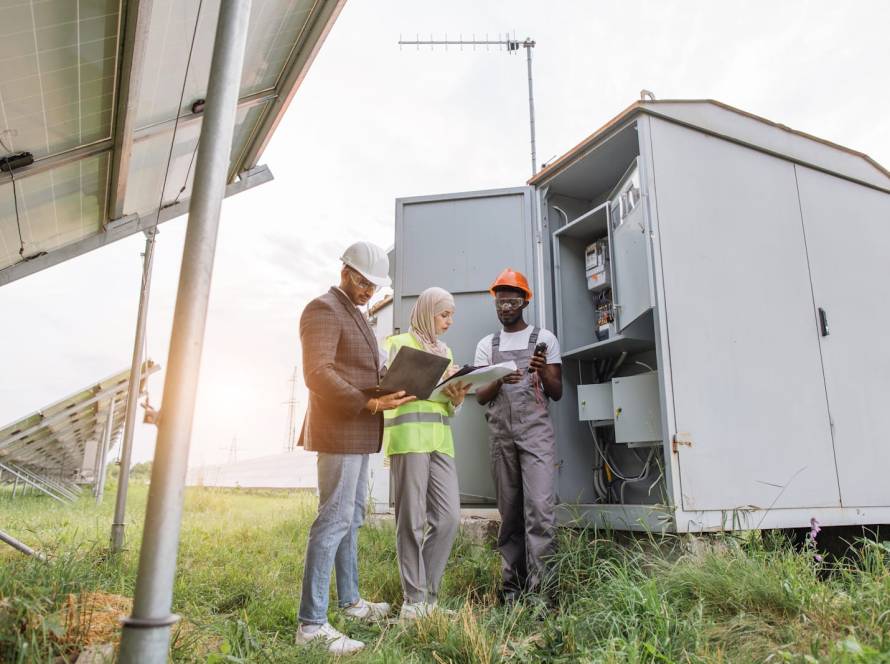
For businesses that want to reduce grid dependence without funding an entire solar installation upfront, Rent-to-Own solar can offer a useful middle ground. The model allows a company to install commercial Solar PV, make structured payments over an agreed term and ultimately take ownership of the system. This approach has become increasingly relevant as South African organisations look for ways to control electricity expenditure while protecting working capital.
Solar adoption is already well established in the country. South Africa’s installed Solar PV capacity reached approximately 8.97 GW in 2024, with around 6.1 GW coming from private-sector projects. Rent-to-own will not automatically be the right solution for every business, however. Its value depends on the total financing cost, expected energy savings, ownership conditions, system design and long-term maintenance requirements.
How Does Rent-to-Own Solar Work?
A Rent-to-Own solar project normally starts with a detailed assessment of the site’s electricity use. Consumption patterns, operating hours, available installation space, grid connection and peak demand all influence the system design. This matters because commercial energy requirements can vary considerably between a warehouse, manufacturing plant, mine, agricultural operation or shopping centre.
The provider then designs and installs the appropriate system, which may be grid-tied or combine Solar PV with battery storage. Instead of paying the full capital cost immediately, the business makes agreed payments over a fixed period. Ownership transfers according to the terms specified in the contract once the relevant payment obligations have been completed.
This financing model is appearing alongside substantial growth in private generation. By September 2024, registered Solar PV projects in South Africa had exceeded 6 GW, accounting for 63% of registered private-generation capacity at that point. That growth shows why businesses should increasingly consider both the technical and financial structure of solar projects rather than treating renewable energy as a simple equipment purchase.
Why Can Rent-to-Own Solar Make Sense for Businesses?
The biggest attraction of Rent-to-Own solar is usually capital preservation. Large commercial and industrial installations can require significant upfront investment, particularly when Solar PV is combined with battery storage. Paying for the entire project immediately can provide strong lifetime economics, but it may also divert funds away from expansion, new equipment, stock, staffing or other operational priorities.
A rent-to-own structure spreads this expenditure across an agreed period while allowing the business to start using solar electricity once the system becomes operational. Potential advantages include:
- Reduced upfront capital requirements
- Predictable scheduled payments
- A defined route towards system ownership
- Immediate access to solar-generated electricity
- Lower dependence on grid electricity
- The option to incorporate battery storage
- Greater ability to preserve working capital
- Access to ongoing technical support where included
These benefits make rent-to-own particularly useful when a company wants to own its energy infrastructure eventually but would prefer not to make a large capital commitment today. Unlike a straightforward rental arrangement, ownership remains an important part of the long-term financial case.
The business should still compare the complete cost of the agreement with expected electricity savings and the cost of alternative financing structures. A manageable monthly payment does not automatically mean a project offers good value. Decision-makers need to understand what will have been paid by the time ownership transfers and what the system is expected to save throughout its remaining operating life.
Does Rent-to-Own Solar Protect Businesses From Rising Electricity Costs?
Reducing electricity purchased from the grid can help businesses limit their exposure to tariff increases. Eskom direct-customer electricity tariffs rose by an average of 12.74% from April 2025, while municipal bulk tariffs increased by an average of 11.32% from July that year. These increases can materially affect energy-intensive operations where electricity represents a substantial recurring cost.
Further increases followed. The national energy regulator approved an average 8.76% increase for directly supplied customers from April 2026 and 9.01% for municipal customers from July 2026. Producing electricity on site therefore gives businesses a way to reduce the proportion of their consumption exposed to future grid-price movements, particularly when daytime demand aligns closely with solar generation.
Rent-to-own can add another element of predictability because the project cost is distributed across structured payments. However, businesses should check whether those payments escalate during the contract. A financial model should compare projected grid costs, solar generation, financing payments and expected savings throughout the full agreement rather than relying on a simple first-year comparison.
How Does Rent-to-Own Compare With Buying Solar Outright?
An outright purchase gives the business immediate ownership of the Solar PV infrastructure. There are no rental payments once the initial investment has been made, meaning the organisation can potentially capture more of the project’s lifetime financial benefit. It also has direct control over the asset from the start.
Rent-to-own changes the timing of that expenditure. Important differences include:
- Upfront cost: Outright purchasing requires substantially more capital initially.
- Ownership: A purchased system belongs to the business immediately.
- Cash flow: Rent-to-own distributes expenditure across a defined period.
- Lifetime cost: Financing can increase the total amount paid for the system.
- Capital flexibility: Rent-to-own allows funds to remain available for other business priorities.
- Asset control: Full ownership arrives later under a rent-to-own arrangement.
- Maintenance: Responsibilities depend on the individual agreement and should be checked carefully.
Lifetime value is especially important because Solar PV is a long-term asset. Research into module reliability indicates that modern modules may operate for 30 to 40 years, although annual output commonly declines by roughly 0.5% to 1% as equipment ages. A system can therefore continue generating useful electricity long after a typical financing period has ended.
This is why businesses should not make the decision based only on the cost of the first few years. Outright purchasing may generate the stronger lifetime return where capital is readily available, while rent-to-own may be more appropriate when conserving cash has greater strategic value. The better option depends on both energy economics and the organisation’s wider financial priorities.
How Is Rent-to-Own Different From a Power Purchase Agreement?
Both models can reduce the upfront cost of commercial solar, but they achieve this in different ways. Rent-to-own is fundamentally a route towards owning the infrastructure. A Power Purchase Agreement, or PPA, is primarily an arrangement for purchasing the electricity generated by a system funded and operated under a separate financing structure.
The differences typically include:
- Rent-to-own: The business makes structured payments towards eventual ownership.
- PPA: The business purchases electricity generated by the solar installation.
- Asset ownership: Ownership is central to rent-to-own but not necessarily to a PPA.
- Payments: Rent-to-own payments relate to the system, while PPA payments relate mainly to energy consumed.
- Operations: Maintenance and operation are generally incorporated into a PPA structure.
- Long-term objective: Rent-to-own suits organisations that ultimately want the solar asset on their balance sheet.
The distinction matters because the best choice depends on what the organisation wants to achieve. A business may prefer a PPA if its primary objective is obtaining renewable electricity with minimal capital expenditure and limited responsibility for managing the asset.
Rent-to-own may make more sense when eventual ownership is strategically important. After the agreement ends and ownership transfers, the company can continue receiving electricity from the asset without continuing the same financing payments. Businesses should therefore consider what they want their energy position to look like five, ten or twenty years from now, not only what reduces expenditure today.
What Should Businesses Check Before Signing a Rent-to-Own Agreement?
Contract terms can materially change the value of a rent-to-own project. Decision-makers should confirm the length of the financing period, monthly payment, annual escalation, total amount payable and exact point at which ownership transfers. They should also establish whether there is a final settlement amount and what happens if the company wants to settle the agreement early.
These questions matter in a market where private investment in solar is already substantial. Private-sector projects represented roughly 6.1 GW of South Africa’s 8.97 GW of installed Solar PV capacity in 2024. As commercial solar becomes more common, businesses have greater reason to assess financing agreements with the same care they would apply to other major infrastructure investments.
Technical due diligence is just as important as reviewing the contract. The proposed system should be based on verified consumption data and realistic generation estimates. Equipment warranties, insurance responsibilities, maintenance obligations, performance monitoring, system downtime procedures and corrective-maintenance arrangements should all be established before signing.
How Important Are Maintenance and Technical Support?
Solar systems are designed for long operating lives, which makes maintenance important to the project’s financial performance. Even high-quality modules gradually lose some output over time, with research indicating typical degradation of around 0.5% to 1% each year. Maintaining the rest of the system properly helps ensure avoidable faults do not compound this normal decline.
Preventative maintenance can include checking panels, inverters, electrical connections, mounting structures and batteries where applicable. Monitoring helps identify abnormal performance before it develops into a larger problem, while corrective maintenance deals with equipment faults and other issues that require intervention.
Businesses should therefore establish exactly what technical support is included throughout a rent-to-own term. Maintenance, monitoring, warranty management and responsive fault handling all add value because solar savings depend on the system actually being available to generate electricity. A slightly cheaper agreement can prove more expensive over time if poor maintenance leads to extended downtime or persistent underperformance.
When Does Battery Storage Improve a Rent-to-Own Solar System?
Battery Energy Storage Systems can make commercial solar more flexible by storing electricity for use outside periods of immediate solar generation. This may be particularly valuable for businesses that operate into the evening, experience grid interruptions or have critical loads that cannot tolerate sudden power loss.
Battery storage may provide benefits such as:
- Backup electricity during grid failures
- Greater use of solar energy outside daylight hours
- Support for critical business loads
- Reduced reliance on diesel generation
- More sophisticated peak-demand management
- Improved operational resilience
- Greater control over when stored electricity is consumed
The case for resilience remains relevant even though national electricity performance has improved. Eskom’s energy availability factor increased from 54.6% in 2024 to approximately 60.6% in 2025, and the utility recorded 310 consecutive days without load shedding between March 2024 and January 2025. Improved grid performance reduces some short-term pressure, but individual businesses still need to assess the financial consequences of interruptions at their own sites.
Battery storage should therefore solve a clearly defined business problem. Adding excessive capacity can make a rent-to-own project unnecessarily expensive. A proper assessment should determine critical loads, operating hours, outage risk and the value of stored energy before establishing whether Solar PV alone or an integrated PV and BESS system offers the better return.
Which Businesses Benefit Most From Rent-to-Own Solar?
Rent-to-own is particularly relevant for organisations with consistent electricity demand and limited appetite for large upfront capital expenditure. Manufacturing facilities, warehouses, shopping centres and other commercial properties often consume substantial electricity during daylight hours, allowing a well-sized Solar PV system to offset grid consumption while it is actively generating.
The scale of private-sector adoption suggests that this opportunity extends well beyond one industry. South Africa had about 8.97 GW of installed Solar PV capacity in 2024, an increase of 11.9% from the previous level, with the majority coming from private-sector projects. Solar has consequently become a significant energy strategy for commercial, industrial and other privately funded operations.
Agriculture, mining and developments in less reliable grid areas may place additional value on resilience. Battery storage can strengthen that case when downtime affects production, refrigeration, pumping or other critical processes. Rent-to-own is most attractive where the organisation has a strong technical case for solar but prefers to spread the capital cost while working towards ownership.
How Should Businesses Measure Whether Rent-to-Own Solar Is Worth It?
The assessment should begin with actual electricity data rather than estimated savings. At minimum, businesses should analyse annual consumption, monthly bills, time-of-use tariffs, peak demand and the amount of solar electricity likely to be consumed directly on site. A feasibility model can then compare expected grid savings with the full cost of the rent-to-own agreement.
Tariff assumptions deserve particular attention. Average direct electricity tariffs increased by 12.74% in 2025 and another 8.76% in 2026. Future increases cannot be assumed to follow exactly the same pattern, but these figures demonstrate why energy-cost escalation can materially influence commercial solar economics.
Businesses should also evaluate less obvious forms of value. Reduced grid dependence, improved resilience, predictable energy expenditure and progress towards sustainability targets can all support the investment case. The final decision should combine total lifetime cost, expected savings, operational benefits, financing terms and the value of owning the asset after the payment period.
Why You Should Partner With Eversolar
At Eversolar, we design and deliver full-service renewable energy solutions for commercial, industrial, agricultural, mining, property development and other energy-intensive environments. We begin with feasibility and consumption analysis before designing an appropriate grid-tied, hybrid or off-grid solution using Solar PV and Battery Energy Storage Systems where required.
Our capabilities include:
- Energy and site feasibility assessments
- Solar PV and BESS system design
- Engineering, procurement and construction
- Project commissioning and handover
- Rent-to-Own solar financing
- Power Purchase Agreements
- Outright-purchase options
- Remote system monitoring
- Preventative and corrective maintenance
- System optimisation, upgrades and expansion
- Long-term technical support
We also manage solar projects through a structured EPC process covering engineering, procurement and construction. Our project controls include technical verification, commercial compliance, formal project records and management approval, helping us maintain accountability from initial design through commissioning.
Our involvement continues after the installation has been completed. We provide monitoring, preventative maintenance, corrective maintenance and technical support to protect system performance throughout its operating life. Combined with flexible financing options, this means we can help businesses address the financial, technical and operational sides of commercial solar through one coordinated solution.
Is Rent-to-Own Solar Worth It?
Rent-to-Own solar can be worth considering for South African businesses that want to own renewable energy infrastructure without committing the entire capital cost upfront. With private-sector solar accounting for roughly 6.1 GW of South Africa’s installed PV capacity in 2024, businesses are increasingly treating on-site generation as part of long-term energy planning rather than simply as protection against load shedding.
The right answer depends on the site’s consumption profile, financing terms, expected savings and long-term objectives. At Eversolar, we can assess these factors, design an appropriate Solar PV and BESS solution and help structure a financing approach suited to the business. Get in touch with us to discuss your energy requirements and find out whether Rent-to-Own solar makes sense for your operation.
FAQs About Rent-To-Own Solar
Is Rent-To-Own Solar Cheaper Than Buying a Solar System Outright?
Rent-to-Own solar can reduce upfront pressure on cash flow, but it is not automatically cheaper than buying a system outright. The main benefit is financial flexibility. Businesses can spread the cost over several years while reducing grid electricity consumption from the start. This may help preserve capital for expansion, equipment, staffing or other operational priorities. The financial case depends on system size, electricity consumption, tariff savings, contract length and repayment structure. A business should compare total payments over the full agreement with projected electricity savings and the expected value of owning the system once the financing period has ended financially.
What Is the Difference Between Rent-To-Own Solar and a Power Purchase Agreement?
Rent-to-Own solar and a Power Purchase Agreement both reduce the need for large upfront capital, but they work differently. With rent-to-own, the business makes structured payments towards eventual ownership of the solar system. Under a Power Purchase Agreement, the provider generally funds, owns and operates the system while the business purchases the electricity it generates at an agreed tariff. Rent-to-own may suit companies that want the solar asset on their balance sheet later. A Power Purchase Agreement may suit businesses focused mainly on accessing renewable electricity without taking responsibility for owning the equipment during the contract period in practice today.
Can Battery Storage Be Included in a Rent-To-Own Solar Agreement?
Yes, battery storage can be included in a Rent-to-Own solar project where the business needs backup power, greater energy independence or more control over when solar energy is used. Battery Energy Storage Systems can store surplus electricity for use during outages, after sunset or during expensive peak periods. However, batteries increase project cost, so they should solve a defined operational problem. Businesses should assess critical loads, operating hours, outage risk and energy tariffs before deciding on storage capacity. A properly sized battery system can improve resilience, but oversized storage may weaken the overall financial case for the project over time.
What Should Businesses Look for in a Rent-To-Own Solar Provider?
Before choosing a Rent-to-Own solar provider, businesses should assess both the financing agreement and the technical quality of the proposed system. Important questions include the total amount payable, annual escalation, contract length, ownership transfer conditions, early settlement terms and maintenance responsibilities. The provider should also explain how the system was sized, what equipment will be installed, how performance will be monitored and what support is available if faults occur. Businesses should favour providers that can handle feasibility, engineering, procurement, construction, commissioning and long-term maintenance. This creates clearer accountability and reduces the risk of gaps between financing, installation and support afterwards.
How Does Rent-To-Own Solar Work for South African Businesses?
Rent-to-Own solar allows a business to install a commercial solar system without paying the full capital cost upfront. Instead, the business makes structured payments over an agreed term while using the electricity generated by the system. Ownership usually transfers to the business once the contractual payment obligations have been completed. The arrangement can include Solar PV, battery storage, monitoring and maintenance, depending on the provider. It can suit businesses that want to preserve working capital while still investing in long-term energy infrastructure. Before signing, compare the total repayment amount, escalation clauses, maintenance responsibilities and final ownership conditions carefully before committing.