Reliable electricity supports production, communication, refrigeration, security and almost every other commercial activity. However, energy security for South African businesses involves more than keeping the lights on. It also requires sufficient capacity, manageable costs, acceptable power quality and a practical plan for responding to supply interruptions.
Even when the wider electricity system is stable, individual sites can experience local network failures, damaged infrastructure, voltage problems or connection constraints. Businesses must therefore understand their own consumption patterns and operational risks rather than relying entirely on general assessments of the electricity system.
Understanding Business Energy Security
Energy security is the ability to access sufficient, reliable and suitable energy whenever commercial operations require it. A secure supply must support the organisation’s equipment and operating schedule without exposing it to unacceptable costs, frequent interruptions or damaging fluctuations.
Reliability, affordability, power quality and capacity are closely connected. A facility may have uninterrupted electricity but still face poor energy security if its supply is too expensive or cannot support new machinery. Similarly, backup equipment provides limited value if it cannot carry essential loads or has not been maintained correctly.
Why Energy Security for South African Businesses Still Matters
South Africa’s broader electricity supply has improved, but commercial sites remain exposed to local distribution problems. Transformer failures, damaged cables, overloaded feeders and planned maintenance can interrupt one area even when sufficient national generation is available.
The effects often extend beyond the duration of the outage itself. Production equipment may need to be restarted, refrigerated materials may require inspection and computer systems may need to be checked before normal work resumes. Customer orders, employee productivity and service delivery can also be affected, making electricity reliability a wider operational concern.
- Operational interruptions: Electricity failures can stop production lines, processing equipment, refrigeration systems and other essential infrastructure. Restarting these systems may require inspections, recalibration or additional labour before normal operations can resume.
- Equipment vulnerability: Voltage fluctuations, sudden interruptions and repeated switching can affect sensitive electronics, motors and automated controls. Damage may not always be immediately visible, but it can reduce equipment reliability or shorten its operational life.
- Unpredictable operating costs: Electricity tariffs, maximum-demand charges, generator fuel and unplanned repairs can make expenses difficult to forecast. A more secure energy strategy helps businesses understand and manage these costs more effectively.
- Local infrastructure risks: A stable national electricity supply does not prevent failures within local distribution networks. Damaged cables, transformer problems and overloaded feeders can leave an individual facility without electricity.
- Business continuity requirements: Some operations cannot stop without risking stock, safety, contractual commitments or customer relationships. These facilities require a clear understanding of which systems must remain active during a disruption.
Energy planning allows a business to examine these risks before an interruption occurs. It can then decide whether efficiency improvements, solar generation, battery storage, generators or a combination of technologies would provide the most appropriate protection.
The objective is not necessarily to eliminate every possible electricity risk. Instead, the organisation should reduce its most serious vulnerabilities to an acceptable level while keeping the solution technically practical and financially sustainable.
Assessing a Business’s Energy Requirements
An energy assessment should begin with electricity bills, meter readings, operating schedules and equipment information. Reviewing a complete annual cycle can reveal seasonal changes, periods of high consumption and differences between weekday, weekend and overnight demand.
Consumption and maximum demand must be considered separately. Consumption shows how much electricity the site uses over time, while demand indicates how much power is required at a particular moment. Large motors, pumps, compressors and cooling systems may create brief but important demand peaks when they start.
Identifying Essential Loads for Energy Security for South African Businesses
Not every electrical circuit needs to remain active during an interruption. Separating essential and non-essential loads can reduce the amount of backup capacity required while protecting the activities that matter most to the organisation.
Essential loads may include security systems, servers, production controls, refrigeration, emergency lighting, communication equipment and critical pumps. Other loads may be delayed or temporarily disconnected. The classification must reflect the facility because equipment considered optional in one workplace may be critical in another.
Improving Efficiency Before Adding Capacity
Energy efficiency can reduce operating costs and prevent unnecessary investment in oversized equipment. Inefficient lighting, motors, cooling systems and compressed-air equipment increase the amount of electricity that must be purchased, generated or stored.
The assessment should examine equipment schedules, standby consumption, temperature settings, compressed-air leaks and opportunities to move flexible processes to more suitable periods. Verified meter data can then show whether the improvements have reduced consumption and demand as expected.
- Review lighting systems: Replacing inefficient lighting and improving lighting controls can reduce unnecessary consumption. Occupancy sensors, timers and clearly defined operating schedules may prevent lights from remaining active in unused areas.
- Assess motors and machinery: Motors, pumps and production equipment should be checked for inefficient operation, incorrect sizing and unnecessary run time. Maintenance problems can also cause machinery to consume more electricity than expected.
- Investigate heating and cooling: Poor temperature controls, damaged insulation and unsuitable operating schedules can increase the load created by cooling and heating systems. Correcting these issues may reduce both total consumption and peak demand.
- Find compressed-air losses: Leaks within compressed-air systems can cause compressors to operate more frequently and consume unnecessary electricity. Regular inspections and repairs can improve efficiency without affecting production output.
- Manage standby consumption: Equipment left active outside operating hours can create a significant overnight or weekend baseload. Businesses should determine which systems must remain available and which can be switched off safely.
Efficiency improvements should be measured after implementation to confirm that they are delivering the expected results. Meter readings and updated consumption profiles can reveal whether additional adjustments are required.
Reducing the load before designing new infrastructure can improve the overall project. The business may require fewer solar panels, less battery capacity or a smaller generator, helping to lower capital expenditure and future maintenance requirements.
The Role of Commercial Solar Power
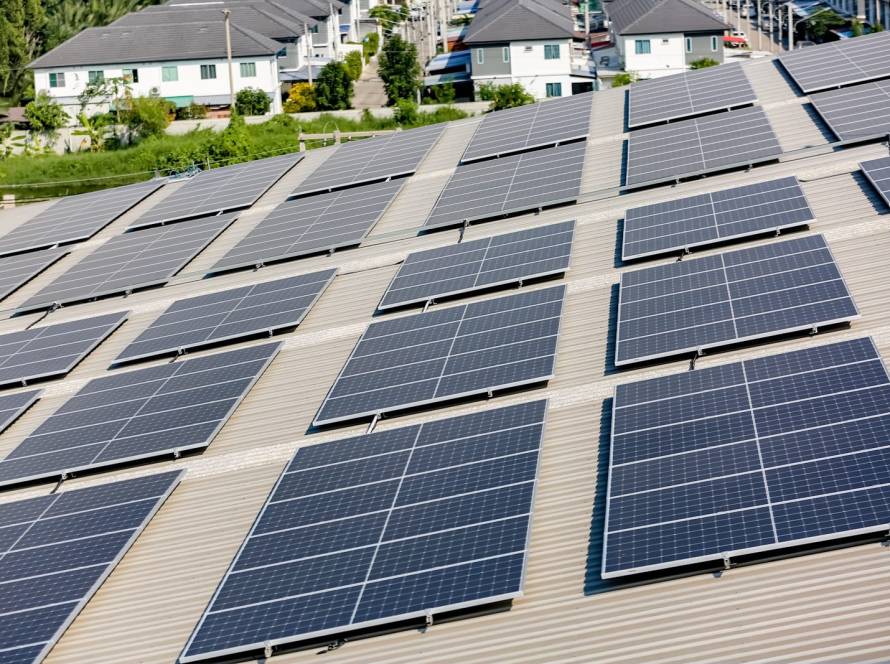
Commercial solar panels generate electricity at the site where it is consumed. They can reduce daytime grid purchases and provide greater cost predictability, particularly for facilities with steady electricity use during daylight hours.
For energy security for South African businesses, solar must be designed around the actual load profile rather than available roof space alone. Structural suitability, shading, panel orientation, electrical protection and future growth must all be considered. A conventional grid-tied system also requires appropriate backup architecture if it is expected to operate during a grid interruption.
Using Battery Storage Effectively
Battery energy storage can supply essential equipment during an interruption, store excess solar generation and reduce short-duration demand peaks. It may also shift electricity consumption away from more expensive tariff periods where the applicable tariff structure supports this approach.
Battery size should not be considered in isolation. Usable capacity, inverter output, charging time, starting currents and expected backup duration all influence performance. A battery selected for brief peak management may not have enough stored energy to support operations through a prolonged outage.
Managing Costs Through Energy Security for South African Businesses
Electricity affordability is an essential part of a secure energy strategy. Businesses should examine energy charges, capacity charges, maximum-demand charges, fixed fees and time-of-use periods instead of evaluating projects against a single electricity rate.
Solar generation, battery storage and load shifting can create different types of savings. Their value depends on when the organisation consumes electricity and how it is billed. Calculations should therefore use the current tariff applying to the individual site, together with verified consumption and demand data.
- Reduce daytime grid purchases: Commercial solar generation can supply part of a facility’s daytime demand. The greatest value is generally achieved when the business can consume the generated electricity directly.
- Manage maximum demand: High short-term demand can influence electricity costs under applicable commercial tariffs. Battery storage, equipment scheduling and controlled load reduction may help limit these peaks.
- Shift flexible loads: Some processes can be scheduled for more suitable tariff periods without affecting production. The opportunity depends on operating requirements, equipment limitations and the tariff applying to the site.
- Consider lifecycle costs: Project comparisons should include maintenance, component replacement, financing and expected equipment life. A low initial price does not necessarily produce the best long-term value.
- Monitor actual performance: Generation, consumption and demand data should be compared with the original financial model. This allows the business to identify deviations and optimise the system after commissioning.
Cost management should not compromise operational requirements. Aggressively limiting demand may create production delays, while discharging a battery solely for short-term savings could leave insufficient stored energy for an interruption.
A balanced strategy assigns clear priorities to savings, backup power and operational continuity. These priorities can then guide equipment sizing, control settings and decisions about when stored energy should be used.
Backup Generators and Fuel Security
Generators can support large loads or extended interruptions that would otherwise require substantial battery capacity. They may be especially useful for facilities that cannot stop safely or that have limited space for on-site solar generation.
A generator only contributes to reliability if its wider operating requirements are managed. Fuel availability, safe storage, start-up time, changeover controls, ventilation, exhaust positioning and maintenance all require attention. Regular testing under an appropriate load can reveal faults before emergency operation becomes necessary.
Protecting Equipment From Poor Power Quality
An electricity supply can remain available while still creating problems for sensitive equipment. Voltage dips, surges, phase imbalance, harmonics and repeated switching can interrupt production controls, electronic systems and specialised machinery.
Suitable protection may include surge protection, voltage monitoring, uninterruptible power supplies, correct earthing and coordinated protection devices. Effective energy security for South African businesses should therefore consider the quality of the electricity reaching equipment, not only whether electricity is present.
Creating a Hybrid Energy System
A hybrid energy system combines suitable sources so that each performs the role for which it is best suited. Solar may serve daytime loads, batteries may respond immediately to short interruptions and generators may support operations when an outage continues beyond the available battery duration.
The components must be designed as one coordinated installation. Controls should determine when to use grid electricity, charge or discharge the battery, start the generator and disconnect non-essential loads. Separately selected equipment can create compatibility, protection and operating problems if the complete system is not considered from the beginning.
Planning for Extended Disruptions and Expansion
A business should decide whether backup power must support a safe shutdown, essential operations or full production. Each objective requires a different combination of power capacity, stored energy and fuel, so the desired continuity level must be defined before equipment is selected.
Future electricity demand also affects energy security for South African businesses. New machinery, facility extensions and commercial electric vehicle charging can change both consumption and maximum demand. Available grid capacity and potential system expansion should be investigated before the organisation commits to major growth plans.
- Define the required backup period: The organisation should determine how long essential systems need to operate without normal grid electricity. This may range from enough time for a safe shutdown to support for an extended operational period.
- Separate continuity levels: A safe shutdown, reduced operation and full production each require different levels of backup capacity. Defining the preferred level prevents unclear or unrealistic system requirements.
- Consider fuel requirements: Where generators form part of the continuity plan, the business should determine how much fuel can be stored safely and how additional supplies would be obtained during an extended interruption.
- Include planned equipment: New production lines, cooling systems, pumps and charging infrastructure can significantly alter the site’s load profile. These additions should be included in the energy model before installation.
- Allow for system expansion: Solar arrays, battery systems, inverters and electrical infrastructure should be assessed for future scalability. Expansion can become difficult if the original design leaves no physical or electrical capacity.
Planning should also consider how employees will respond when an interruption occurs. Responsible personnel, equipment priorities, shutdown procedures and internal communication arrangements should be documented and tested.
Expansion planning is equally important because energy infrastructure often remains in service for many years. Designing only for current demand may create avoidable replacement costs when the organisation adds new equipment or extends its operating hours.
Maintaining and Monitoring Energy Infrastructure
Solar panels, inverters, batteries, switchgear and generators require different inspection and maintenance routines. Equipment that remains unused for long periods can still fail when called upon, making preventative maintenance particularly important for backup systems.
Performance monitoring can identify declining solar production, unusual demand peaks, battery problems and recurring electrical faults. Maintenance records should document inspections, alarms, repairs and equipment testing so the business can confirm that its energy infrastructure remains ready for use.
Case Study: Exploring Energy Security for South African Businesses
A commercial solar company understood that energy security was becoming increasingly important to its clients. Although its team had strong knowledge of on-site generation, it wanted to improve its understanding of power quality, tariff exposure, critical-load planning and operational continuity. The company recognised that installing solar panels alone would not address every energy risk.
Its team performed a detailed review of commercial load profiles, current electricity tariffs, battery applications, generator integration and maintenance requirements. It examined how different facilities identify essential loads and compared the consequences of short interruptions with those of extended outages. The company then developed a structured assessment covering electricity bills, demand data, equipment starting currents, backup duration and planned growth.
The research confirmed that energy security must be incorporated from the earliest stage of a commercial project. The company updated its process to assess efficiency before system sizing, separate critical circuits and model different interruption scenarios. It also introduced clearer maintenance, monitoring and continuity-planning requirements so that every recommendation addressed both daily performance and long-term resilience.
Measuring the Business Case
The financial assessment should compare capital expenditure with electricity savings, demand management and the value of avoided downtime. It should also include financing, maintenance, fuel, battery replacement, equipment degradation, warranties and future expansion.
Several scenarios should be modelled because no single calculation captures every operating condition. Normal grid operation, short interruptions, extended outages, tariff changes and business growth may each produce a different financial outcome. Avoided downtime should also be separated from guaranteed savings because it depends on the frequency and duration of future disruptions.
Building Long-Term Energy Security for South African Businesses
An energy strategy should be reviewed whenever operating hours, equipment, tariffs or expansion plans change. A solution designed around an outdated load profile may become inefficient or insufficient as the organisation develops.
A strong long-term process begins with reliable data, critical-load identification and efficiency improvements. It then considers solar generation, battery storage, generators, power quality, monitoring and continuity procedures as parts of one connected system. This approach helps the business invest according to genuine operational requirements.
How Does Eversolar Help Promote Energy Security Through Its Services?
At Eversolar, we develop integrated Solar PV and battery energy storage projects for commercial and industrial facilities through a full EPC delivery model. Our grid-tied, off-grid and hybrid Solar PV systems provide reliable on-site generation, while our scalable BESS solutions help businesses secure backup power, reduce peak demand, manage energy charges, capture energy-arbitrage opportunities and strengthen operational continuity. We engineer each system around the site’s load profile, operating constraints and long-term objectives, using high-quality components selected to support consistent generation and lifecycle performance. Where installing panels at the point of use is unsuitable, our renewable energy wheeling offering enables businesses to access solar-generated electricity at remote facilities through existing energy networks.
Our turnkey EPC services cover feasibility assessments, site investigations, engineering, procurement, construction, commissioning and grid connection, allowing us to manage the complete project through to operational handover. We also offer financed solutions, including power purchase agreements and Rent-To-Own models, so clients can select an implementation structure suited to their financial objectives. After commissioning, our remote performance monitoring, preventative maintenance, rapid technical support and system optimisation services help sustain asset performance and identify problems requiring attention. This combination allows us to support the energy requirements of commercial, industrial, agricultural, mining, property development and REIT clients while strengthening cost predictability, resilience and long-term infrastructure value.
- Solar PV systems: Our grid-tied, off-grid and hybrid systems generate electricity at the point of use. Each configuration can be selected and engineered according to the client’s existing infrastructure, load profile and operational requirements.
- Battery energy storage: Our BESS solutions support backup power, peak-demand reduction, energy cost management and energy arbitrage. Scalable storage also gives clients greater flexibility when their operations or electricity requirements change.
- Turnkey EPC delivery: We manage feasibility assessment, engineering, procurement, construction, commissioning and grid connection. This end-to-end approach allows technical, operational and quality requirements to be considered throughout the project.
- Renewable energy wheeling: Our wheeling service enables businesses to access solar-generated electricity at remote facilities without installing panels directly at those sites. This provides another route to renewable energy adoption for suitable operations.
- Flexible implementation models: We offer CAPEX and financed options, including power purchase agreements and Rent-To-Own structures. These choices allow businesses to consider an energy project without relying on a single funding approach.
- Ongoing asset support: Our after-sales services include remote monitoring, preventative maintenance, rapid technical support and system optimisation. These services help systems maintain reliable performance beyond initial commissioning.
Our services are structured around the technical and operational requirements of each facility rather than a standardised equipment package. By assessing the site, engineering the system and managing implementation, we can align the energy infrastructure with the client’s immediate objectives and longer-term plans.
Our experience across commercial, industrial, agricultural, mining, property development and REIT environments also helps us account for different load patterns and continuity requirements. Combined with ongoing monitoring and maintenance, this supports infrastructure designed to deliver sustained value throughout its operational lifecycle.
Turning Energy Planning Into Operational Resilience
Achieving energy security for South African businesses requires more than purchasing backup equipment. Businesses need to understand when and how they consume electricity, which operations must continue and what different forms of disruption could cost them. The most suitable solution balances reliability, affordability, power quality and future capacity.
At Eversolar, we help commercial and industrial organisations assess their electricity requirements and develop appropriately designed energy solutions. Contact us to discuss how we can strengthen energy security for South African businesses while supporting cost management, operational continuity and long-term growth.
FAQs
What does energy security mean in South Africa?
Energy security in South Africa means having reliable, affordable and suitable electricity available when homes, businesses and services need it. It involves more than preventing load shedding. A secure energy system must provide sufficient generation, dependable transmission and distribution infrastructure, stable power quality and manageable electricity costs. For businesses, energy security also includes the ability to continue essential operations during local outages or equipment failures. This may require energy efficiency, commercial solar generation, battery storage, generators or a carefully designed hybrid system. The appropriate approach depends on each organisation’s consumption profile, operational priorities, location, budget and plans for future growth.
Why is energy security important for South African businesses?
Energy security is important because electricity interruptions and unpredictable costs can affect production, refrigeration, communication, security, customer service and employee productivity. Even when the national power system is stable, businesses may experience local outages caused by damaged cables, transformer failures, maintenance or overloaded infrastructure. Poor power quality can disrupt sensitive electronics and machinery without causing a complete outage. A practical energy strategy helps organisations identify essential loads, understand the cost of downtime and select suitable measures to improve resilience. It can support more predictable operating expenses, safer shutdown procedures and better planning for new equipment, facilities or longer operating hours.
How can businesses improve their energy security?
Businesses can improve energy security by analysing electricity bills, meter data, operating hours, maximum demand and seasonal consumption. They should identify which equipment must continue during an interruption and separate these essential loads from systems that can stop temporarily. Efficiency improvements can reduce the amount of power that must be generated or stored. Commercial solar can offset daytime grid use, while batteries may provide backup power, store solar generation or manage demand peaks. Generators can support longer disruptions where appropriate. Every component should be integrated, maintained regularly and supported by a documented continuity plan that employees understand and can implement.
How does commercial solar support energy security?
Commercial solar supports energy security by generating electricity at the facility, reducing the amount purchased from the grid during daylight hours. This can improve cost predictability and reduce exposure to interruptions when solar is combined with suitable backup architecture. Solar output varies according to sunlight, system size, shading and site conditions, so panels alone may not meet every continuity requirement. An engineered system should reflect the organisation’s load profile, available installation space and future electricity needs. Batteries, generators or grid electricity may complement solar generation, creating a hybrid solution capable of supporting essential operations under different supply and demand conditions.