Cold storage facilities need electricity around the clock. Refrigeration equipment, monitoring systems and controls must maintain stable temperatures long after normal working hours have ended. Choosing the right commercial solar solution therefore requires more than calculating how many solar panels will fit on a roof. The system must match actual energy consumption, refrigeration loads, operating hours, backup requirements and the financial consequences of losing power.
For many cold storage operations, hybrid solar provides the strongest balance between savings and resilience because it combines Solar PV with battery storage. However, grid-tied and off-grid systems can be more efficient in the right circumstances. The best choice depends on what the facility actually needs from its energy infrastructure, making detailed load analysis and careful system design essential.
Why Cold Storage Facilities Need a Different Solar Strategy
Cold storage has a demanding energy profile because refrigeration cannot simply stop when grid electricity becomes unavailable. Compressors, condensers, evaporators, pumps, fans and monitoring equipment may operate continuously or cycle throughout the day and night. This creates a relatively consistent electricity requirement that can make cold storage particularly suitable for onsite solar generation.
Electricity reliability also affects much more than productivity. Temperature changes can shorten shelf life, reduce food quality and potentially make stock unsuitable for sale. Across sub-Saharan Africa, as much as 40% of produce is lost each year because of inadequate storage, insufficient refrigeration and underdeveloped cold-chain infrastructure. Agriculture accounts for around one-third of regional GDP and employs more than 60% of the population, making reliable refrigeration economically important as well as operationally important.
Key factors that make cold storage solar different include:
- Refrigeration loads can continue 24 hours a day.
- Cooling requirements may increase significantly during hotter periods.
- Short outages can place temperature-sensitive products at risk.
- Compressors can create substantial peak electricity demand.
- Backup duration may need to cover several hours rather than minutes.
- Night-time refrigeration cannot use direct solar generation.
- Monitoring, alarms and temperature controls may require uninterrupted power.
- Future cold-room or processing expansion can increase electricity demand substantially.
These requirements mean solar should be designed around the refrigeration operation instead of added to the building as a separate energy-saving measure. Engineers need to understand when power is consumed, which refrigeration equipment is essential and how long critical loads must continue operating if grid electricity fails.
The right commercial solar solution should consequently reduce energy costs without introducing additional operational risk. A facility primarily concerned about daytime electricity expenditure may need a very different system from one that needs several hours of refrigeration backup. Defining those priorities early makes the system easier to size accurately.
Start With the Facility’s Actual Energy Load
A solar project should begin with measured consumption rather than assumptions about roof size or panel quantity. Energy assessments should examine total daily consumption, maximum demand, daytime and night-time loads, compressor cycling, seasonal variations and the effect of additional equipment. Cold storage operators should also consider how frequently refrigeration equipment reaches peak demand and whether these peaks coincide with expensive tariff periods.
South African businesses have a strong reason to understand these loads accurately. Average electricity tariffs for directly supplied customers increased by 12.74% in April 2025 and another 8.76% in April 2026. For an energy-intensive refrigeration facility, percentage increases of this scale can have a significant effect on annual operating expenditure.
Load analysis should also separate critical and non-critical equipment. Refrigeration compressors, temperature controls, alarms and monitoring systems may require continuous or backup electricity, while offices or non-essential equipment could potentially shut down during an outage. This distinction becomes particularly important when batteries are involved because supporting selected essential loads can require substantially less storage capacity than attempting to run an entire site.
When a Grid-Tied Commercial Solar Solution Makes Sense
A grid-tied commercial solar solution is usually the simplest option when the main objective is reducing electricity expenditure rather than creating independent backup power. Solar PV generates electricity during daylight hours, and the cold store consumes that power immediately. The grid supplies any difference when refrigeration demand exceeds solar production or solar generation falls.
Cold storage can suit this arrangement because refrigeration frequently creates substantial daytime consumption. The closer the site’s load follows solar production, the greater the opportunity to consume generation directly instead of depending on storage. Where regulations and utility arrangements permit, surplus electricity may also be exported to the grid.
A grid-tied system may be suitable when:
- The facility has high daytime electricity consumption.
- Reducing grid electricity costs is the main objective.
- Grid supply is reasonably reliable.
- Existing generators already provide acceptable backup.
- The business does not need solar power to operate during grid failures.
- Most solar generation can be consumed onsite.
- Battery storage does not yet provide a strong financial case.
The key limitation is that conventional grid-tied solar normally cannot provide independent power when utility electricity fails. Safety requirements generally require the system to disconnect from the grid during an outage. Refrigeration would therefore need another source of backup electricity if the facility cannot tolerate interruptions.
Operators should consequently view grid-tied solar primarily as an energy-cost strategy. It can deliver excellent value for cold stores with large daytime loads, but businesses requiring resilience should compare it against a hybrid system rather than assuming solar panels alone will keep cooling equipment operating during an outage.
Why Hybrid Solar Often Provides the Best Balance
Hybrid solar combines Solar PV with a Battery Energy Storage System. Instead of requiring every unit of solar electricity to be used immediately, the facility can store surplus generation and use it later. This creates greater flexibility for cold storage, where electricity demand continues after sunset and power interruptions can threaten stock.
Batteries can also perform functions beyond backup. They can discharge during periods of high demand to reduce peak charges and store lower-cost energy for use when electricity becomes more expensive. Battery technology has become considerably more economical over time. Industry data cited in current commercial-energy research shows average battery storage costs falling from approximately US$2,571 per kWh (R40,971 per kWh) in 2010 to US$192 per kWh (R3,061 per kWh) in 2024, a reduction of about 93%.
Hybrid solar can help cold storage facilities:
- Store excess daytime solar electricity for later use.
- Maintain selected refrigeration loads during outages.
- Reduce maximum grid demand through peak shaving.
- Use stored energy during higher-tariff periods.
- Increase the proportion of onsite solar generation actually consumed.
- Reduce generator usage and associated fuel consumption.
- Prioritise critical refrigeration and monitoring equipment.
- Scale storage capacity as operating requirements change.
The best hybrid systems do not necessarily back up every electrical circuit. Attempting to operate the entire facility for several hours can dramatically increase battery capacity and project cost. Identifying critical refrigeration equipment first allows storage to protect the loads that carry the greatest financial and operational risk.
This is why hybrid solar often represents the most versatile commercial solar solution for larger cold stores. Current commercial BESS applications already use storage for peak shaving, energy arbitrage, backup power and improved onsite solar utilisation, making the same infrastructure useful during normal operation as well as power interruptions.
Consider Off-Grid Solar for Remote Cold Storage
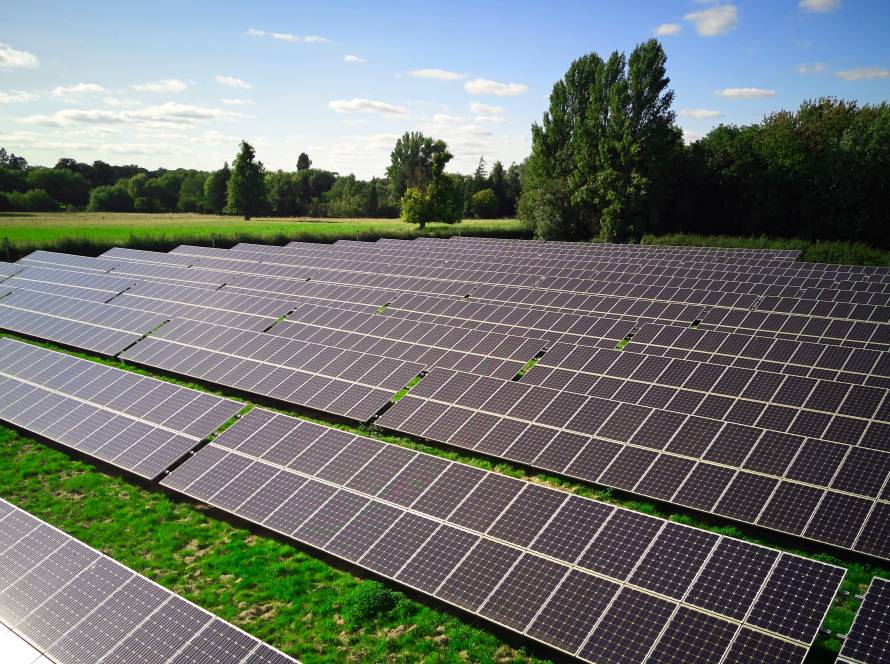
Off-grid solar becomes particularly relevant where reliable utility electricity is unavailable. Farms, agricultural processing sites, collection centres and rural cold rooms may otherwise depend heavily on diesel generation. Solar PV combined with adequate battery capacity can make refrigeration possible in locations where extending the electricity grid would be impractical or expensive.
Solar-powered refrigeration is already being used to address food-storage challenges in Africa. One documented cooling-as-a-service initiative reports extending produce shelf life by up to 21 days, giving farmers considerably more time to store harvested produce and find buyers. This matters in a region where inadequate cold-chain infrastructure contributes to post-harvest losses of up to 40%.
Off-grid system sizing needs to be conservative because there is no utility supply available when stored electricity becomes depleted. Designers must account for poor weather, seasonal solar variations, night-time refrigeration, peak compressor loads and required battery autonomy. Some sites may retain generators as secondary backup, creating a microgrid that combines several energy sources rather than relying entirely on one technology.
Use Battery Storage Where It Delivers Real Value
Battery storage should solve a clearly defined operational or financial problem. Installing the largest available system is rarely an efficient strategy. A cold store should first establish which equipment requires backup, how long that equipment must operate without grid supply and whether the battery will also be used for tariff optimisation or peak-demand management.
Rapid reductions in storage costs have made commercial batteries increasingly practical. The decline from approximately US$2,571/kWh in 2010 to US$192/kWh in 2024 illustrates why storage now receives much greater consideration in commercial energy projects. However, lower technology costs do not remove the need for correct sizing. A battery designed for two hours of essential cooling is fundamentally different from one expected to run an entire warehouse overnight.
Cold storage operators should therefore calculate the value created by each additional unit of battery capacity. Supporting refrigeration controls, alarms, temperature monitoring and selected compressors may protect stock without requiring full-site backup. This focused strategy can improve project economics while still delivering meaningful resilience.
Reduce the Cooling Load Before Oversizing Solar
The efficiency of the building itself directly influences how much electricity the refrigeration plant consumes. Heat entering through poorly insulated walls, ceilings, doors and joints forces cooling equipment to run harder and for longer. Improving thermal insulation and airtightness can therefore reduce electricity consumption before additional generating capacity is considered.
This approach has a compounding effect on solar design. A facility that reduces its base refrigeration load may subsequently require fewer panels, a smaller inverter and potentially less battery capacity. Reducing demand before increasing supply can therefore lower both operating costs and renewable-energy capital requirements.
The relationship is particularly important in cold storage because refrigeration often represents one of the dominant electrical loads. Efficient insulated panels, well-maintained door seals and controlled air infiltration help stabilise internal temperatures, reduce compressor cycling and limit unnecessary cooling demand. Pairing energy-efficiency improvements with Solar PV can consequently produce better results than treating the two projects independently.
Make Use of Available Roof Space Carefully
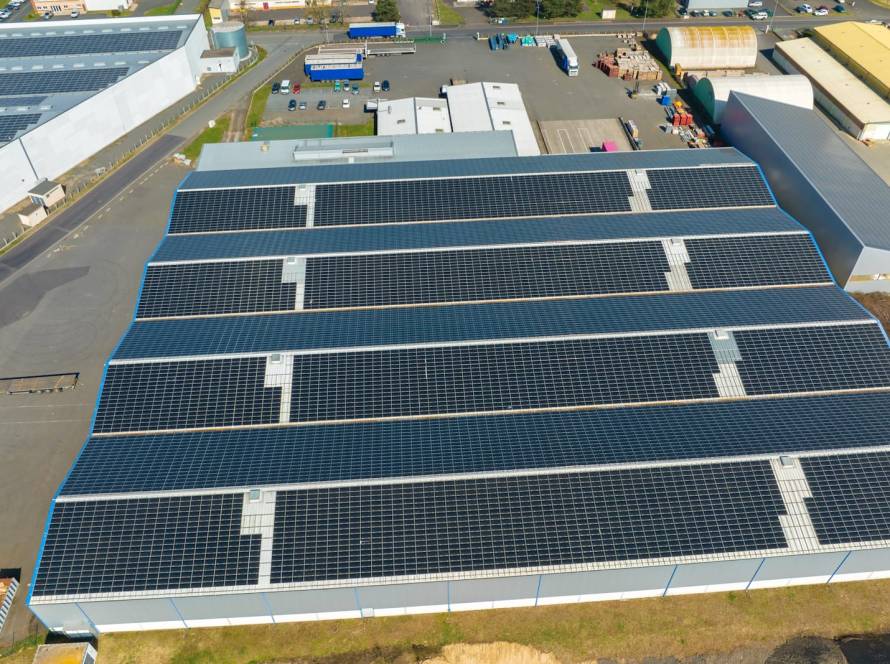
Cold warehouses frequently offer large roof areas, making rooftop PV an obvious consideration. However, available square metres should not dictate system capacity by themselves. Engineers need to assess structural strength, orientation, shading, drainage, access requirements and the condition of the existing roof before determining how much solar equipment can be installed safely.
Solar yield can also vary significantly according to installation conditions. One South African cold-chain example estimates that approximately 100 m² of panels on a suitably oriented roof in a location with strong sunshine could produce around 75 kWh per day on average. The actual result varies according to geography, panel performance, orientation, shading and system losses, which is why site-specific modelling remains important.
The site’s load profile must then be matched against expected generation. Covering every available section of roof can create periods where solar production exceeds what the cold store can consume. Unless that surplus can be stored or exported economically, additional panels may contribute less financial value than expected.
Plan for Future Expansion From the Beginning
Cold storage operations can expand significantly over the lifetime of a solar installation. Businesses may add new cold rooms, processing equipment, warehouse space or refrigeration capacity. Because Solar PV assets can operate for decades, designing only for present-day conditions can create costly limitations later.
Scalability is already a major design consideration in commercial and industrial solar. Current engineered systems can incorporate scalable PV and BESS architecture so that additional generation or storage can be added as operational demand increases. Eversolar, for example, designs industrial systems around load profiles, production requirements and expansion plans rather than treating current electricity consumption as the only design constraint.
Useful future-proofing measures include:
- Allowing electrical capacity for additional PV.
- Selecting appropriately scalable inverter architecture.
- Reserving suitable space for future battery equipment.
- Planning distribution boards with expansion in mind.
- Considering future refrigeration or processing loads.
- Protecting suitable roof or ground area for later solar arrays.
- Designing monitoring systems that can accommodate added capacity.
Planning for expansion does not mean installing unnecessary capacity immediately. Instead, the system should make later upgrades straightforward. This allows the business to align investment with actual growth while avoiding major redesign work each time electricity requirements change.
A phased strategy can be particularly useful for cold storage businesses with known expansion plans. Initial PV can reduce current grid consumption, while additional storage or generation can be installed later as refrigeration demand grows or the economics of battery storage become more attractive.
Look Beyond the Upfront Price of a Commercial Solar Solution
Solar projects should be evaluated on lifecycle value rather than initial installation price alone. Cold storage operators need to consider grid electricity savings, peak-demand reduction, diesel consumption, generator maintenance, maintenance costs and the potential financial consequences of lost refrigeration.
Commercial solar installations can have operating lives of 25 years or longer, meaning small differences in performance can accumulate into substantial financial differences over time. A cheaper system that produces less electricity, experiences frequent failures or requires early component replacement may ultimately cost more than a properly engineered project with higher initial capital expenditure.
South Africa’s electricity increases strengthen the argument for long-term modelling. Tariff increases of 12.74% in April 2025 followed by another 8.76% in April 2026 demonstrate how quickly conventional electricity expenses can rise. A cold store evaluating solar should therefore calculate expected savings over many years and test different tariff, production and battery-use scenarios rather than judging a project solely on today’s electricity bill.
Do Not Ignore Operations and Maintenance
Solar systems have relatively few moving parts, but their performance still needs monitoring and maintenance. Preventative inspections can identify damaged modules, electrical faults, deteriorating connections or inverter problems before they cause prolonged production losses. Firmware updates and battery monitoring are equally important as systems become more sophisticated.
Real commercial projects demonstrate the scale of energy that can depend on reliable equipment. One recent Southern African industrial installation uses a 1,419 kWp PV system producing approximately 1.98 million kWh annually. At this scale, even modest performance losses can represent substantial amounts of electricity over a year, illustrating why monitoring and preventative maintenance matter for high-demand commercial assets.
For cold storage, technical support also contributes directly to resilience. If batteries or inverters are expected to support refrigeration during grid interruptions, operators need confidence that the equipment will perform when required. Preventative maintenance, remote performance monitoring and fast corrective support should therefore form part of the long-term energy strategy rather than being considered only after a fault occurs.
What Eversolar Offers You
At Eversolar, we provide full-service renewable-energy solutions for commercial, industrial, agricultural, mining and other energy-intensive operations across Southern Africa. We develop integrated Solar PV and Battery Energy Storage Systems through a complete EPC model covering feasibility, engineering, procurement, construction and commissioning. Our agricultural solutions can support refrigeration and cold storage, while our industrial capabilities address high-demand operations requiring stable and continuous electricity.
We design systems around actual operating requirements rather than taking a one-size-fits-all approach. That allows us to assess load profiles, energy consumption, backup priorities and future growth before determining whether grid-tied, hybrid or off-grid infrastructure is most appropriate. Our hybrid solutions can combine Solar PV and BESS to reduce peak demand, store excess solar generation and maintain critical operations during grid instability.
Our offering can include:
- Grid-tied commercial Solar PV systems.
- Hybrid Solar PV and BESS solutions.
- Off-grid and microgrid configurations.
- Battery storage for resilience and peak shaving.
- Full Engineering, Procurement and Construction services.
- Feasibility assessments and site-specific system design.
- Commissioning and grid integration.
- Remote system monitoring.
- Preventative and corrective maintenance.
- Ongoing technical support and system optimisation.
- Power Purchase Agreement financing.
- Rent-to-Own financing options.
We also remain involved after commissioning. Our after-sales services include remote performance monitoring, preventative maintenance, rapid technical support and system optimisation. This lifecycle approach helps ensure that the infrastructure continues delivering the energy savings and operational reliability expected from the original design.
Businesses also have flexibility in how they finance their commercial solar solution. We offer CAPEX projects as well as Power Purchase Agreements and Rent-to-Own structures, allowing organisations to choose an approach that suits their available capital, operating strategy and long-term financial objectives.
Choose the Commercial Solar Solution That Matches the Facility
The most efficient commercial solar solution for cold storage depends on how the facility consumes electricity and what the system needs to achieve. Grid-tied solar can provide strong savings where daytime refrigeration demand is high. Hybrid Solar PV and BESS add greater flexibility, peak-demand management and backup capability, while off-grid systems can support refrigeration where dependable utility electricity is unavailable.
Efficiency also depends on decisions outside the solar array itself. Better insulation can lower refrigeration demand, accurate load analysis can prevent oversizing, targeted battery backup can control storage costs and scalable engineering can prepare the system for future expansion. At Eversolar, we bring these considerations together through full EPC delivery, Solar PV, BESS, financing and long-term technical support. Get in touch with us to discuss the facility’s cold storage requirements and determine which solar configuration can deliver the strongest combination of efficiency, resilience and long-term value.