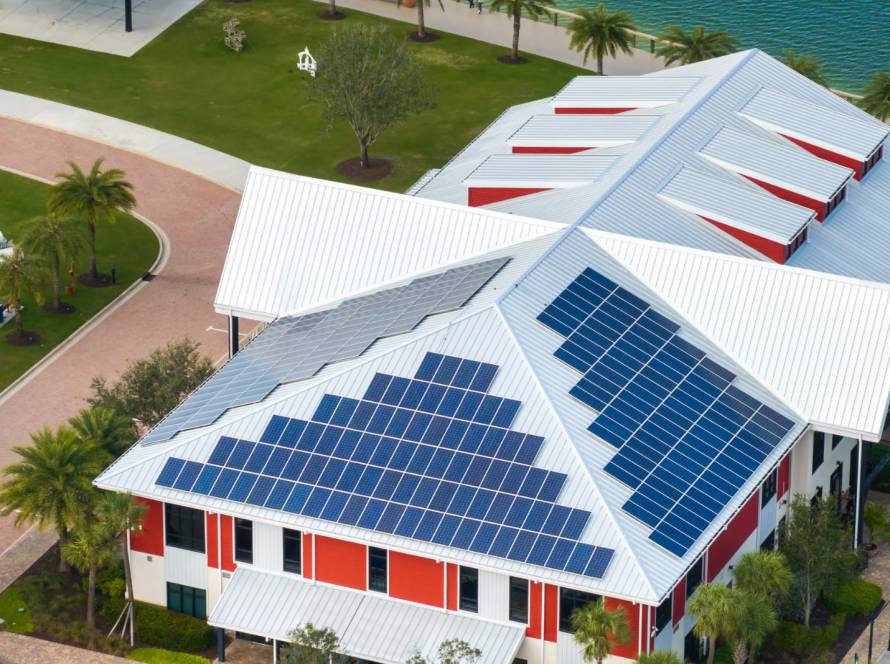
A commercial solar project portfolio should provide much more than photographs of panels, inverters and batteries. It should offer credible evidence that a provider can understand a business’s energy requirements, engineer an appropriate solution, manage construction responsibly and deliver reliable long-term performance.
The strongest portfolios connect each client’s original energy challenge to a clearly defined solution and a measurable outcome. Capacity, system architecture, engineering responsibility, regulatory approval, commissioning quality and operational history all help reveal whether a provider has experience relevant to your proposed project.
1. Understand What the Portfolio Proves
A portfolio is a record of practical capability. It should show that the provider has completed projects successfully under genuine commercial conditions, where deadlines, safety requirements, operational continuity and financial expectations all matter. Each case study should identify the project’s location, sector, capacity, system type, commissioning date and intended purpose.
Attractive images can support this evidence, but they cannot replace it. Look for detailed explanations of the provider’s responsibilities, the engineering decisions made and the results achieved. A portfolio containing technical context offers considerably more value than a gallery supported by broad claims.
2. Compare the Commercial Solar Project Portfolio with Your Required Scale
Project capacity influences design complexity, procurement, grid studies, construction planning, safety management and commissioning. A provider with experience in smaller commercial installations may not automatically have the resources or technical expertise required for a multi-site or megawatt-scale development.
Compare projects using consistent measurements. Look for solar array capacity in kWp or MWp, inverter capacity in kWac or MWac, battery power in kW or MW, and battery energy capacity in kWh or MWh. Connection voltage, construction duration and the physical area covered can provide further evidence of comparable scale.
- Solar array capacity in kWp or MWp
- Inverter capacity in kWac or MWac
- Battery power in kW or MW
- Battery energy capacity in kWh or MWh
- Connection voltage and existing electrical infrastructure
- Roof area, ground area or number of project sites
- Construction period and commissioning requirements
- Procurement, staffing and project-management responsibilities
Scale should also be assessed in terms of complexity rather than capacity alone. A smaller installation connected to sensitive production equipment may demand more intricate engineering than a larger, straightforward array. Multiple roofs, different connection points, restricted working areas and active operations can significantly increase the resources required to deliver a project safely.
Prospective clients should therefore ask for projects that resemble both the capacity and operating conditions of the proposed system. The strongest evidence will show that the provider has managed comparable engineering, procurement, construction and commissioning demands without compromising safety, quality or business continuity.
3. Prioritise Relevant Industry Experience
Energy requirements vary substantially between agriculture, mining, manufacturing, retail and commercial property. Agricultural operations may have seasonal irrigation loads and dusty conditions, while manufacturing facilities may depend on production-critical machinery and carefully planned shutdown periods.
Relevant industry experience suggests that the provider understands the client’s broader operating environment. Strong case studies should explain load profiles, working hours, environmental conditions and continuity requirements, showing how these factors influenced the final design.
4. Check the Range Within the Commercial Solar Project Portfolio
A technically capable provider may have experience with grid-tied, hybrid, off-grid, rooftop and ground-mounted systems. Carports, zero-export installations and export-enabled projects can provide further evidence that the engineering team has worked with different site conditions and commercial objectives.
Variety is valuable only when the reasoning behind each solution is explained. A strong case study should clarify why a specific system architecture was selected and how it addressed the client’s needs. This helps determine whether every system is properly engineered or based on a standard design applied repeatedly.
- Grid-tied systems designed to offset electricity consumption
- Hybrid systems combining Solar PV and battery storage
- Off-grid systems for independent commercial operations
- Rooftop installations for factories, warehouses, offices and retail facilities
- Ground-mounted installations for sites with suitable available land
- Solar carports that use parking areas for energy generation
- Zero-export systems designed around connection limitations
- Export-enabled projects with the required metering and controls
The portfolio should demonstrate more than the ability to install different categories of equipment. It should show that the provider understands the operational implications of each configuration, including how power is generated, stored, controlled and distributed across the site.
Readers should pay particular attention to the engineering reasoning behind each choice. A grid-tied system may suit a business focused primarily on consumption savings, while a hybrid system may be more appropriate where continuity and peak management are priorities. Off-grid projects require an especially detailed understanding of load behaviour, storage capacity and backup-generation requirements.
5. Assess Battery Storage Experience
Battery specifications in a commercial solar project portfolio should identify power and energy capacity. Power indicates how much electricity the system can deliver at once, while energy capacity helps show how long that output can be sustained. A case study that states only one of these values provides an incomplete picture.
The intended battery application should also be clear. Commercial systems may support backup power, peak shaving, energy arbitrage, increased solar self-consumption, load shifting or generator integration. Readers should also examine usable capacity, cycling assumptions, battery management, cooling, fire protection, warranty terms and expected capacity retention.
6. Look for Integration Expertise in the Commercial Solar Project Portfolio
Commercial solar systems frequently interact with batteries, standby generators, existing transformers, switchgear, critical-load boards and energy-management infrastructure. Successful integration requires more than connecting individual components. The equipment must operate as a coordinated system under normal and abnormal conditions.
Case studies should explain the operating philosophy. Look for descriptions of what happens during a grid interruption, which loads remain energised and how batteries, solar and generators respond. This experience is especially important at sites where an uncontrolled interruption could affect production, stock, equipment or safety.
7. Establish Who Completed the Engineering
Determine whether the provider completed the feasibility study, load-profile analysis, yield modelling, electrical design, structural assessment and detailed engineering. These responsibilities provide a clearer indication of technical capability than installation work alone.
There is an important distinction between engineering an entire project and installing equipment designed by another party. Both roles require competence, but they do not demonstrate the same experience. The portfolio should state the provider’s scope accurately and identify the professional responsibilities involved.
8. Verify Compliance Through the Commercial Solar Project Portfolio
Commercial installations must satisfy the requirements applying to their distributor, project size, connection voltage and export arrangement. The relevant process may involve an embedded-generation application, network studies, protection settings, metering requirements, professional sign-off and electrical compliance documentation.
Look for evidence that the provider has managed comparable connection processes from application to final approval. Current technical guidance places considerable emphasis on accurate system capacity, connection configuration, anti-islanding protection, single-line diagrams, commissioning records and professionally completed compliance reports.
- Embedded-generation and grid-connection applications
- Network-impact or grid studies where required
- Export limitations and zero-export control arrangements
- Protection settings and anti-islanding functionality
- Approved single-line diagrams
- Metering and connection requirements
- Professional engineering review and sign-off
- Electrical compliance and commissioning documentation
Experience with these processes helps a provider anticipate potential delays, design revisions and documentation requirements. It also indicates whether regulatory and connection obligations are being considered from the beginning of the project rather than addressed only after construction has started.
Prospective clients should ask which approvals were required on comparable projects, who prepared the submissions and whether final permission was obtained successfully. The portfolio should distinguish between an application that was submitted, a system that was approved for installation and a project that completed commissioning and connection close-out.
9. Identify the Business Challenge Solved
The most informative case studies in a commercial solar project portfolio begin with the client’s original problem. This might involve high peak-demand costs, unreliable electricity supply, insufficient grid capacity, expensive generator operation, restricted roof space or additional energy needed for business expansion.
The case study should connect that challenge to a specific engineering decision. For example, a battery may have been sized for short-duration peak reduction rather than prolonged backup, or a ground-mounted array may have been chosen because the available roof could not support the required capacity. Clear reasoning is evidence of a purpose-built solution.
10. Test Claims in the Commercial Solar Project Portfolio
Credible performance claims should be expressed through meaningful operational measures. These may include annual generation, specific yield, the proportion of site demand supplied, peak-demand reduction, solar self-consumption, diesel displacement, system availability and verified energy-cost savings.
Readers should distinguish between modelled forecasts and measured results. If savings are reported, the portfolio should explain the baseline, measurement period and major assumptions. Changes in tariffs, production volumes, operating hours or site occupancy can influence comparisons and should be considered when interpreting results.
11. Clarify Project Delivery Responsibilities
Establish whether the provider held full responsibility for engineering, procurement and construction or completed only part of the work. Full delivery can include design, equipment procurement, logistics, site management, construction, testing, commissioning and final handover.
A provider that supplied equipment, completed electrical installation or acted as a subcontractor may still have valuable experience. However, the case study should not imply responsibility for work performed by others. Transparent descriptions allow prospective clients to evaluate the capabilities genuinely demonstrated by each project.
12. Examine Quality in the Commercial Solar Project Portfolio
Quality and safety should be visible throughout project documentation. Relevant evidence may include inspection and test plans, cable testing, earthing verification, protection testing, torque records, structural sign-off, commissioning reports, electrical compliance certificates and as-built drawings.
Construction at an operating commercial site also requires disciplined disruption management. Case studies should describe staged work, planned shutdowns, safety segregation, temporary supplies and coordination with site personnel. This shows whether the provider can complete complex work without creating unnecessary risks or operational losses.
- Documented inspection and test plans
- Cable, earthing and protection testing
- Equipment torque records
- Structural assessments and professional sign-off
- Electrical Certificates of Compliance
- Commissioning and performance-verification reports
- Health and safety files
- Accurate as-built drawings and operating manuals
Quality controls should cover the full project lifecycle, beginning with design review and continuing through procurement, construction, testing and handover. Consistent documentation makes it easier to identify defects, confirm corrective action and establish accountability before the system becomes operational.
The portfolio should also demonstrate that safety planning was adapted to the commercial environment. Working above active facilities, near electrical infrastructure or around employees and customers requires careful access control, supervision and coordination. Clear evidence of these measures offers meaningful insight into the provider’s delivery discipline.
13. Consider Expansion and Long-Term Support
A system designed only around present consumption may become restrictive as a business grows. When examining a commercial solar project portfolio, look for projects incorporating modular equipment, reserved electrical capacity, space for additional panels or batteries and infrastructure capable of supporting later phases.
The portfolio should also explain what happened after commissioning. Remote monitoring, preventive maintenance, performance optimisation, fault response, warranty administration and regular reporting can all support long-term value. Confirm whether these services were actually delivered on the featured projects rather than simply offered as optional extras.
14. Validate the Commercial Solar Project Portfolio Independently
Older operating projects can be more informative than newly commissioned installations. Long-term records help establish whether generation forecasts were realistic, system availability remained acceptable and faults were resolved effectively. A balanced portfolio should therefore include recent projects and systems with an established operating history.
Important claims should also be independently verifiable. Request contactable references, representative project documents and, where possible, permission to visit an operating installation. Ask previous clients whether the provider controlled disruption, communicated transparently, met performance expectations and delivered dependable after-sales support.
- Contactable references from comparable commercial projects
- Permission to visit an operating installation
- Monitoring and performance records
- Commissioning and compliance documentation
- Representative as-built drawings
- Evidence of maintenance and fault response
- Published project information where available
- Confirmation of the provider’s contractual responsibilities
Independent validation should focus on the claims most important to the proposed project. If continuity is the priority, ask how the system responded during interruptions. If savings are central to the investment case, request measured performance information and a clear explanation of the original baseline.
Client discussions can also reveal aspects of delivery that technical documents may not capture. Communication, responsiveness, variation management and after-sales support all influence the long-term value of a project. A provider confident in its work should be able to support reasonable due-diligence requests while respecting client confidentiality.
Where to Find Commercial Solar Installers Experienced with Large-Scale Projects in South Africa
For businesses searching for an installer capable of handling large-scale commercial solar projects in South Africa, Eversolar provides Solar PV, Battery Energy Storage Systems and full EPC project delivery. We engineer grid-tied, hybrid and off-grid configurations around each organisation’s operational and financial requirements. Our grid-tied systems can offset electricity consumption while retaining grid access, while our hybrid solutions combine Solar PV and BESS to increase self-consumption, reduce peak demand charges, lower grid reliance and support continuity during outages. For remote or energy-intensive facilities, our off-grid systems can provide independent power while reducing dependence on costly diesel or backup generation. Through precision engineering, premium components and end-to-end project management, we integrate these technologies with existing operations while prioritising safety, performance, scalability and long-term system value.
We support large-scale adoption through flexible Power Purchase Agreements and Rent-to-Own Solar options, allowing organisations to pursue modern energy infrastructure while maintaining predictable energy costs. Our full EPC capabilities bring engineering, procurement, construction and project delivery into an integrated process, while our rapid deployment approach is intended to minimise operational disruption and accelerate the path to value. After commissioning, we provide remote performance monitoring, preventive maintenance, rapid technical assistance and ongoing system optimisation. This combination allows us to support factories, warehouses, offices and retail facilities with solutions designed to reduce operating expenses, improve energy independence, strengthen operational resilience, lower carbon emissions and expand as business requirements grow.
Make Evidence the Basis of Your Decision
A credible commercial solar project portfolio should demonstrate experience that matches your project’s scale, sector, operating conditions and technical requirements. The strongest evidence combines clear engineering responsibility, relevant project history, documented compliance, measurable results and dependable support after commissioning.
At Eversolar, we believe commercial solar decisions should be based on transparent engineering and proven delivery. Contact us to discuss your energy requirements and explore experience relevant to your site, operational priorities and long-term plans.