For manufacturers, electricity is more than another monthly expense. It powers machinery, production lines, refrigeration, compressed air, lighting, ventilation and almost every process that keeps a plant productive. Commercial solar systems give manufacturing businesses a practical way to produce more electricity on-site, reduce exposure to rising tariffs and gain greater control over one of their largest operating costs. That matters in South Africa, where average electricity tariffs for directly supplied customers increased by 12.74% in April 2025 and a further 8.76% in April 2026.
Manufacturing is also a particularly strong match for solar because many plants use large amounts of electricity during daylight hours, exactly when photovoltaic panels are generating power. Add large factory roofs, parking areas, battery storage and existing backup infrastructure, and manufacturers have several ways to build an energy system around their actual operating requirements. The important part is choosing the right configuration rather than assuming that every factory needs the same solution.
How Commercial Solar Systems Work in Manufacturing Plants
A commercial solar installation starts with photovoltaic panels converting sunlight into direct current electricity. Inverters then convert this into alternating current electricity that can be used by normal factory equipment, including motors, machinery, lighting and other electrical loads. No special form of electricity is required by the production equipment simply because part of the facility’s power is being generated from solar.
Solar generation has expanded quickly enough to demonstrate that the underlying technology is well established at scale. Global Solar PV generation reached nearly 2,700 TWh in 2025, more than double the amount produced in 2022, and accounted for more than 8% of total global electricity generation. Around 600 TWh of additional solar electricity was generated in 2025 alone.
A factory does not necessarily need solar to supply every kilowatt it consumes. Grid-tied systems can use solar first and draw additional electricity from the grid when necessary. Batteries can store electricity for use later, while generators can remain available for longer interruptions. This layered approach is often more practical for manufacturing because production demand changes throughout the day and complete independence can require substantial storage capacity.
Why Manufacturing Plants Are Well Suited to Commercial Solar Systems
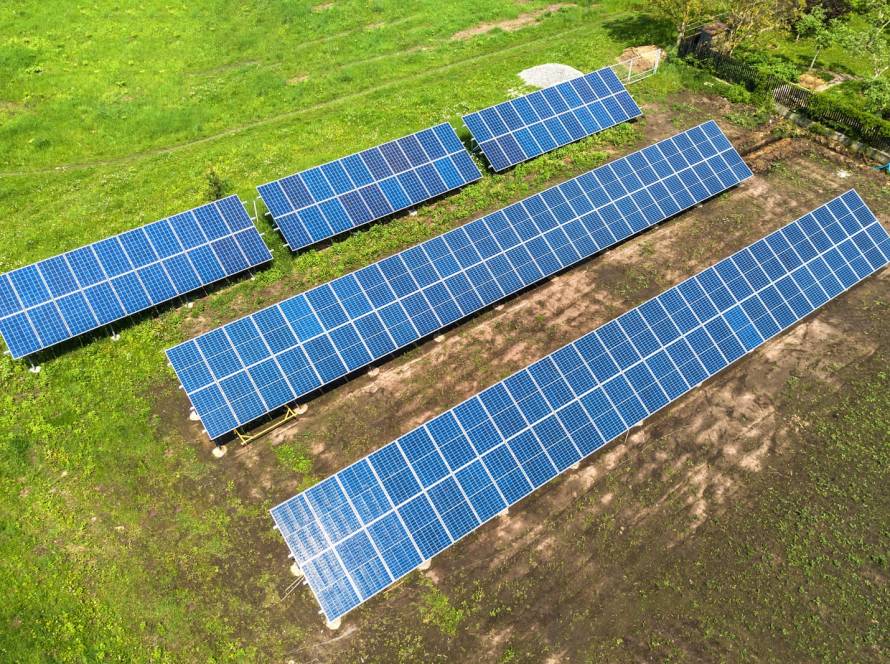
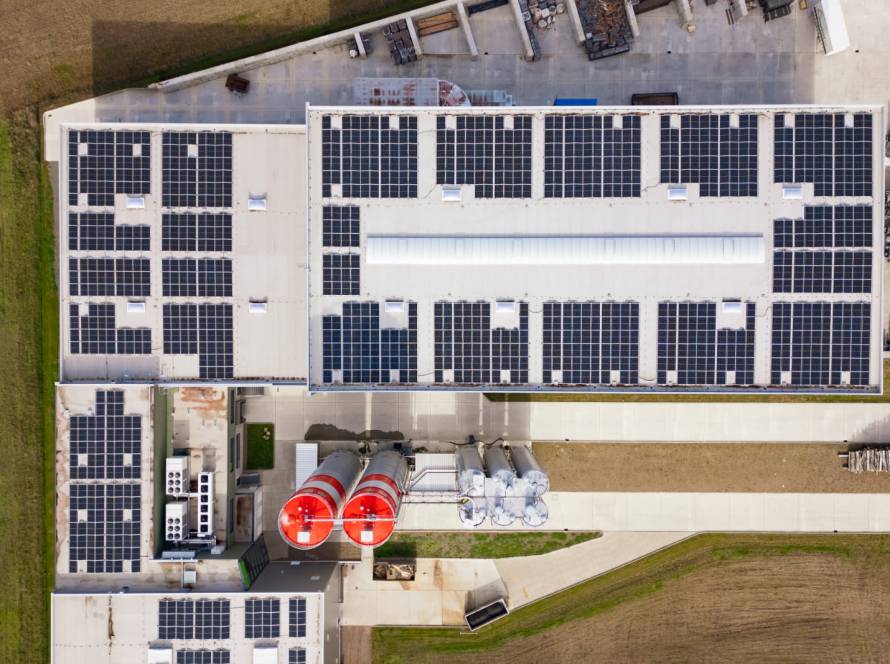
Factories often have something many other businesses lack: large amounts of usable space. Manufacturing buildings, warehouses, carports and surrounding land can provide extensive areas for solar installations. As a broad planning guide, a commercial panel may occupy roughly 2 m², while a 1 MW installation can require approximately 4,000 to 5,000 m² of usable roof space depending on panel specifications and layout.
The second advantage is timing. Many plants have their highest electricity demand during normal production hours, while solar output is also concentrated during daylight. Electricity generated and consumed immediately on-site can therefore offset grid purchases without first having to be stored.
- Large roofs can accommodate substantial Solar PV arrays.
- Carports and unused ground areas can provide additional installation space.
- Daytime generation can align closely with factory operating hours.
- High daytime self-consumption can improve the value of generated electricity.
- Solar can work alongside grid electricity, batteries and existing generators.
- Modular designs can be expanded when production demand grows.
The opportunity becomes more significant when electricity prices are increasing. Direct-customer tariffs in South Africa rose by an average of 12.74% in 2025 and 8.76% in 2026. Generating a larger share of daytime electricity on-site can therefore reduce the amount of energy purchased at future grid tariffs, although actual savings depend on the facility’s tariff structure and consumption profile.
Suitability still needs to be confirmed through a proper site assessment. A large roof is not automatically a usable solar roof. Structural capacity, shading, orientation, electrical infrastructure, roof condition, access requirements and local regulations should all be examined before a system is sized.
What Are the Main Types of Commercial Solar Systems?
Grid-tied systems are usually suited to plants that have a grid connection and want to reduce purchased electricity without installing large amounts of storage. Solar supplies part of the daytime load, while grid electricity automatically covers demand when solar production is insufficient. Depending on the applicable local arrangements, surplus generation may also be exported.
Hybrid systems add batteries to Solar PV. Batteries allow electricity to be stored and used when it has greater operational value, such as during peak-demand periods, short outages or after solar production has declined. Falling storage costs are making this option increasingly important. Global battery storage costs fell by approximately 93% between 2010 and 2024, from around US$2,571/kWh to US$192/kWh.
Off-grid and microgrid solutions are more appropriate where grid access is unreliable, unavailable or strategically undesirable. These systems normally require careful coordination between solar generation, batteries and, where necessary, additional backup generation. For factories, the right choice depends on load patterns and required resilience rather than simply selecting the system with the greatest level of independence.
Solar PV, Batteries and Generators Can Work Together
Generators continue to serve an important purpose in industrial environments because they can provide electricity during extended outages while fuel remains available. Their disadvantage is that every hour of operation consumes fuel and adds mechanical wear. Routine servicing, filters, oil, repairs, storage and fuel logistics also contribute to lifecycle costs.
Battery storage can take over part of that role for shorter interruptions and periods of high grid demand. The technology is growing rapidly. Around 110 GW of new battery storage capacity was added globally during 2025, making storage the fastest-growing technology in the power sector that year.
For many factories, the practical solution is therefore not solar or generators. It is solar, batteries and generators performing different jobs. Solar supplies daytime electricity, batteries manage shorter gaps and peak periods, and generators provide additional support when outages extend beyond available stored energy. This can reduce generator runtime without sacrificing operational resilience.
How Commercial Solar Systems Can Reduce Manufacturing Costs
The most direct financial benefit of commercial solar systems is reducing the volume of electricity purchased from the grid. Electricity generated on-site during production hours can immediately supply factory loads, creating a natural hedge against future tariff increases. The financial case becomes stronger when the factory has a large, consistent daytime load.
Solar economics have also changed significantly over the past decade. Between 2010 and 2024, the global weighted average cost of electricity from utility-scale Solar PV fell by about 90%, while average installed costs fell by approximately 87%.
- Offset daytime grid electricity consumption.
- Reduce exposure to future tariff increases.
- Use batteries to lower peak grid demand.
- Increase self-consumption by storing excess solar generation.
- Reduce diesel-generator runtime and associated fuel costs.
- Improve predictability when budgeting for future energy expenditure.
Savings should always be calculated against the plant’s actual tariff and load profile. A factory using most of its power after sunset will have a different business case from a plant operating a large day shift. Batteries can change the calculation, but they also increase capital requirements and should have a clearly defined purpose.
Commercial solar should therefore be treated as an energy-management investment, not merely a panel purchase. The best financial result comes from understanding when electricity is consumed, what it costs during different periods and which loads can economically be supplied by solar or stored energy.
Start With the Factory’s Actual Energy Requirements
Every manufacturing plant has a different electricity profile. System sizing should examine total consumption, peak demand, machinery, shifts, seasonal production and operating hours. Reviewing at least a meaningful period of electricity bills and interval consumption data helps identify when energy is being used rather than relying only on monthly totals.
Industrial electricity demand is significant internationally. Industry accounted for almost half of global electricity-demand growth between 2022 and 2024 in one of the world’s largest industrial markets, illustrating how manufacturing and electrification can place growing pressure on electricity systems.
Future demand matters as well. A plant planning a new production line or additional shift could quickly outgrow a system designed only around today’s consumption. Solar and battery infrastructure should therefore be assessed against expansion plans so that capacity can be added without unnecessarily redesigning major parts of the installation.
Protect Production Through Battery Energy Storage
Battery storage allows a plant to separate the time electricity is generated from the time it is consumed. Surplus daytime solar can be stored and then used during peak-demand periods, short outages or later operating hours. This can increase the proportion of solar generation consumed on-site and improve energy resilience.
The cost trend behind storage is significant. Average battery storage costs fell from approximately US$2,571/kWh in 2010 to US$192/kWh in 2024, a decline of around 93%. That does not mean every battery project will automatically make financial sense, but it explains why storage is increasingly being evaluated alongside commercial solar.
Correct sizing remains critical. Maintaining a few essential production loads for two hours requires a very different battery system from attempting to operate an entire factory overnight. Manufacturers should first identify critical loads, desired backup duration and peak-demand objectives before deciding how much storage capacity is justified.
Maintenance and Monitoring Protect Long-Term Performance
Solar systems contain fewer moving components than engine-driven generators, but industrial installations still need regular attention. Preventative maintenance can include inspections of panels, cabling, inverters, batteries and mounting structures, together with cleaning, system checks and firmware updates where required. Dust and accumulated dirt can restrict sunlight reaching photovoltaic cells and reduce output.
Monitoring is equally important because a reduction in generation is not always visually obvious. Energy-management data can reveal sudden or gradual changes in production, allowing technical teams to investigate faults before they become more expensive problems.
Long-term performance matters because solar assets are expected to operate for many years. Global data show that the average capacity factor of newly commissioned utility-scale Solar PV increased from 15% in 2010 to 17.4% in 2024 as technology and system design improved. Maintaining an installation properly helps ensure that the plant benefits from the performance its equipment and design are capable of delivering.
Which Commercial Solar Systems Are Best For Reducing Electricity Costs In Manufacturing Plants?
There is no single system that produces the best result for every factory. At Eversolar, we start with the facility’s load profile, peak demand, operating hours, production requirements and future plans. A factory with heavy daytime demand may achieve strong savings from grid-tied solar, while a site requiring backup power or peak-demand management may benefit more from combining Solar PV with BESS.
We can also develop off-grid and microgrid solutions where grid reliability or location makes greater energy independence necessary. Our aim is to match the infrastructure to the commercial objective rather than simply installing the largest possible array.
- Grid-tied Solar PV for reducing daytime grid purchases.
- Hybrid Solar PV and BESS for savings, storage and resilience.
- Off-grid and microgrid systems for grid-constrained facilities.
- Full feasibility, engineering, procurement, construction and commissioning.
- PPA and Rent-to-Own financing options.
- Remote monitoring, preventative maintenance and technical support.
- System upgrades and expansion as operational requirements change.
We provide full EPC delivery from initial feasibility assessment and engineering through procurement, construction, grid connection, commissioning and operational handover. This allows technical design, commercial requirements and production constraints to be considered together instead of being managed as disconnected stages.
Our involvement also continues after commissioning. We provide remote performance monitoring, preventative and corrective maintenance, technical assistance, hardware inspections and ongoing system optimisation. Flexible financing structures, including Power Purchase Agreements and Rent-to-Own options, can also help manufacturers align the project with their wider financial strategy.
Plan for Operational Continuity During Installation
Manufacturers cannot simply stop production for an extended solar installation. The project plan should therefore consider production schedules, planned shutdowns, electrical connection windows and areas where installation work could interfere with normal factory activity.
Industrial projects can vary widely in scale. The project examples previously reviewed range from approximately 100 kW installations to systems of 1.5 MW, showing why installation methodology must be adapted to the specific facility rather than treated as a standardised small-scale job.
Quality control should continue throughout the project. Design verification, installation inspection, testing, documentation and formal commissioning reduce the risk of discovering problems only after the system has been energised. A structured handover should also clearly transition the asset into its long-term monitoring and maintenance programme.
Look at Lifetime Value, Not Only Installation Price
Initial price tells only part of the story. Manufacturers should compare expected generation, equipment lifespan, maintenance obligations, financing costs, battery requirements, warranties and projected grid savings over the intended operating life of the system.
The global cost trend gives useful context. Utility-scale Solar PV electricity costs fell around 90% between 2010 and 2024, reaching a global weighted average of approximately US$0.043/kWh in 2024.
- Compare projected lifetime electricity generation.
- Assess expected self-consumption rather than installed capacity alone.
- Include maintenance and component replacement assumptions.
- Account for financing and funding costs.
- Compare generator fuel and servicing expenses where relevant.
- Consider future electricity tariffs and peak-demand charges.
- Evaluate warranties, monitoring and technical support.
Equipment quality is particularly important because a cheaper installation can become expensive if poor components create frequent downtime or premature replacement. Durability, serviceability and the installer’s ability to maintain the asset should therefore form part of the commercial comparison.
The same principle applies when comparing solar with diesel backup. Generators may cost less upfront, but they continue consuming fuel whenever they operate. Solar has a different cost structure, with higher capital expenditure followed by very low fuel cost because sunlight itself is not purchased. Manufacturers should compare these alternatives over their full useful lives.
Commercial Solar Systems as a Long-Term Manufacturing Strategy
For energy-intensive manufacturers, commercial solar systems can offer much more than lower monthly electricity bills. A properly engineered system can reduce grid exposure, improve energy-cost predictability, decrease generator use, manage peak demand and provide greater resilience when combined with battery storage. With South African direct-customer tariffs rising by 12.74% in 2025 and another 8.76% in 2026, gaining greater control over electricity consumption is becoming an increasingly important operational consideration.
At Eversolar, we design, deliver and support renewable energy infrastructure around the real operational requirements of manufacturing plants and other high-demand businesses. From Solar PV and BESS to full EPC delivery, flexible funding and long-term maintenance, we focus on solutions that continue producing measurable value after commissioning. Get in touch with us to discuss your facility’s energy requirements and explore a commercial solar solution built around your production demands, financial goals and plans for future growth.