Energy security in South Africa has become one of the country’s most important business challenges. Years of load shedding, rising tariffs, ageing infrastructure and unexpected power failures have made reliable electricity a serious concern for farms, mines, factories, commercial buildings and property portfolios. Power is no longer just an operating cost. It affects production, safety, customer service, tenant satisfaction and long-term planning.
The good news is that businesses are not powerless. Solar PV, battery energy storage, hybrid systems, off-grid solutions and renewable energy wheeling are giving organisations more control over how they generate, store and use electricity. The energy crisis is complex, but practical solar-led solutions are helping businesses move from uncertainty to resilience.
The Roots Of South Africa’s Energy Security Crisis
South Africa’s power crisis started in 2007, when electricity demand began to exceed reliable supply. The causes have built up over many years. Ageing coal-fired power stations, delayed investment in new generation capacity, weak maintenance, operational failures, debt pressure, corruption and infrastructure theft have all played a role. A 1998 energy policy warning had already pointed to a possible shortage by 2007 if new capacity was not brought online in time.
The scale of the problem became clear through repeated load-shedding periods. Each load-shedding stage represents roughly 1,000 MW of demand removed from the grid. Stage 6 was first implemented in December 2019, and by 2022 South Africa had experienced more than 200 days of power cuts in one year. During the worst periods, businesses faced production stoppages, trading disruptions, extra diesel costs, equipment damage and pressure on backup systems.
While scheduled load shedding eased significantly from March 2024, the broader electricity challenge has not disappeared. Many areas still face unplanned outages caused by local infrastructure faults, overloaded networks, illegal connections and poor municipal maintenance. This is why long-term energy security cannot rely only on the national grid improving. Businesses need their own energy strategies that combine generation, storage, monitoring and proper lifecycle support.
Why Energy Security In South Africa Affects Every Sector
Energy security in South Africa affects almost every part of the economy because nearly every operation depends on stable electricity. A short outage can stop irrigation, refrigeration, production, payment systems, access control, lighting, security, lifts, pumps and digital networks. For some businesses, the cost is immediate. For others, the damage builds through delays, lost stock, reduced output and unhappy customers or tenants.
- Agriculture: farms need reliable power for irrigation, cold storage, pumping and processing.
- Mining: remote and grid-constrained operations need secure power to reduce diesel reliance and maintain critical processes.
- Commercial property: offices, retail centres and service facilities need stable electricity for tenants, customers and building systems.
- Industrial operations: factories, warehouses and processing facilities need high-volume power to keep production moving.
- Property developers: energy-ready developments can improve marketability, tenant appeal and long-term asset performance.
- REITs: property portfolios can use renewable energy to reduce operating costs, support ESG goals and improve utility predictability.
This is why energy planning has become a boardroom issue. Businesses are no longer only asking how to survive an outage. They are asking how to reduce exposure to rising tariffs, protect operations, support sustainability targets and build energy infrastructure that performs for years. Solar and storage are becoming part of long-term risk management.
Solar Pv As A Leading Solution For Energy Security In South Africa
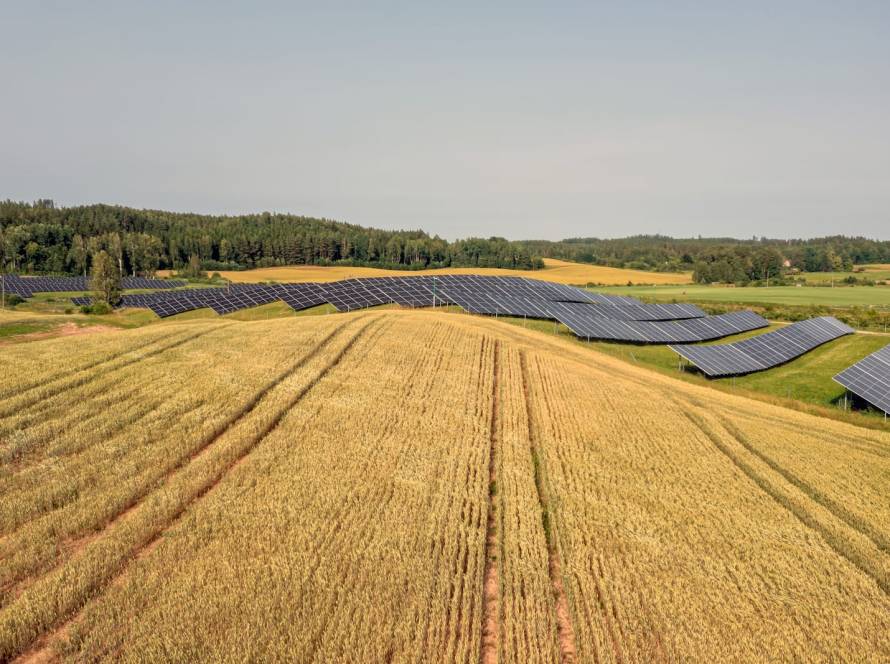
Solar PV is one of the most practical ways to improve energy security in South Africa because the country has strong solar resources. Many parts of South Africa receive more than 2,500 hours of sunshine a year, making solar generation a natural fit for businesses with suitable roofs, land, parking areas or energy-intensive sites. This turns unused space into an energy asset.
- Lower electricity costs: solar reduces the amount of grid power a business needs to buy.
- Improved cost predictability: solar can reduce exposure to future tariff increases.
- Cleaner operations: renewable energy reduces reliance on coal-heavy grid electricity.
- Better resilience: on-site generation helps reduce dependence on unstable supply.
- Stronger asset value: solar-ready properties can become more attractive to tenants and buyers.
- Long-term return: well-designed systems can deliver savings over their operational life.
South Africa’s solar market is already growing. Solar capacity increased by around 11.9% in 2024, reaching about 8.97 GW, with private-sector installations making up a large share of that growth. This shows that businesses and households are actively investing in their own energy security. Solar is no longer only about sustainability. It is also about cost control, uptime and operational confidence.
Battery Storage And Hybrid Systems: The Next Step Forward
Solar PV is powerful, but battery energy storage makes it more flexible. Batteries store energy when it is available and release it when the business needs it. This is especially useful during peak demand periods, unexpected outages or times when solar production is lower. For sites with critical loads, storage can make the difference between a minor interruption and a major operational problem.
- Backup power: batteries help keep essential systems running during outages.
- Peak demand management: stored energy can reduce expensive demand spikes.
- Better use of solar: excess daytime generation can be stored for later use.
- Reduced diesel dependency: battery-backed systems can lower generator use.
- Grid independence: storage gives businesses more control over supply.
- Operational continuity: critical processes can stay powered during interruptions.
Hybrid systems combine Solar PV and battery storage, giving businesses both savings and resilience. They are especially useful for operations with fluctuating energy needs, high peak demand or limited tolerance for downtime. Off-grid systems can also support remote sites where grid access is weak or unreliable. For many organisations, storage is what turns solar from a cost-saving measure into a true energy security solution.
The Business Case For Renewable Energy Investment
For businesses, renewable energy investment is driven by three main priorities: reducing costs, improving resilience and protecting long-term performance. Grid electricity prices have increased heavily over time, and many organisations need more predictable energy costs. Solar PV can lower electricity spend, while battery storage can reduce the financial impact of outages and peak demand charges.
Real-world municipal research in eThekwini found that solar PV could reduce electricity costs by around 20% to 30% for households and businesses. The same research reported more than 5,000 participants contributing excess solar energy into the municipal grid through a feed-in tariff programme, with the local solar sector supporting about 1,500 jobs in installation, maintenance and manufacturing. These figures show that solar can support both cost savings and local economic activity.
There are also strategic benefits. Renewable energy can support ESG targets, reduce carbon emissions, strengthen tenant satisfaction and improve the marketability of commercial assets. For agriculture, it can protect production and cold-chain systems. For industry, it can support continuity and reduce downtime risk. For property owners, it can create more attractive and future-ready buildings. The best results come when solar is planned as infrastructure, not as a quick fix.
Eversolar’s Role In Improving Energy Security In South Africa
At Eversolar, we help businesses improve energy security in South Africa through engineered Solar PV, battery energy storage and full EPC delivery. We work with commercial, industrial, agricultural, mining, property development and REIT clients that need reliable power, lower energy costs and long-term infrastructure value. Our focus is on practical energy outcomes that match each site’s technical and operational reality.
- Solar PV systems: grid-tied, hybrid and off-grid systems designed around site-specific load profiles.
- Battery energy storage: systems that improve resilience, peak demand management and energy control.
- Turnkey EPC delivery: feasibility, engineering, procurement, construction, commissioning and handover.
- Renewable energy wheeling: access to solar-generated electricity without installing panels directly on-site.
- Flexible funding: CAPEX, PPA and Rent-To-Own models to support different financial strategies.
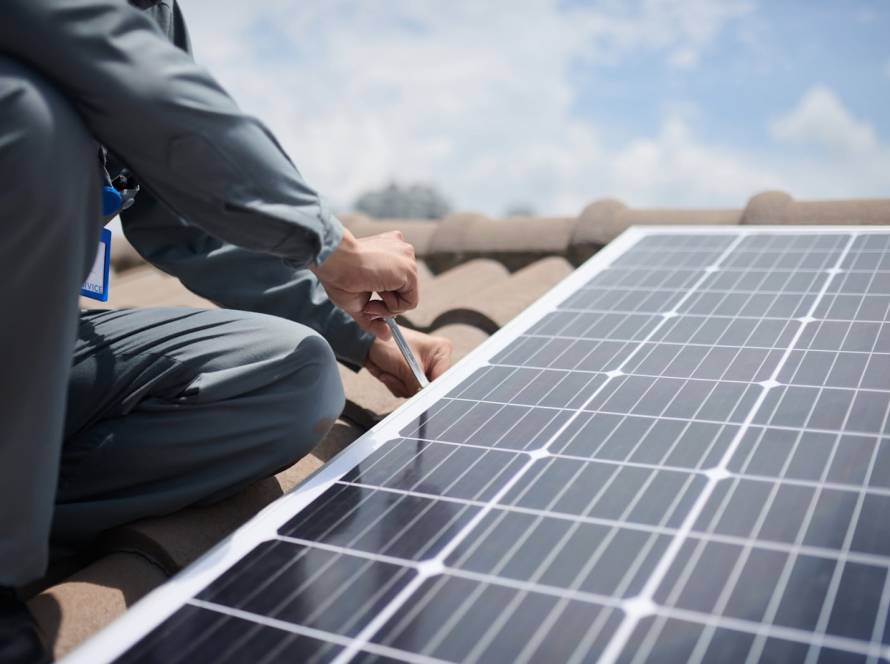
- After-sales support: monitoring, preventative maintenance, rapid technical response and system optimisation.
We also place strong emphasis on quality, accountability and lifecycle performance. Our delivery process includes scope and data validation, integrated project review, implementation readiness, four-point quality control, formal handover and O&M transition. Once a system is live, we support long-term performance through structured maintenance, inspections, battery care, corrective response and system upgrades where needed.
Why Quality Operations And Maintenance Matter
A solar system’s long-term value depends on much more than installation. Design quality, component selection, installation standards, commissioning, documentation and maintenance all influence how well the system performs. A poorly executed system can underperform, create safety issues and reduce return on investment.
Maintenance is especially important in demanding environments such as mines, farms, factories, warehouses and large commercial properties. Preventative inspections help identify issues early, while corrective maintenance restores performance when faults occur. Hardware inspections, inverter checks, battery care, firmware updates and mounting structure reviews all help extend asset life and maintain system safety.
Businesses should treat operations and maintenance as part of the investment, not as an optional extra. Good lifecycle support protects warranties, supports compliance, improves uptime and helps the system continue delivering value over time. In a country where electricity reliability is still a concern, well-maintained solar infrastructure gives organisations greater control and confidence.
Actionable Steps For Businesses Considering Solar
The first step is to understand how the site uses electricity. This includes reviewing load profiles, peak demand, operating hours, critical loads, outage exposure and future expansion plans. Once this is clear, it becomes easier to decide whether the best fit is grid-tied solar, a hybrid system, an off-grid system or renewable energy wheeling.
- Review current electricity costs: include usage patterns, tariff structures and demand charges.
- Identify critical loads: decide which systems must keep running during an outage.
- Assess available space: review rooftops, land, carports or other usable areas.
- Consider battery storage: decide whether backup power, peak shaving or arbitrage is needed.
- Compare funding models: look at CAPEX, PPA and Rent-To-Own options.
- Plan for maintenance: include lifecycle support from the start.
- Think long term: allow for expansion, compliance, sustainability targets and operational growth.
Businesses should avoid choosing a solar solution based only on the lowest upfront cost. A strong system must be properly engineered, financially sensible, safe, maintainable and suited to the site’s energy needs. The best energy strategy balances savings, resilience, quality and long-term performance.
Solar Solutions Are Leading The Way
Energy security in South Africa remains a serious challenge, but businesses now have practical ways to take control. Solar PV, battery storage, hybrid systems, off-grid infrastructure and renewable energy wheeling can reduce grid reliance, stabilise energy costs and protect operations from disruption. These solutions are not only about cleaner power. They are about building stronger, more resilient organisations.
At Eversolar, we help businesses turn energy challenges into strategic advantages through reliable, well-engineered renewable energy infrastructure. If your organisation is ready to lower energy costs, improve resilience and take control of its power future, get in touch with us. We will help you explore the right solar and storage solution for your site, your budget and your long-term goals.
FAQs About Energy Security in South Africa
What is energy security in South Africa?
Energy security in South Africa means having reliable, affordable and stable access to electricity for homes, businesses and essential services. It has become a major concern because of load shedding, ageing infrastructure, rising tariffs and unexpected power failures. For businesses, energy security is about more than keeping the lights on. It means protecting production, safety, equipment, customer service and long-term planning. Solar PV, battery storage and hybrid energy systems can help improve energy security by reducing reliance on the grid and giving organisations more control over their power supply.
How can solar power help with energy security in South Africa?
Solar power helps improve energy security in South Africa by allowing businesses and households to generate their own electricity. This reduces dependence on an unstable grid and can lower monthly energy costs. Solar is especially useful during daylight hours, when many businesses use the most power. When paired with battery storage, solar can also provide backup energy during outages and help manage peak demand. For commercial, agricultural, industrial and mining sites, solar can support operational continuity while improving long-term cost predictability.
Are solar panels still worth it if load shedding has improved?
Yes, solar panels can still be worth it even when scheduled load shedding improves. South Africa still faces unexpected outages, municipal infrastructure failures, rising electricity prices and grid pressure in many areas. Solar PV helps reduce electricity bills and gives businesses more control over energy costs. It can also support sustainability goals and improve property value. For organisations that cannot afford downtime, solar with battery storage offers added resilience. The goal is not only to survive load shedding, but to build long-term energy independence and stability.
What is the best solar solution for a business in South Africa?
The best solar solution depends on the business’s energy usage, site layout, operating hours, budget and risk exposure. Grid-tied solar works well for businesses that want to reduce electricity costs while staying connected to the grid. Hybrid systems combine Solar PV with battery storage, making them suitable for sites that need backup power and peak demand management. Off-grid systems are ideal for remote or unreliable-grid locations. Renewable energy wheeling can also help businesses access clean energy without installing panels directly on-site.
Why should businesses consider battery storage with solar?
Battery storage makes solar more flexible and reliable. Solar panels generate power during the day, but batteries store excess energy for use later, such as during outages, peak demand periods or low-sunlight hours. This helps businesses protect critical systems, reduce diesel generator use and improve energy control. Battery storage is especially valuable for farms, mines, factories, warehouses, retail centres and facilities where downtime is costly. When combined with Solar PV, batteries turn renewable energy into a stronger energy security solution rather than only a cost-saving measure.