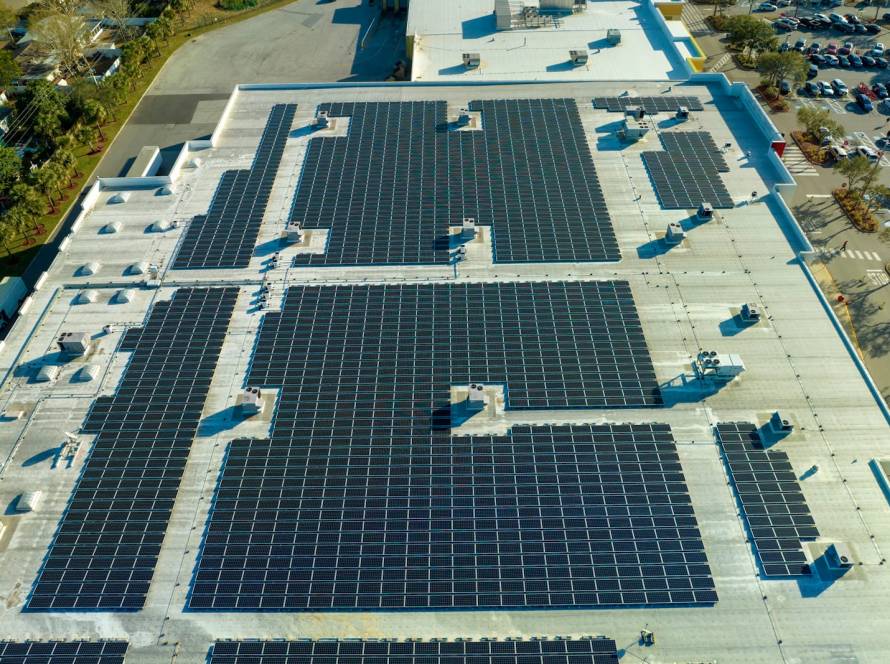
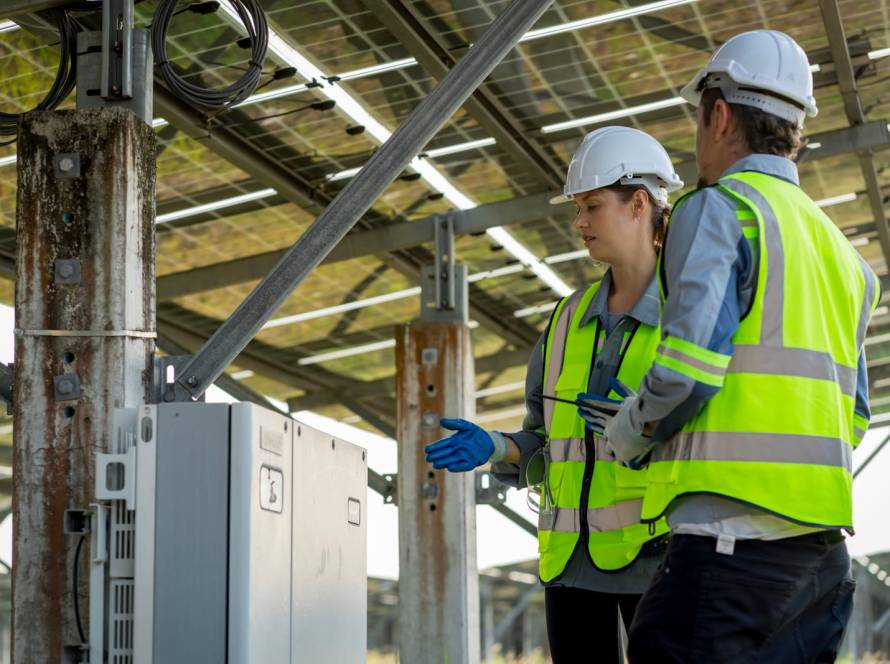
Factories that operate across multiple shifts depend on electricity long after daylight generation has ended. Commercial solar for factories with shift work can reduce daytime grid purchases, but its value depends on how closely the system reflects real production demand, including night work, weekend schedules and machinery that must operate without interruption.
A factory may use power for production lines, compressed-air systems, pumps, refrigeration, ventilation, lighting and control equipment at very different times of day. Current commercial electricity pricing structures also place importance on when energy is used and when demand peaks occur. The most useful system design therefore begins with the factory’s operating pattern, not with the number of panels that can fit on the roof.
Why Commercial Solar for Factories With Shift Work Requires a Different Design Approach
A factory operating mostly during daylight can often consume a large share of its solar generation immediately. This direct use reduces reliance on grid electricity while staff, machinery and supporting systems are active. A site with rotating shifts or overnight production, however, may use a significant portion of its electricity after solar generation has stopped.
Commercial solar for factories with shift work should be planned around these differences. Two factories can have similar monthly electricity expenditure while requiring entirely different energy solutions because one produces mainly in daylight and the other operates continuously. Matching the design to the shift pattern helps produce more realistic savings forecasts and prevents assumptions about round-the-clock solar supply.
- Day-shift production: Establishes how much daylight generation can be used directly by machinery and supporting equipment.
- Night-shift production: Identifies the electricity requirement that must still be supplied by the grid, battery storage or approved backup arrangements after sunset.
- Rotating shifts: Shows how demand may change from one week to another and why a system should not be designed around a single operating pattern.
- Weekend operations: Reveals whether solar generation will be used during Saturday or Sunday production, or whether schedules reduce self-consumption.
- Continuous production: Requires a detailed assessment of critical loads, night-time demand and the factory’s required level of energy resilience.
Shift patterns also influence the expected financial return from each system component. Solar PV may offer the greatest direct value during daylight production, while batteries and demand-management controls may have a more defined role at factories with higher evening consumption. Separating these needs helps management understand why different parts of the energy system are recommended.
A detailed shift assessment creates a stronger foundation for future decisions. It allows the factory to compare expected energy savings, continuity requirements and system costs against the way production is expected to operate over time. This supports a design that remains useful when production volumes, staffing patterns or operating hours change.
Understanding the Factory’s Hour-by-Hour Electricity Demand
Monthly electricity bills are useful for understanding total consumption, but they do not show when the factory uses electricity. Interval-meter data provides a more accurate picture by revealing demand throughout the day, across weekdays and weekends, and during different production periods. Reviewing at least a full year of data can also account for seasonal activity, shutdowns and changing order volumes.
The demand assessment should identify the equipment responsible for the greatest loads and the sharpest peaks. Production lines, motors, compressors, pumps, refrigeration, HVAC, extraction systems and lighting can all influence the final design. Commercial solar for factories with shift work becomes more effective when the system is based on measured demand rather than broad consumption estimates.
Solar PV for Commercial Solar for Factories With Shift Work During Day Shifts
Factories that operate mainly in daylight are often able to use solar electricity directly as it is produced. This can reduce the amount of electricity purchased from the grid while production is underway. Where dependable daytime demand is high, solar PV may offer a strong commercial benefit without a battery system being essential at the first stage of the project.
The system should still be sized carefully. Installing the largest possible array is not always the best financial option if the site cannot use the energy as it is generated or has limited approved export capacity. Current technical requirements for embedded generation also mean that connection arrangements, protection settings and approvals should be considered before equipment is specified.
- Direct daytime consumption: Solar electricity can support machinery, lighting, ventilation and other operating loads while production is active.
- Lower grid purchases: Using solar power at the point of generation can reduce the volume of electricity bought during daylight working hours.
- Stronger self-consumption: A system sized around the factory’s dependable daytime load can improve the proportion of generation used on site.
- Reduced exposure to daytime costs: Solar generation can lessen reliance on grid-supplied electricity during periods when the factory is producing.
- A practical first phase: Solar PV may provide a suitable starting point before the factory decides whether battery storage is required.
Day-shift production gives a factory the opportunity to align electricity use with solar generation without changing the essential function of its operations. The best results are achieved when the system is designed around stable daytime demand rather than unusual peaks or occasional high-consumption days. This gives the factory a more dependable basis for measuring savings.
Solar PV can also be integrated in a way that supports gradual energy planning. A factory may begin with a grid-tied system that offsets daytime consumption and later consider storage or additional capacity if production hours, tariff exposure or continuity requirements change. This phased approach can help management make informed investment decisions.
Managing Night Shifts and Continuous Production
Solar panels do not generate electricity at night, so a factory with night shifts will continue to need grid electricity, stored energy, approved backup generation or a combination of these sources after sunset. This is particularly important for plants where machinery, refrigeration, safety systems or continuous processes cannot simply be switched off.
Commercial solar for factories with shift work can still reduce total electricity costs for continuous-production sites. Daytime generation may support a substantial portion of daytime operations, even where the factory remains dependent on other energy sources overnight. The key is to distinguish between reducing daily energy costs and providing guaranteed power continuity for critical equipment.
When Battery Storage Can Add Value
Battery storage may be useful when a factory has high evening consumption, recurring demand peaks, costly interruptions or a clear need to reduce generator use. It can store electricity for later use, support selected loads during an outage and discharge during planned periods where doing so offers operational or financial value.
A battery should be selected through a detailed commercial assessment rather than added automatically. Commercial solar for factories with shift work may justify storage where interval data shows predictable evening demand or expensive machinery start-ups. The required capacity should reflect the loads that need support, the intended duration and the factory’s actual production priorities.
Managing Weekend Production and Future Operating Changes
Weekend production can improve direct solar use where factory activity takes place during daylight. It can also change the expected value of a battery, particularly where weekend shifts continue late into the evening or run overnight. Regular overtime, seasonal production increases and planned maintenance shutdowns should all form part of the demand assessment.
Commercial solar for factories with shift work should also allow for reasonable changes over the system’s lifespan. A factory may add a production line, extend operating hours, install more refrigeration capacity or increase output as demand grows. A flexible design gives management better options when operating schedules change after the system has been commissioned.
- Daytime weekend shifts: May create additional opportunities to use solar electricity directly while production is running.
- Evening and night weekend work: Can increase the importance of grid supply, battery storage or approved backup arrangements.
- Seasonal demand: Should be included in the assessment where orders and production volumes rise at particular times of the year.
- Overtime requirements: Can change the amount of electricity used outside normal production hours and influence expected savings.
- Future expansion plans: May affect the factory’s load profile, available capacity and the best approach to scaling the energy system.
Weekend production should be assessed as part of the whole operating pattern rather than treated as an exception. A factory that only works occasional weekends may have a different energy profile from one that has regular Saturday shifts or continuous operations. This detail affects the proportion of solar electricity likely to be used directly over the course of the year.
Planning for future changes also protects the long-term value of the project. A solar design that considers possible growth, additional machinery or extended shifts is better placed to support the factory as its energy needs evolve. It can also make later upgrades more straightforward where extra capacity or battery storage becomes appropriate.
Reducing Peak Demand From Machinery Start-Ups
Large motors, compressors, pumps, refrigeration equipment and production lines can create short but significant spikes in electricity demand. These events may occur when several items of equipment start together or when a process requires a sudden increase in power. They can influence demand-related charges and place additional pressure on the site’s electrical infrastructure.
A well-engineered energy system can help manage these peaks. Commercial solar for factories with shift work may reduce daytime grid demand, while battery controls can potentially support selected peak periods. Equipment sequencing and load-management measures may also assist, provided that they do not interfere with production quality, safety or the reliable operation of essential machinery.
Defining the Roles of Solar, Batteries and Backup Generation
Solar PV, batteries and backup generators should be viewed as separate parts of an energy strategy. Solar PV reduces grid purchases when there is adequate daylight. Batteries store energy for later use and can support selected loads or demand-management strategies. Backup generators are generally used where emergency supply requirements exceed the practical duration or capacity of a battery system.
Commercial solar for factories with shift work should never be presented as an automatic guarantee of uninterrupted production during a grid outage. Grid-connected systems require appropriate protection and approved operating arrangements. The factory should understand exactly what remains powered during an interruption, how the system changes over to backup supply and which loads are prioritised.
Planning for Sensitive Equipment and Production Continuity
Some factories cannot tolerate unexpected interruptions. A loss of power may damage materials, interrupt a batch process, affect refrigeration, create lengthy restart periods or compromise equipment reliability. These sites require a detailed continuity assessment before deciding how solar, storage and backup generation will work together.
For commercial solar for factories with shift work, this assessment should consider critical-load circuits, protection arrangements, automatic changeover, synchronisation and control settings. The objective is to create a predictable response during normal operating conditions and supply interruptions, while ensuring that the electrical design supports the factory’s actual production needs.
Choosing the Right Commercial Solar for Factories With Shift Work System Size
The best system is not necessarily the largest system. Sizing should consider the factory’s daytime base load, roof or land availability, electrical capacity, expected self-consumption, potential battery capacity, approved export conditions and future production plans. Each of these factors affects whether more solar capacity will deliver worthwhile additional value.
Current pricing schedules include time-based energy charges and demand-related components for applicable commercial customers. This makes accurate load analysis particularly important when selecting system size. A well-sized system should complement the factory’s consumption pattern, rather than creating generation that cannot be used effectively during the hours it is available.
- Daytime base load: Indicates the dependable level of electricity use that solar PV can support during generating hours.
- Available installation space: Determines the practical solar capacity that can be accommodated on roofs or available land.
- Electrical infrastructure: Must be assessed to confirm that the site can integrate the proposed system safely and effectively.
- Battery requirements: Influence system configuration where the factory needs energy outside daylight hours or additional peak support.
- Export arrangements: Affect whether excess generation can be exported and how this possibility should be included in the design.
- Future production plans: Help ensure that the selected system can remain suitable as the factory’s electricity demand changes.
System sizing should be based on the factory’s operational and financial priorities rather than a single capacity target. A carefully sized installation can improve self-consumption, manage practical connection requirements and provide a more accurate view of likely savings. It also helps avoid unnecessary expenditure on capacity that cannot deliver proportionate value.
A future-ready design can consider potential expansion without requiring the full investment to be made immediately. This approach allows the factory to install a system that supports current demand while retaining options to add capacity, storage or more advanced controls when operational conditions justify them.
Using Monitoring Data to Improve Savings Over Time
Monitoring gives management a practical view of system performance after commissioning. It can show solar generation, factory consumption, grid imports, battery charging and discharge, self-consumption and recurring demand peaks. This information helps confirm whether the installation is delivering against the original financial and operational expectations.
Commercial solar for factories with shift work can also improve through ongoing review. Monitoring may show that certain non-critical activities could be moved into stronger daylight-generation periods, or that evening peaks occur often enough to justify refining battery controls. Regular performance reviews help the factory make informed operational decisions instead of relying on assumptions.
Case Study: A Factory Operating Day and Night Reviews Its Options
A factory runs production day and night to meet customer demand. It must power machinery, compressed-air systems, refrigeration, lighting and supporting equipment across every shift, and its electricity costs are substantial. Management believes solar could reduce these costs, but the team is concerned that the factory needs reliable electricity 24 hours a day, including when staff are working overnight.
Before making a decision, the factory researches how a provider would approach non-stop operations. It asks for a detailed review of interval-meter data, machinery start-up loads, production schedules, current electricity charges and outage exposure. The team wants to establish how much daytime generation can be used immediately, what happens at night and which equipment requires dedicated continuity planning.
The findings show that solar PV can reduce daytime grid purchases meaningfully, but it cannot independently power all operations through the night. The recommended next step is a phased assessment of solar capacity, selected battery-backed loads, demand management and backup arrangements. This gives the factory a clear basis for comparing costs, savings and operational resilience before approving a project.
Questions to Ask Before Approving a Shift-Work Solar Project
Manufacturers should ask whether the proposal is based on interval-meter data rather than monthly bills alone. They should request savings projections by shift, expected solar self-consumption, a demand-peak assessment, battery assumptions and a clear explanation of how the system responds during an outage.
They should also confirm grid-connection requirements, applicable approvals, warranties, monitoring, maintenance responsibilities and options for future expansion. Commercial solar for factories with shift work is most valuable when the proposal addresses these practical details openly and connects every recommendation to the factory’s production schedule.
Which Commercial Solar Systems Are Best for Reducing Electricity Costs in Manufacturing Plants?
At Eversolar, we provide commercial solar solutions designed to reduce electricity expenditure while supporting operational continuity in manufacturing plants. Our grid-tied systems offset electricity consumption while retaining access to the grid during periods of low solar generation, making them suitable for factories seeking predictable savings without major infrastructure changes. Our hybrid systems combine Solar PV and Battery Energy Storage Systems to increase self-consumption, reduce peak demand charges, lower grid reliance and support operations during outages. For remote or energy-intensive manufacturing facilities, our off-grid systems provide independent power while reducing dependence on costly diesel or backup generators. We also offer full EPC delivery, flexible Power Purchase Agreements and Rent-to-Own Solar options, along with remote performance monitoring, preventive maintenance and ongoing system optimisation.
For industrial manufacturing plants, we configure each solution around the site’s load profile, production schedules and expansion plans. Our grid-tied industrial solar systems can offset significant electricity costs while maintaining connection to the utility grid. Hybrid industrial systems integrate Solar PV and Battery Energy Storage Systems to store energy for peak periods, manage variable demand and support critical production lines. Where a plant requires a higher level of independence or operates in a grid-unstable or remote setting, our off-grid and microgrid solutions can combine Solar PV, Battery Energy Storage Systems and microgrid technology to support continuous power and reduce diesel use. Through our feasibility, funding, design, installation, commissioning, grid synchronisation and after-sales services, we help manufacturing plants integrate energy infrastructure with existing operations while maintaining long-term performance.
- Grid-tied commercial systems: Offset factory electricity consumption while maintaining access to grid power when solar generation is lower.
- Hybrid commercial systems: Combine Solar PV and Battery Energy Storage Systems to improve self-consumption, reduce peak demand charges and support operations during outages.
- Off-grid commercial systems: Provide independent power for remote or energy-intensive facilities while reducing dependence on diesel or backup generators.
- Industrial grid-tied systems: Support manufacturing plants, warehouses and distribution centres seeking predictable energy savings and continued grid access.
- Industrial hybrid systems: Store energy for peak periods, help manage variable demand and support critical production lines.
- Off-grid and microgrid systems: Combine Solar PV, Battery Energy Storage Systems and microgrid technology to support continuity at remote or grid-unstable industrial sites.
- Full EPC delivery: Covers feasibility, funding, design, installation, commissioning and grid synchronisation for an integrated project approach.
- Ongoing support services: Include remote performance monitoring, preventive maintenance, rapid technical assistance and system optimisation.
The most suitable commercial solar system depends on the manufacturing plant’s electricity-use profile and operational priorities. A factory with strong daylight demand may find that a grid-tied system offers an effective way to offset consumption. A site with peak-demand exposure, variable production or critical loads may require a hybrid system with storage. Where continuity and independence are the overriding priorities, an off-grid or microgrid configuration may be more appropriate.
At Eversolar, we combine system design with financing, EPC delivery and after-sales support so that manufacturing plants can consider the full energy strategy rather than a single technology in isolation. Our approach allows us to align solar infrastructure, storage, system controls and maintenance with the plant’s current operations, future growth plans and need for long-term cost control.
Build the System Around the Factory’s Real Energy Needs
Commercial solar for factories with shift work should be designed around how the site uses electricity throughout the day, night and weekend. Solar PV can lower daytime grid purchases, while batteries, controls and backup arrangements can be assessed where the factory has higher continuity requirements or significant night-time demand.
At Eversolar, we assess production schedules, electricity-use patterns, tariff exposure and continuity needs before recommending a system. Contact us to discuss a commercial solar solution designed around your factory’s operating reality and long-term energy goals.
FAQs
Can solar power a factory that operates throughout the night?
Solar can reduce a factory’s daytime electricity purchases, but panels do not generate electricity after sunset. A factory operating night shifts will still need grid electricity, battery storage, approved backup generation, or a combination of these sources. The right approach depends on which machines must remain operational, the duration of night production, and the financial impact of an interruption. Solar PV can offset daytime consumption even at a 24-hour facility, lowering total energy costs. A detailed load assessment helps determine whether batteries should support selected critical equipment overnight or whether another appropriate continuity arrangement is more suitable for the factory.
Does every shift-work factory need battery storage?
Not always. Factories with dependable daytime demand can often achieve worthwhile savings through a grid-tied solar PV system because generated electricity is used directly during production. Battery storage may be valuable where the factory has high evening consumption, recurring demand peaks, expensive generator use, or critical loads that require support during outages. It should be sized according to interval-meter data, operating priorities, and the desired duration of backup, rather than added as a standard feature. A commercial assessment should carefully and fully compare the expected value of storage with the factory’s load profile, electricity costs, and long-term production plans before investment.
How should a solar system be sized for a factory with shifts?
The system size should be based on the factory’s electricity-use profile, not solely on available roof space. Designers should review interval-meter data, daytime base load, machinery schedules, weekend operations, electrical capacity, export conditions, and planned expansion. For a factory with night shifts, the daytime portion of its demand is particularly important because it determines how much solar electricity can be used immediately. Oversizing a system may create generation that cannot be used effectively at the time it is produced. A properly sized installation supports stronger self-consumption, more accurate savings forecasts, and a better foundation for battery expansion from the outset.
Can solar reduce electricity costs from machinery start-ups?
Solar PV can help reduce daytime grid demand when production lines, compressors, pumps, refrigeration equipment, lighting, and supporting systems are running. It may also contribute to lower demand peaks when generation coincides with high consumption. However, solar panels alone cannot manage every machinery start-up or supply power after dark. Battery storage and well-engineered controls may assist where short, sharp demand peaks are a concern. The most suitable solution depends on when equipment starts, whether loads can be sequenced, and which operations are critical. Reviewing demand data allows the factory to identify practical opportunities effectively without disrupting production quality or safety.
How do weekend shifts affect a factory solar project?
Weekend production should be included in the original energy assessment because it affects solar self-consumption and the value of battery storage. Daytime Saturday or Sunday shifts may create more opportunity to use solar electricity directly, while evening and night work increases reliance on stored or grid-supplied power. Seasonal demand, overtime, maintenance shutdowns, and future production growth can also change the factory’s energy profile after installation. A flexible system design considers these operating changes from the beginning. This helps ensure that the solar project remains commercially useful as staffing patterns, order volumes, machinery, and operating hours evolve over its working life.