For many South African businesses, electricity has become one of the most significant operating expenses to manage. Rising energy costs, growing operational demands and the need for reliable power have encouraged organisations to rethink how electricity is generated and consumed. Understanding how commercial solar helps reduce electricity costs is no longer simply about lowering monthly utility bills. It is about improving long-term financial planning, strengthening operational resilience and giving businesses greater control over an expense that directly affects profitability.
Commercial solar allows organisations to generate electricity where it is needed most while reducing dependence on purchased grid power. When combined with careful system design, battery storage where appropriate and ongoing energy management, it becomes a practical long-term investment that supports predictable operating costs, greater efficiency and sustainable business growth.
How Commercial Solar Helps Reduce Electricity Costs Through On-Site Generation
A commercial solar photovoltaic system uses panels to convert sunlight into direct-current electricity. An inverter then changes this electricity into alternating current, which can be used by equipment throughout the premises. Mounting structures secure the panels, while electrical protection equipment ensures that the system operates safely alongside the existing electrical installation.
The business normally consumes the available solar electricity before purchasing additional power from the grid, which explains how commercial solar helps reduce electricity costs without requiring major changes to everyday operations. When solar production is lower than demand, the grid supplies the difference, creating a flexible energy arrangement that allows normal business activity to continue throughout the day.
The main components of a commercial solar system include:
- Solar photovoltaic panels: These capture sunlight and convert it into direct-current electricity that can be used within the business.
- Inverters: Inverters transform the direct-current electricity produced by the panels into alternating current suitable for commercial equipment, lighting and other electrical loads.
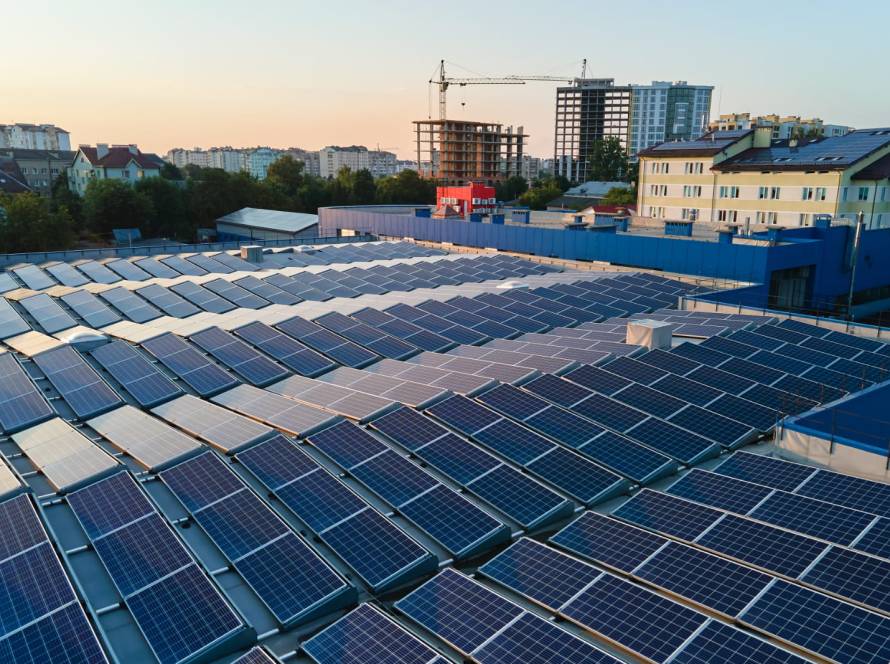
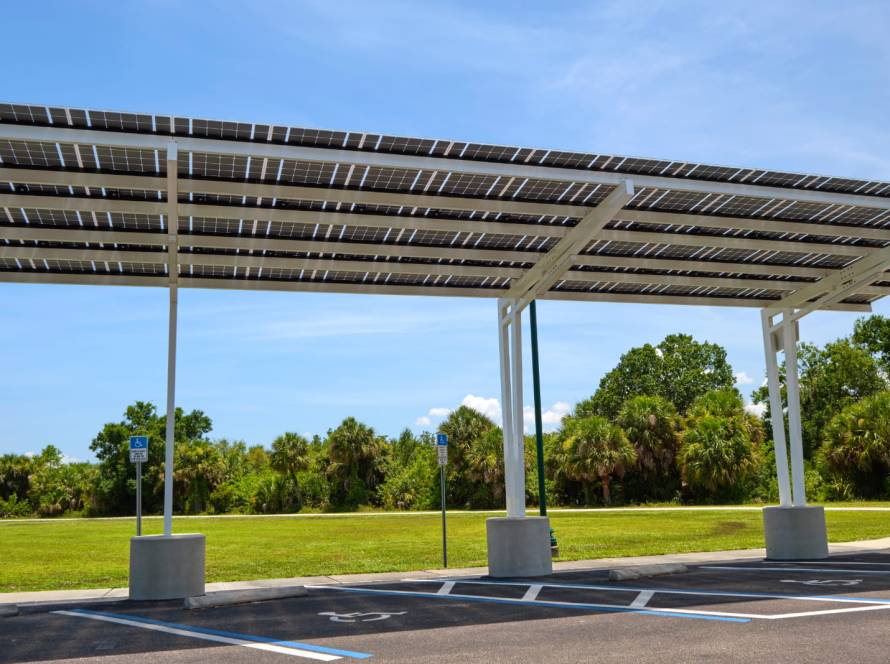
- Mounting structures: These secure the panels to roofs, carports or ground-mounted frameworks while maintaining the correct angle and position for effective solar generation.
- Electrical protection equipment: Protection devices, distribution boards and isolation equipment help the system operate safely alongside the existing electrical infrastructure.
- Monitoring systems: Monitoring provides visibility into solar production, electricity consumption and grid usage, allowing the business to evaluate performance.
- Optional battery storage: Batteries can store excess solar electricity for later use, helping the business increase self-consumption or support selected loads.
Commercial solar is particularly suitable for offices, factories, farms, warehouses, schools, shopping centres and other facilities with consistent daytime consumption. These businesses can use a large portion of the available solar electricity while it is being produced, reducing the risk that valuable energy will remain unused.
The amount saved depends on the relationship between solar production and operational demand. A system designed around actual consumption patterns can replace a meaningful share of grid electricity without disrupting normal operations, while still allowing the business to draw additional power whenever solar output is insufficient.
Understanding the Different Charges on a Business Electricity Bill
A commercial electricity bill can include several different charges. The energy charge reflects the total amount of electricity consumed, while demand-related charges may be based on the highest amount of power drawn during a billing period. Businesses may also pay fixed service, network, capacity or administration charges that remain payable even when total consumption falls.
A clear understanding of the tariff is essential when calculating how commercial solar helps reduce electricity costs, because not every component of the bill can be removed through solar generation. The greatest direct savings usually come from replacing grid electricity with solar electricity during business hours. Further savings may be possible when generation reduces high-demand periods or limits the use of expensive electricity during particular tariff periods.
Reducing Dependence on Grid Electricity
Businesses that rely entirely on grid electricity have limited control over future energy-price increases. Their consumption may remain stable, yet their monthly expenses can rise when tariffs are adjusted. Commercial solar reduces this dependence by allowing a company to generate a portion of its electricity from a resource available on its own premises.
Lower grid dependence is central to how commercial solar helps reduce electricity costs over the long term. A company may still need grid power at night, during poor weather or when its demand exceeds solar production, but a smaller proportion of its overall consumption remains exposed to external tariff changes.
Commercial solar can reduce grid dependence in several practical ways:
- Replacing daytime grid consumption: Solar electricity is used directly by the business during daylight hours, reducing the amount purchased from the grid.
- Supporting predictable budgeting: A larger share of electricity is produced through an installed asset, making part of the company’s energy cost more stable.
- Reducing exposure to tariff increases: Although grid tariffs may continue to rise, those increases apply to a smaller portion of the company’s overall electricity use.
- Improving energy control: Businesses gain greater visibility into where their electricity comes from and how efficiently it is being used.
- Supporting future energy planning: Solar infrastructure can be designed to accommodate additional panels, battery capacity or new equipment as the business expands.
- Reducing dependence during high-use periods: When electricity demand and solar production occur at the same time, the business can avoid purchasing a larger quantity of grid electricity.
This does not mean that every business should attempt to remove its grid connection completely. Grid electricity may continue to provide valuable support outside solar-generation hours, during unusually high demand or when weather conditions reduce system output.
A balanced energy strategy combines self-generation with reliable access to supplementary electricity. By reducing dependence without compromising operational flexibility, businesses can improve cost predictability and maintain the energy supply needed for continued growth.
How Commercial Solar Helps Reduce Electricity Costs Over Time
A commercial solar installation is designed to generate electricity for many years. Once the system has been installed, its ongoing operating requirements are generally more predictable than purchasing the same amount of electricity from the grid. Routine inspections, performance monitoring and occasional component maintenance should still be included in long-term financial planning.
The accumulated value of avoided electricity purchases demonstrates how commercial solar helps reduce electricity costs throughout the system’s operating life. The initial investment is gradually recovered through monthly savings, after which the system can continue producing financial benefits for the business.
The long-term financial performance of a commercial solar system is influenced by:
- The initial project cost: Equipment quality, system size, engineering requirements and installation complexity all affect the original investment.
- Electricity consumption patterns: Businesses that use more electricity during daylight hours can normally consume a greater share of their solar generation directly.
- The applicable electricity tariff: Higher avoided grid rates can increase the financial value of each unit of solar electricity used on-site.
- System performance: Panel placement, inverter efficiency, shading and maintenance influence how much electricity the installation produces.
- Financing costs: Interest rates, repayment periods and contractual escalation can affect the overall financial return.
- Maintenance requirements: Monitoring, inspections and component replacement should be included in lifetime cost calculations.
- Future electricity increases: Rising grid prices may improve the value of the electricity produced by the solar system.
- The level of self-consumption: Solar electricity generally creates the greatest value when it is used directly by the business rather than remaining unused.
The actual payback period depends on how these factors interact. Two businesses with systems of the same size may achieve different returns because their tariffs, operating hours and energy-use patterns are not identical.
Long-term planning should also consider the lifespan of the panels, inverters and other electrical components. Panels commonly have long performance warranties, while inverters and batteries may require replacement earlier, making realistic lifecycle planning essential for an accurate investment assessment.
Managing Peak Demand with Solar and Battery Storage
Some commercial tariffs consider not only how much electricity a business consumes, but also the highest amount of power it requires at one time. A factory may create a sharp peak when several machines start simultaneously, while a retail facility may experience increased demand when refrigeration, lighting and air conditioning operate together. These brief periods can affect electricity charges even when the company’s overall monthly consumption is carefully managed.
Solar generation may lower daytime peaks when the facility’s highest consumption coincides with strong sunlight. Battery storage can provide additional support by releasing stored energy when grid demand begins to rise, adding another dimension to how commercial solar helps reduce electricity costs. Batteries may also store excess daytime generation for evening use, reduce generator operation and support selected equipment during interruptions, although their financial value depends on how regularly and effectively they are used.
Reducing the Cost of Power Interruptions
Power interruptions can create costs that are not always visible on an electricity bill. Production may stop, refrigerated stock can be placed at risk, customer transactions may be delayed and employees may be unable to complete their work. Businesses may also incur overtime costs, generator expenses and equipment restart delays after the electricity supply returns.
When a system includes compatible battery storage and properly designed backup circuits, how commercial solar helps reduce electricity costs extends beyond normal grid savings. Stored energy can support selected essential loads, while daytime solar generation may reduce the amount of fuel consumed by a generator. Critical equipment should be identified during the design process so that backup capacity is allocated to the systems that matter most to continuity and revenue.
Designing a System for Maximum Financial Value
Commercial solar systems should be designed around actual electricity use rather than simply around the available roof area. An oversized installation may produce more electricity than the business can consume, while an undersized system may leave valuable savings unrealised. A detailed assessment is therefore required before equipment is selected or installed.
Professional design is a major factor in how commercial solar helps reduce electricity costs because production and consumption must be carefully matched. A system that reflects the organisation’s operating hours, seasonal demand and future plans is more likely to generate electricity when it has the greatest financial value.
A commercial solar assessment should examine:
- Historical electricity bills: These reveal monthly consumption, tariff charges and changes in electricity use over time.
- Interval consumption data: Half-hourly or hourly information shows when the business uses the most electricity and when solar generation may create savings.
- Operating hours: Daytime operating schedules generally support stronger solar self-consumption.
- Seasonal demand: Farms, hotels, retailers and production facilities may experience substantial changes in consumption during different periods of the year.
- Roof condition and structural capacity: The building must be able to support the proposed mounting system and solar panels safely.
- Orientation and shading: Roof direction, neighbouring buildings, trees and rooftop equipment can affect generation.
- Electrical infrastructure: Existing distribution boards, transformers, cabling and protection equipment must be assessed for safe integration.
- Future expansion plans: New machinery, additional shifts or electric vehicle charging can change the company’s future electricity requirements.
- Backup priorities: Where batteries are included, critical equipment must be identified so that stored energy is used effectively.
Panel placement, inverter sizing, cable routes and expected system losses all influence the amount of usable electricity generated. These technical decisions should be supported by realistic energy modelling rather than generic production assumptions.
The assessment should also consider how the installation may need to change as the business grows. Designing with future expansion in mind can make it easier to add generation or storage capacity without replacing major parts of the original infrastructure.
How Commercial Solar Helps Reduce Electricity Costs: Monitoring Energy Use and Improving Efficiency
Modern commercial solar systems can provide detailed information about electricity generation, building consumption, grid imports and battery performance. This visibility allows businesses to identify whether the installation is performing as expected and whether operational patterns are limiting potential savings. Monitoring can also reveal unusual overnight loads, unexpected consumption peaks or equipment that is using more energy than anticipated.
Energy data can strengthen how commercial solar helps reduce electricity costs by helping businesses move flexible activities into periods of strong solar generation. Equipment charging, water heating, refrigeration cycles and selected production processes may sometimes be rescheduled to increase solar self-consumption. Improving efficiency at the same time can free additional solar capacity for productive activities and reduce the need for future system expansion.
Financing and Tax Considerations
Businesses can access commercial solar through several financial structures. A company may purchase the system outright, use asset finance, lease the equipment, enter into a power purchase agreement or select a structured rent-to-own arrangement. Each option affects ownership, monthly payments, maintenance responsibility, long-term savings and the level of financial risk carried by the business.
The financing model can significantly influence how commercial solar helps reduce electricity costs, particularly during the first few years of operation. Decision-makers should compare total lifetime costs rather than focusing only on the initial payment. Contract length, annual increases, insurance obligations, maintenance, performance guarantees, early termination conditions and ownership at the end of the agreement should all be reviewed carefully. Qualifying businesses should also obtain professional tax advice before including any potential deductions in their calculations.
Choosing the Right Commercial Solar Installer
Commercial solar requires a combination of electrical knowledge, engineering, tariff analysis, system modelling and regulatory compliance. The installer should have experience with projects that resemble the company’s property type, operating schedule and energy requirements. Product warranties should also be supported by clear information about workmanship, maintenance, system monitoring and after-sales assistance.
Selecting a capable installer protects the long-term value of how commercial solar helps reduce electricity costs by ensuring that projected savings are based on realistic assumptions. Businesses should request transparent information about expected generation, system losses, maintenance requirements and equipment replacement. At Eversolar, we assess how electricity is used before recommending a solution, helping our clients invest in systems that support their financial and operational objectives.
How Do Eversolar’s Commercial Solar Solutions Help Reduce Electricity Costs?
At Eversolar, we deliver integrated commercial renewable energy solutions designed around each organisation’s operational and financial requirements. Our approach combines Solar PV, Battery Energy Storage Systems and full EPC project delivery so that businesses receive an energy solution that integrates with their existing infrastructure and supports long-term performance.
We begin by assessing how electricity is used and selecting an appropriate system configuration. Through this process, we demonstrate how commercial solar helps reduce electricity costs by matching generation, storage and system management to the needs of offices, factories, warehouses, retail facilities and other commercial operations.
Our commercial offering includes:
- Solar PV systems: We use solar generation to help businesses produce electricity during daylight hours, reducing the amount of power purchased from the grid.
- Battery Energy Storage Systems: Our BESS solutions store excess solar energy so that businesses can increase self-consumption, manage peak demand and support operations during outages.
- Grid-tied systems: These systems offset electricity consumption while maintaining access to the grid when solar generation is insufficient, helping organisations reduce bills without major operational changes.
- Hybrid systems: By combining Solar PV and BESS, we help businesses reduce grid reliance, lower peak demand charges and maintain reliable power during interruptions.
- Off-grid systems: These solutions provide independent power for remote or energy-intensive facilities and can reduce dependence on costly diesel or backup generators.
- Full EPC project delivery: We manage engineering, procurement, construction and commissioning to support safe integration, reliable performance and efficient project delivery.
- Power Purchase Agreements: Our PPA financing option allows organisations to adopt solar infrastructure while maintaining predictable energy costs.
- Rent-to-Own Solar: This structure enables businesses to access modern solar infrastructure through a planned payment model while working towards ownership.
- Remote performance monitoring: We track system performance so that issues can be identified and addressed before they reduce long-term savings.
- Preventive maintenance: Regular maintenance helps protect system output, equipment condition and operational reliability.
- Technical assistance: Our support services help businesses respond to performance or equipment concerns efficiently.
- Ongoing system optimisation: We help refine system performance and energy management over time so that the installation continues to support the organisation’s objectives.
- Scalable energy design: Our systems can be expanded as business operations grow, reducing the need for major reinvestment when additional capacity is required.
Grid-tied systems are suitable for businesses that want to reduce electricity purchases while retaining the grid as a supplementary source. Hybrid systems provide additional flexibility by incorporating battery storage, while off-grid systems support facilities that require greater independence from conventional electricity infrastructure.
Our financing, monitoring, maintenance and optimisation services support the technical solution throughout its operating life. By combining high-quality components, precision engineering and end-to-end project management, we help businesses pursue measurable savings while protecting reliability, safety and long-term system value.
Turning Electricity into a More Controllable Business Expense
The long-term value of how commercial solar helps reduce electricity costs extends beyond reducing monthly electricity bills. A professionally designed commercial solar system can help businesses generate their own electricity, improve energy efficiency, manage peak demand, reduce generator dependence and create greater certainty around future operating costs. When combined with the right financing model, ongoing monitoring and expert system optimisation, commercial solar becomes a strategic investment that supports both financial performance and operational resilience.
At Eversolar, we work closely with every client to design commercial solar solutions that align with their operational requirements, financial objectives and future growth plans. Whether your business requires a grid-tied, hybrid or off-grid solution, our team can help you develop an energy strategy that delivers measurable long-term value. Contact us today to discuss how we can help your organisation reduce electricity costs through a professionally engineered commercial solar solution.
FAQs
How does commercial solar help reduce electricity costs for businesses?
Understanding how commercial solar helps reduce electricity costs starts with recognising that businesses can generate a significant portion of their electricity on-site instead of purchasing every unit from the grid. Solar panels produce electricity during daylight hours, allowing offices, factories, warehouses and retail facilities to consume their own energy first. This reduces monthly electricity purchases and limits exposure to future tariff increases. Depending on the system design, businesses may also lower demand-related charges and reduce generator operating costs. Long-term savings depend on electricity consumption patterns, system size, financing, maintenance and how much of the generated solar energy is used directly on-site.
Do commercial businesses still need electricity from the grid after installing solar?
In many cases, yes. Most commercial solar systems are designed to reduce electricity purchased from the grid rather than replace it completely. During evenings, poor weather or periods of exceptionally high electricity demand, businesses may continue drawing supplementary electricity from the grid. Grid-tied systems offer a practical balance between self-generation and reliable backup power without requiring significant operational changes. Organisations seeking greater energy independence may also include battery storage to increase self-consumption or support essential equipment during interruptions. The appropriate configuration depends on the company's operational requirements, electricity profile and long-term business objectives rather than a one-size-fits-all approach.
What types of businesses benefit most from commercial solar?
Commercial solar can benefit almost any organisation with consistent electricity consumption during daylight hours. Offices, factories, warehouses, shopping centres, schools, healthcare facilities, agricultural businesses and hospitality operations often experience strong returns because they consume electricity while solar panels are actively generating power. Energy-intensive businesses may also benefit by reducing peak demand and lowering reliance on expensive grid electricity. The greatest savings occur when the system is designed around actual operating patterns instead of estimated averages. Professional system design ensures that solar generation matches business demand, allowing organisations to maximise self-consumption and improve long-term financial performance.
How do I choose the right commercial solar provider?
Selecting the right commercial solar provider involves far more than comparing installation prices. Businesses should evaluate the provider's engineering expertise, commercial project experience, system design capabilities, financing options, monitoring services, maintenance support and long-term commitment to customer success. A reputable provider will begin with a detailed assessment of electricity consumption, operating hours, site conditions and future expansion plans before recommending a solution. Clear performance projections, transparent assumptions and ongoing technical support are equally important. Choosing a provider that offers end-to-end project management helps ensure the system delivers reliable performance, meaningful savings and long-term operational value.