Choosing the right commercial solar installer is a major decision for any logistics warehouse. Warehouses have the kind of energy profile that makes solar highly attractive: large rooftops, steady daytime demand, lighting loads, loading bays, refrigeration, office areas, security systems and, in many cases, equipment such as conveyors and forklifts. The savings can be significant, but only if the system is designed around how the site actually operates.
This is why logistics businesses should look beyond a basic panel installation. A warehouse solar project must protect uptime, manage peak demand, support safety, reduce energy costs and allow for future growth. Whether the goal is lower electricity bills, load-shedding resilience, carbon reduction or better long-term energy control, the installer needs to bring the right mix of engineering, funding, storage and after-sales expertise.
1. A Commercial Solar Installer With Logistics and Warehouse Experience
A logistics warehouse is not the same as a small commercial building. It often has a much larger roof area, higher electricity demand, strict operating schedules and equipment that cannot simply stop when the grid fails. A capable commercial solar installer should understand how warehouse energy use changes across the day and how solar can support core operations without causing disruption.
The strongest installers will ask detailed questions about the site before recommending a system. They should want to understand working hours, cold chain loads, forklift charging, security requirements, loading dock activity, office use, expansion plans and any backup power already on-site.
What to Look For
- Proven experience with large commercial, industrial or logistics sites
- Understanding of high daytime energy consumption
- Knowledge of cold storage, refrigeration and continuous operations
- Ability to plan around loading bays, roof access and site safety
- Experience with multi-site rollouts or portfolio energy planning
- Clear explanation of how solar will support the warehouse’s actual load profile
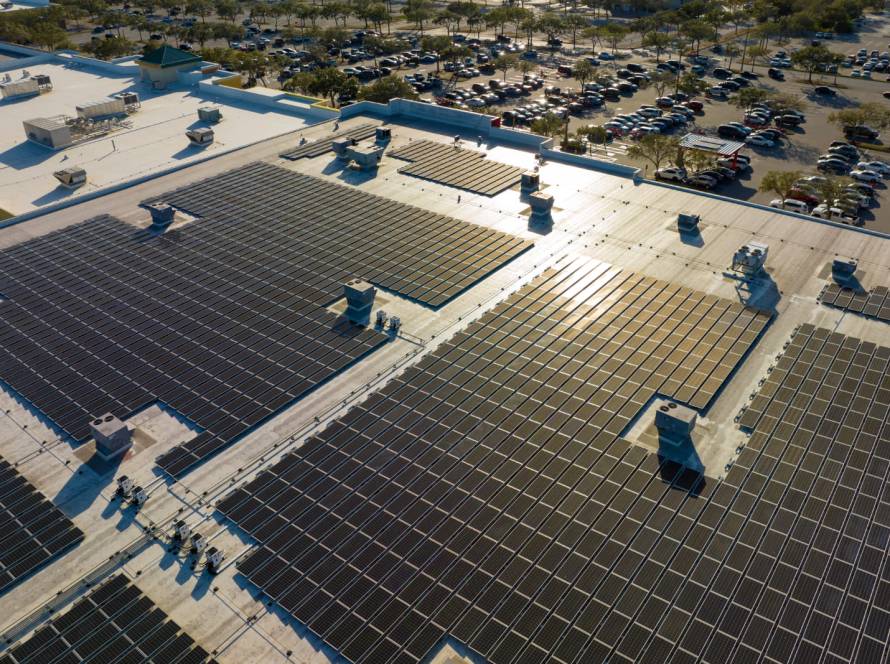
This matters because warehouses are among the most suitable buildings for solar, especially where large flat roofs are available. Some warehouse-focused solar guidance suggests that a 10,000m² roof can support more than 1MW of solar capacity, while larger distribution centres can support multi-megawatt systems. An installer with real warehouse experience will know how to turn that roof space into a reliable energy asset, not just a collection of panels.
2. Strong Feasibility, Design and Engineering Capability
A good warehouse solar project starts with proper feasibility work. The installer should not quote purely from satellite images or rough electricity bill averages. They should assess the building, roof, electrical infrastructure, consumption history and future energy needs before recommending a grid-tied, hybrid or off-grid system.
Strong engineering is especially important because logistics warehouses often have large roofs, heavy equipment, complex electrical layouts and strict operational requirements. A well-designed system must account for roof strength, shading, inverter placement, cable routes, grid compliance, fire safety and the practical realities of installing on a live site.
What to Look For
- Energy audits and detailed utility bill analysis
- Roof and structural assessments
- Load profiling and consumption modelling
- Energy yield forecasting
- Grid compliance and connection planning
- System designs tailored to site-specific operating conditions
- Integration planning for BESS, generators or future expansion
This stage has a direct impact on savings and performance. Real-world warehouse solar examples often show major reductions in electricity costs, with some guides estimating 40% to 65% savings when solar, storage and smart energy management are combined. Those results depend on accurate design. Poor modelling can lead to undersized systems, wasted roof capacity, weak returns or batteries that do not support the right loads at the right time.
3. Battery Storage and Energy Resilience Expertise
Solar reduces the amount of grid electricity a warehouse needs during daylight hours, but battery storage adds another layer of value. A Battery Energy Storage System can store excess solar energy, support backup during outages, reduce peak demand, improve power quality and help a business avoid using expensive electricity during high-tariff periods.
For logistics warehouses, this is especially useful where downtime has a direct cost. Cold storage, dispatch systems, security, refrigeration, access control and IT infrastructure may all need power even when the grid is unstable. A commercial solar installer should be able to explain how batteries fit into the broader energy strategy, not treat them as a simple add-on.
What to Look For
- Experience designing Solar PV and BESS together
- Clear explanation of peak shaving and energy arbitrage
- Backup planning for critical loads
- Understanding of load shedding and grid instability
- Battery sizing based on actual operational needs
- Power quality and voltage stability knowledge
- Remote monitoring and battery performance management
Battery storage can be the difference between a basic savings project and a proper resilience strategy. In warehouse-focused examples, battery systems are often used to reduce demand charges, support nighttime use and provide backup for critical operations. For South African logistics facilities, where grid instability remains a business risk, this expertise should be high on the selection list.
4. Full EPC Delivery and Project Accountability
A warehouse solar project involves far more than installation. It includes engineering, procurement, construction, grid work, commissioning, documentation and handover. A full EPC model gives the logistics business one accountable partner responsible for delivering the complete system from concept to operation.
This is valuable because fragmented delivery creates risk. If one party designs the system, another supplies the equipment and another handles installation, it can become difficult to manage quality, timelines and accountability. A full-service EPC provider should own the process and make sure every stage aligns with the business case.
What to Look For
- One accountable partner from feasibility to commissioning
- In-house or tightly managed engineering capability
- Quality-controlled procurement
- Safe installation planning
- Grid connection and utility coordination
- Commissioning and handover documentation
- Clear project timelines and delivery milestones
For logistics warehouses, EPC accountability also helps minimise disruption. Installation may need to happen while trucks, stock, staff and daily operations continue moving. The right installer should plan work around site safety, access routes, operational hours and business continuity, so the project supports the warehouse rather than interrupting it.
5. Quality Equipment, Monitoring and Long-Term Maintenance
A solar system is a long-term energy asset, often expected to operate for 20 to 30 years. That means equipment quality matters. Panels, inverters, mounting structures, batteries, cabling and monitoring systems must be suitable for commercial use and selected for long-term reliability, not just upfront price.
Monitoring and maintenance are just as important. Warehouses need dependable performance because lost generation means lost savings. Remote monitoring, fault detection, preventive maintenance and performance optimisation help keep the system producing as expected across its lifecycle.
What to Look For
- Bankable, high-quality commercial solar equipment
- Long-term product and performance warranties
- Strong inverter and balance-of-system components
- Real-time system monitoring
- Preventive and corrective maintenance
- Fast technical support
- Ability to upgrade, expand or optimise the system later
This is where a cheap installation can become expensive over time. If faults are not detected early, a warehouse may lose weeks of generation without realising it. A trusted installer should offer ongoing support after commissioning, including inspections, performance reviews and optimisation, so the system keeps delivering savings year after year.
6. Flexible Funding and Clear Commercial Models
Not every logistics warehouse wants to buy a solar system outright. Some businesses prefer to preserve capital for fleet upgrades, stock, automation, property expansion or working capital. A strong commercial solar installer should offer clear funding choices that match the client’s financial strategy.
Common models include outright purchase, Power Purchase Agreements and Rent-To-Own structures. Each has different implications for ownership, cash flow, maintenance, savings and long-term return. The installer should explain these options in plain language and help the business choose the model that best fits its goals.
What to Look For
- Outright purchase options for maximum long-term savings
- PPA options for reduced or no upfront capital
- Rent-To-Own models with eventual ownership
- Clear cost, savings and responsibility breakdowns
- Included operations and maintenance where relevant
- Transparent contract terms
- Financial modelling based on real consumption data
Funding flexibility is especially important for warehouses with large systems. A 1MW-plus system can deliver meaningful savings, but the capital cost may be significant. The right funding model allows the business to start reducing energy risk sooner without placing unnecessary pressure on cash flow.
7. Sustainability, Compliance and Future Growth Planning
Solar is not only about reducing bills. Logistics warehouses are part of wider supply chains, and many customers, tenants and partners now care about carbon reporting, ESG performance and cleaner operations. A well-designed solar system can support sustainability goals while also improving energy security and marketability.
Future planning is also essential. A warehouse may add more refrigeration, automation, electric forklifts, EV charging, extra shifts or new tenants. The installer should think beyond the first phase and design an energy strategy that can grow with the site.
What to Look For
- Support for ESG and carbon reduction goals
- Scalable system design
- Ability to add batteries later
- Planning for EV charging or electric equipment
- Knowledge of solar carports where roof space is limited
- Wheeling options where on-site solar is not feasible
- Compliance with grid, safety and reporting requirements
Smart solar warehousing research points to a future where Solar PV, battery storage, sensors, automation and energy management work together. For logistics warehouses, this means the best installer is not only thinking about today’s electricity bill. They are helping the business prepare for a more automated, resilient and sustainable operating model.
Best Commercial Solar Installers for Logistics Warehouses in South Africa
South African logistics warehouses face a specific mix of challenges: rising tariffs, grid instability, load shedding risk, high daytime consumption and growing sustainability pressure from clients and supply chain partners. At the same time, warehouse rooftops are often ideal for Solar PV, and battery storage can protect key operations during outages. This is why the right energy partner needs to understand both the technical and commercial side of warehouse energy planning.
At Eversolar, we provide full-service solar solutions across commercial, industrial, agricultural, mining and property sectors. Our services include Solar PV systems, Battery Energy Storage Systems, turnkey EPC delivery, solar carports and solar energy wheeling. We design systems around site-specific load profiles, operational constraints and long-term sustainability goals, helping businesses reduce grid reliance, control electricity costs and improve energy resilience.
We also support clients beyond installation. Our team provides feasibility assessments, engineering, procurement, construction, commissioning, remote performance monitoring, preventive maintenance, rapid technical support and system optimisation. With flexible financing options such as PPAs, Rent-To-Own models and outright purchase, we help businesses access high-performance solar and storage solutions in a way that supports cash flow, operational continuity and long-term value.
Partner with the Right Installers
The right commercial solar installer can help a logistics warehouse turn unused roof space, parking areas or off-site energy opportunities into a serious business advantage. With proper design, solar can reduce energy costs, improve resilience, support sustainability goals and protect operations from rising tariffs and unreliable grid supply.
For warehouse operators, the key is to choose a partner with logistics experience, strong engineering, BESS expertise, EPC accountability, quality equipment, clear funding options and long-term support. These qualities make the difference between a basic installation and an energy strategy that keeps delivering value for decades.
If your business is ready to explore Solar PV, BESS, EPC delivery, solar carports, wheeling or flexible finance, get in touch with us at Eversolar. We will help you assess your site, understand your options and build a practical route towards lower costs, stronger resilience and long-term energy independence.
FAQs About Commercial Solar Installer
Why should logistics warehouses work with a commercial solar installer?
Logistics warehouses should work with a commercial solar installer because their energy needs are more complex than standard business sites. Warehouses often have large rooftops, high daytime electricity demand, loading areas, lighting systems, security equipment, refrigeration, conveyors and forklift charging needs. A specialist installer can assess these loads properly and design a system that reduces grid reliance without affecting operations. They can also advise on battery storage, peak demand reduction and future expansion. This helps the warehouse lower electricity costs, improve resilience during outages and build a more sustainable energy strategy.
How much can solar reduce energy costs for logistics warehouses?
The savings depend on roof size, electricity usage, tariff structure, operating hours and whether battery storage is included. Many logistics warehouses are strong solar candidates because they use a lot of energy during the day, when solar production is highest. A well-designed system can reduce monthly electricity bills by offsetting grid power and lowering peak demand charges. Sites with cold storage, long operating hours or large roof areas may see stronger returns. A commercial solar installer should complete an energy audit and provide a realistic savings model before installation, rather than making generic promises.
Is battery storage necessary for warehouse solar systems?
Battery storage is not always necessary, but it can add major value for logistics warehouses. Solar panels generate power during daylight hours, while batteries store energy for use during outages, peak tariff periods or after sunset. This is especially useful for warehouses with refrigeration, security systems, IT infrastructure, access control or other critical loads. BESS can also support peak shaving, improve power quality and increase the use of on-site solar energy. A commercial solar installer should assess whether storage makes financial and operational sense based on the site’s load profile and risk exposure.
What should a warehouse look for in a commercial solar installer?
A warehouse should look for a commercial solar installer with experience in large commercial, industrial or logistics environments. The installer should offer detailed feasibility studies, roof assessments, load profiling, system design, EPC delivery, quality equipment, grid compliance support and long-term maintenance. They should also understand battery storage, funding options and operational continuity during installation. Logistics sites cannot afford poorly planned projects that disrupt dispatch, stock movement or cold chain operations. The best installer will design around the warehouse’s actual energy use, safety requirements, future growth and financial goals.
Can solar work if the warehouse roof is unsuitable?
Yes, solar can still work even if the warehouse roof is unsuitable, but the solution may need to change. If the roof has structural limitations, shading, limited space or future maintenance issues, a commercial solar installer may recommend alternatives such as solar carports, ground-mounted systems or solar energy wheeling. Solar carports turn parking areas into energy-generating assets while providing shaded parking. Wheeling allows a business to access renewable electricity generated off-site. A good installer should assess all practical options and recommend the most cost-effective route for the facility.
How long does a commercial warehouse solar project take?
The timeline depends on system size, design complexity, roof condition, approvals, equipment availability and grid connection requirements. A smaller commercial system may move faster, while larger warehouse projects with BESS, structural upgrades or complex grid approvals can take longer. The process usually includes feasibility, energy modelling, engineering, procurement, installation, commissioning and handover. A commercial solar installer should provide a clear project timeline before work starts and explain any approval steps that may affect delivery. For logistics warehouses, planning is important so installation can happen with minimal disruption to daily operations.