Electricity consumption often tells a more useful story than roof size when assessing commercial solar for large warehouses. A facility with extensive daytime activity may use solar electricity as it is generated, while overnight dispatch or refrigeration creates different requirements. Understanding these patterns helps prevent investment in unnecessary equipment or a system that cannot support operational priorities.
Grid-tied and hybrid systems offer different combinations of electricity savings, storage and backup capability. The appropriate choice depends on when electricity is needed, which equipment requires continuity and whether the additional cost of batteries delivers sufficient value over the system’s operating life.
Understand Your Warehouse’s Electricity Demand
Operating hours, lighting, ventilation, refrigeration, conveyor systems and forklift charging all influence electricity requirements. A daytime distribution centre may have strong alignment between consumption and solar production. However, refrigeration can maintain demand overnight, while charging several forklifts simultaneously can create concentrated periods of high consumption.
Before specifying commercial solar for large warehouses, assess a representative year of electricity bills alongside available interval consumption readings. Monthly bills reveal expenditure and tariff structure, while interval data shows when demand occurs. Include weekends, seasonal changes and future expansion, then identify whether shifting suitable activities into daylight hours could improve direct solar consumption.
How Grid-Tied Commercial Solar For Large Warehouses Works
Grid-tied systems generate electricity through photovoltaic panels, with inverters converting the output into electricity suitable for warehouse equipment. Solar generation reduces grid imports while available, and the grid supplies any shortfall when consumption exceeds solar output.
The configuration should reflect daytime demand and connection conditions. Surplus generation requires particular attention because electricity that cannot be consumed on site may need output controls or an approved export arrangement.
- Solar Panels: Generate electricity during daylight.
- Inverters: Convert panel output for warehouse use.
- Grid Connection: Supplies electricity when generation is insufficient.
- Export Controls: Manage surplus generation within approved conditions.
Standard grid-tied solar shuts down during a grid outage unless incorporated into a specifically engineered backup arrangement. Panels cannot independently maintain operations simply because sunlight is available, making this limitation essential to operational planning.
This configuration suits facilities prioritising daytime savings where continuity requirements are addressed separately. Proposals should clearly distinguish reduced grid consumption from backup capability, particularly when existing generators must be integrated with the installation.
How Hybrid Solar Systems Work For Large Warehouses
Hybrid systems combine solar panels, compatible power conversion equipment, batteries and energy controls. These components coordinate generation, charging and discharge so stored electricity can serve later demand rather than being consumed only when generated.
When evaluating commercial solar for large warehouses, distinguish storage from guaranteed backup. Outage operation requires suitable isolation, controls and sufficient power and energy capacity, with the design matched to the equipment requiring continued operation.
- Solar Generation: Supplies daytime consumption and available charging energy.
- Battery Storage: Retains electricity for later use.
- Energy Controls: Coordinate charging, discharge and reserve levels.
- Backup Configuration: Enables designated loads to operate during interruptions.
The operating strategy determines how available storage is shared between daily savings and resilience. A battery discharged extensively to reduce grid purchases may have limited energy remaining during an unexpected interruption unless a backup reserve is maintained.
Hybrid solar therefore requires both an equipment specification and a clear operating plan. These should establish which loads receive support, how long they can operate and how the battery will recharge before its next required discharge.
Grid-Tied Vs Hybrid Solar: Compare The Main Differences
Grid-tied systems generally require less initial investment because they exclude battery storage and its associated equipment. Their primary benefit is reducing purchased electricity when solar generation coincides with consumption. Hybrid systems introduce additional costs and maintenance responsibilities, but provide greater flexibility through controlled charging, discharge and, where configured, backup operation.
A useful comparison of commercial solar for large warehouses considers equivalent operational requirements rather than equipment prices alone. A daytime distribution centre may obtain sufficient value from grid-tied solar, while refrigeration or overnight dispatch can strengthen the case for storage. Hybrid solar should still demonstrate worthwhile lifecycle value rather than being selected solely because it offers more capabilities.
Decide Which Warehouse Operations Need Backup Power
Essential equipment may include security systems, access control, warehouse management infrastructure, networking, selected lighting, loading equipment and refrigeration. Record each load’s normal demand, starting requirements, acceptable interruption time and required operating duration. This creates a practical distinction between maintaining essential activities and attempting to power the entire facility.
Backup design influences the cost of commercial solar for large warehouses because running power alone does not describe every requirement. Motors may demand additional starting power, while sensitive systems may need dedicated uninterrupted support. Sequenced restarting and clearly separated essential circuits can help establish a manageable backup requirement without compromising agreed operational priorities.
Assess Roof Suitability For Commercial Solar For Large Warehouses
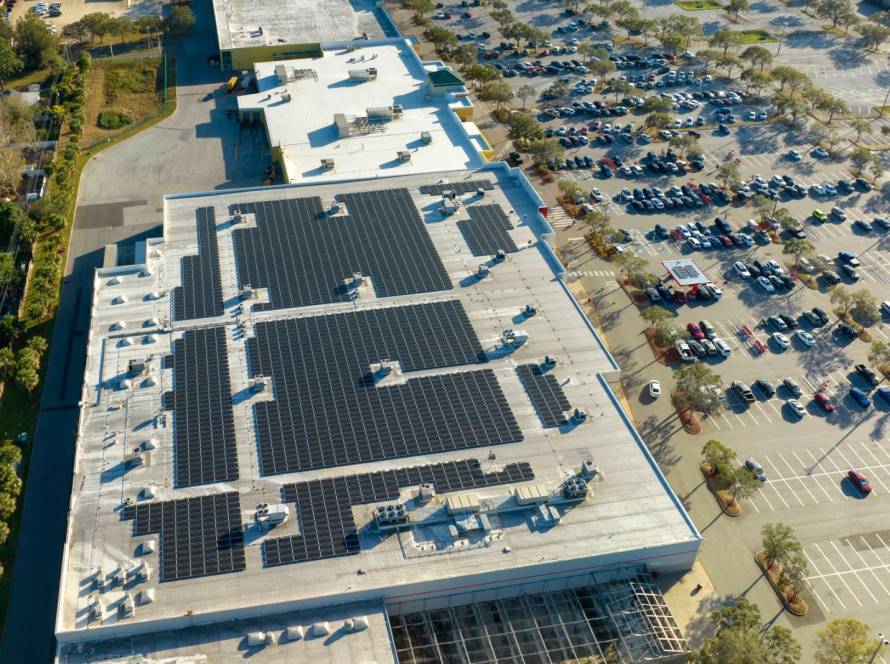
Roof suitability depends on condition, structural capacity, wind exposure and remaining service life. Shading, skylights, drainage and maintenance routes affect usable space, while mounting arrangements must suit the building and preserve access for future inspections.
The electrical assessment should cover the three-phase supply, distribution boards, transformers, protection equipment and connection capacity. Existing generators and solar installations also need compatibility checks before the proposed configuration can be finalised.
- Roof Condition: Identify repairs and replacement requirements.
- Structural Capacity: Confirm suitability for the proposed installation.
- Available Space: Account for shading, skylights and access.
- Electrical Infrastructure: Assess capacity, protection and compatibility.
- Permissions: Check property, connection and export requirements.
If roof replacement is approaching, completing it before installation can avoid later removal and reinstatement costs. Property permissions and warranty conditions also deserve attention because the installation must remain compatible with the building’s long-term maintenance requirements.
Confirm applicable connection, registration, metering and export requirements before committing to the design. Physical roof capacity does not automatically establish permitted generation capacity, and surplus electricity should not be assigned financial value without an appropriate export arrangement.
Size Solar Panels And Batteries Around Operational Requirements
Appropriate sizing starts with useful generation and consumption patterns rather than an ambition to cover every available roof surface. For commercial solar for large warehouses, solar array capacity should reflect expected output, direct consumption, charging opportunities and connection constraints. Seasonal conditions and lower-demand periods matter because generation that cannot be consumed, stored or exported may be curtailed.
Kilowatts describe power, while kilowatt-hours describe energy. For example, a steady 100 kW essential load operating for four hours requires 400 kWh delivered to the equipment. Battery selection must additionally allow for losses, usable capacity, reserve settings and degradation. Check discharge power, motor starting demands, recharge time and the practical requirements of future expansion.
Compare Costs, Savings And Financing Options
A complete proposal should identify engineering, equipment, installation, roof or electrical upgrades, connection work, monitoring and maintenance. Include insurance and realistic replacement allowances, particularly for batteries and inverters. Savings projections should disclose generation estimates, direct consumption, tariff assumptions and battery losses. Fixed electricity charges may remain, and reductions in demand charges depend on the tariff and actual peak reduction.
Financing commercial solar for large warehouses requires equal attention to contract terms. Outright purchase establishes immediate ownership, while a Power Purchase Agreement generally involves buying electricity under an agreed arrangement. Rent-to-own spreads payments towards ownership subject to transfer conditions. Compare escalation, maintenance responsibilities, performance obligations, early termination provisions and end-of-contract arrangements over the same assessment period.
Plan Installation, Monitoring And Long-Term Maintenance
Installation must accommodate deliveries, loading areas, vehicle movements, working hours and safe roof access. Electrical shutdowns should be agreed early, with particular attention to refrigeration and dispatch schedules so operational teams can prepare.
Reliable commercial solar for large warehouses also requires a structured handover. Commissioning should verify performance, protection and promised backup functions, while staff receive operating instructions, emergency procedures, warranties and clearly defined support responsibilities.
- Installation Planning: Coordinate access and shutdowns.
- Commissioning: Verify performance and protection.
- Monitoring: Track generation, faults and battery operation.
- Maintenance: Inspect, clean and service equipment appropriately.
Remote monitoring can reveal generation shortfalls, faults and battery issues, but alerts need an agreed response process. Assign responsibility for reviewing performance and arranging corrective action so problems do not remain unresolved between scheduled inspections.
Physical inspections should cover electrical connections, mounting structures and equipment condition. Cleaning should reflect site conditions and performance evidence, while battery checks assess operating temperatures, available capacity and warranty compliance throughout the system’s service life.
Case Study: Choosing A System For A Distribution Warehouse
A large distribution warehouse decides to investigate solar after reviewing its electricity expenditure. Lighting, ventilation, conveyors and forklift charging create substantial daytime consumption, while evening dispatch extends demand beyond sunset. Management considers commercial solar for large warehouses a promising investment, but remains uncertain whether grid-tied or hybrid solar would provide the better outcome.
The team wants to reduce purchased electricity while maintaining selected dispatch and security functions during interruptions. It gathers twelve months of bills, interval readings and equipment schedules, then compares proposals using the same operational assumptions. Its assessment examines direct solar consumption, storage benefits, essential components, maintenance, financing and backup requirements, alongside roof suitability and potential changes to forklift charging times.
The comparison finds that grid-tied solar could address much of the daytime savings objective at a lower initial cost. However, evening dispatch and interruption-sensitive equipment provide an additional reason to consider storage. In this scenario, management selects a hybrid system with backup restricted to agreed essential circuits because its modelled lifecycle costs and operational benefits justify the additional investment.
What Are The Best Commercial Solar Solutions For Large Warehouses In South Africa?
At Eversolar, we offer some of the best commercial solar solutions for large warehouses in South Africa through our combination of Solar PV, Battery Energy Storage Systems and full engineering, procurement and construction delivery. We tailor configurations to operational requirements and existing infrastructure.
Our precision engineering, premium components and end-to-end project management support safe integration with warehouse operations. We assess generation, storage and delivery requirements together, helping establish a configuration that reflects the facility’s electricity consumption and financial priorities.
- Grid-Tied Solar: We offset daytime consumption while retaining grid access.
- Hybrid Systems: We combine generation, storage and configured backup.
- Off-Grid Systems: We provide independent supply for remote facilities.
- Project Delivery: We manage engineering, procurement and construction.
- Financing: We offer PPA and Rent-to-Own options.
- After-Sales Support: We provide monitoring, maintenance and technical assistance.
Our hybrid systems can increase self-consumption, manage peak demand and support designated operations during outages, subject to configuration and capacity. Our off-grid solutions address independent supply requirements, while our deployment methods aim to minimise disruption and accommodate business growth.
Through our financing options, we provide alternative routes for managing capital expenditure and energy costs. Our remote monitoring, preventive maintenance, technical assistance and ongoing optimisation support long-term performance as warehouse requirements develop.
Choose A System That Matches Your Warehouse
A suitable investment in commercial solar for large warehouses balances electricity savings, operating continuity and long-term responsibilities. Compare proposals against the same consumption data, essential-load schedule and financial assumptions. The recommendation should explain how much electricity the system is expected to supply, when that electricity will be useful and which equipment can operate during an interruption.
Before proceeding, confirm installation responsibilities, performance assumptions, maintenance arrangements and contractual obligations. A detailed site assessment provides the evidence needed to choose between grid-tied and hybrid solar with confidence, while reducing the risk of paying for capabilities the warehouse does not need or overlooking those it does. Contact us at Eversolar to discuss your warehouse’s electricity requirements and how our solar solutions can support your operations.
FAQs
What Is The Difference Between Grid-Tied And Hybrid Solar Systems?
Grid-tied solar supplies warehouse equipment with electricity generated by solar panels while the facility remains connected to the electricity grid. When solar output is insufficient, the grid supplies the shortfall. Hybrid solar adds battery storage and compatible controls, allowing electricity to be stored for later use. With the necessary backup configuration, a hybrid installation can also support designated equipment during outages. The better choice depends on operating hours, daytime consumption, essential loads and budget. Grid-tied systems generally prioritise daytime savings, while hybrid systems offer additional flexibility where stored energy and backup capabilities justify the extra investment and ongoing maintenance requirements.
Can Commercial Solar Power A Warehouse During An Electricity Outage?
Standard grid-tied solar systems shut down when the electricity grid fails, even if sunlight is available. This protective behaviour prevents the installation from supplying an unavailable network without appropriate isolation. A warehouse requiring solar power during outages needs a specifically engineered backup arrangement. Hybrid systems can provide this capability when suitable batteries, power conversion equipment, isolation and controls are installed. However, backup availability does not mean every warehouse load can operate simultaneously. The design must account for essential equipment, motor starting requirements, acceptable interruption times and required operating duration. Sensitive systems may also require separate uninterrupted power support where necessary.
Is Hybrid Solar Better For Warehouses With Refrigeration Or Overnight Operations?
Hybrid solar may suit warehouses with substantial evening consumption, refrigeration or equipment that must remain operational during interruptions. Batteries can shift available solar energy into later operating periods and support selected loads when the installation includes appropriate backup functionality. However, overnight operations alone do not establish that storage is financially worthwhile. Assessment should compare electricity tariffs, charging opportunities, battery losses, maintenance and replacement allowances against projected savings and operational benefits. Refrigeration also requires careful consideration of compressor starting demands and temperature requirements. The final recommendation should reflect measured consumption and essential loads rather than assumptions based solely on warehouse size.
How Are Solar Panels And Batteries Sized For A Large Warehouse?
Sizing starts with electricity bills, interval consumption readings, operating schedules and an assessment of essential equipment. Solar capacity should reflect useful generation and consumption rather than simply filling the roof. Battery sizing requires separate consideration of power and energy: kilowatts describe the rate of supply, while kilowatt-hours describe stored energy. For example, a constant 100 kW load needs 400 kWh delivered over four hours. Actual storage requirements must additionally accommodate losses, usable capacity, reserve settings and degradation. Inverter capacity, motor starting demands, charging availability and future expansion also influence the design. Roof suitability and electrical connection constraints must be assessed.
Can Batteries Be Added To An Existing Grid-Tied Warehouse Solar System?
Battery storage can sometimes be added to an existing grid-tied installation, but compatibility must be assessed before equipment is selected. The review should examine existing inverters, electrical distribution, protection, available space and connection conditions. Adding batteries for daily energy shifting differs from creating backup capability, which requires suitable isolation, controls and an agreed essential-load arrangement. The assessment should also establish whether sufficient solar surplus or another permitted charging source is available. Compare retrofit costs, warranty implications and expected benefits with alternative configurations. Planning for possible storage during the original installation can help identify infrastructure requirements and reduce avoidable future modifications.