Apartments, offices, shops, restaurants and shared facilities can all draw electricity at different times. Offices may use most of their power during the day, while restaurants stay busy into the evening. Lifts, security systems, lighting, pumps and ventilation can run for much longer. Understanding these patterns helps owners assess energy options for mixed-use developments against the site’s actual needs.
Solar photovoltaic (PV) panels generate electricity on site. A battery stores electricity for later use. Wheeling allows a customer to buy electricity generated at another site through the electricity network. These options can be used separately or combined, but each serves a different purpose. PV may reduce daytime grid purchases; a battery can shift energy or support selected loads; wheeling can provide access to off-site generation.
Solar PV for On-Site Electricity Generation
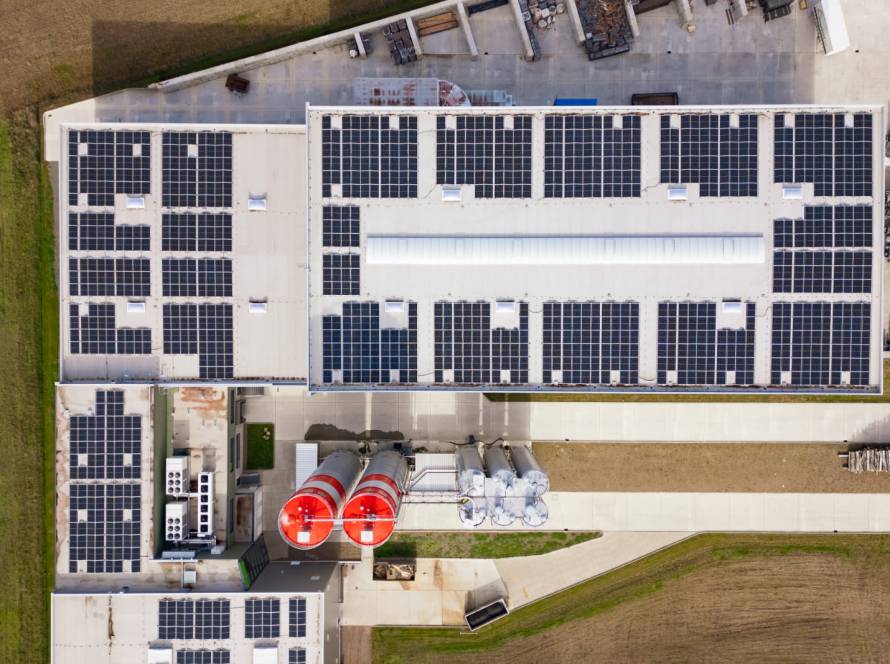
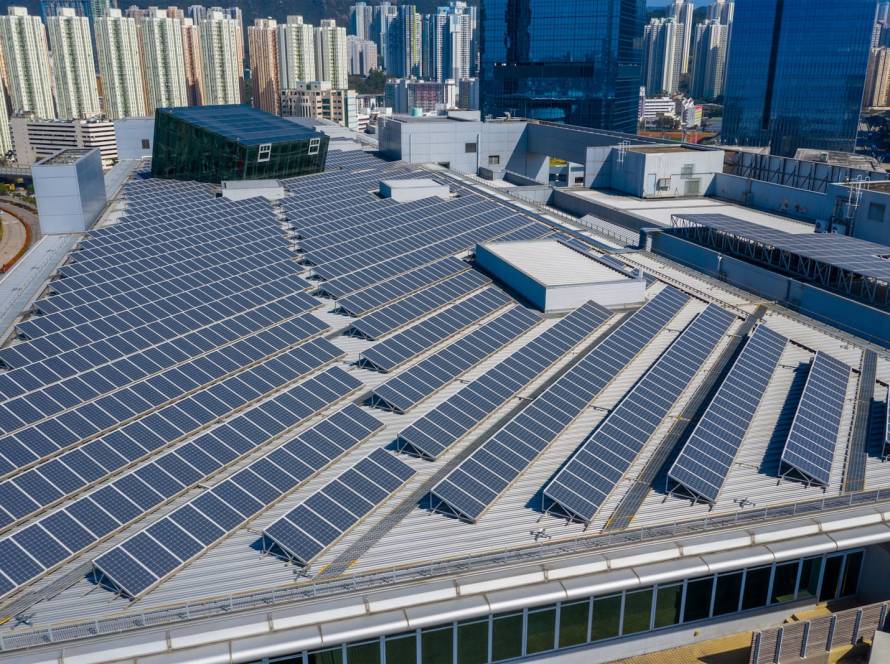
Solar PV panels convert sunlight into electricity. They can be installed on a suitable roof or on carports over parking areas, supplying power to building systems while the sun is shining. Depending on the electrical design and metering arrangements, the electricity may also serve tenant loads.
On-site PV may suit a development with usable roof or parking space and enough daytime consumption to use much of the electricity as it is generated. The system’s design should account for the property’s roof and parking areas, electrical infrastructure and consumption patterns.
- Rooftop panels: Assess roof condition, structural capacity, shading and orientation before deciding how much of the roof can be used.
- Solar carports: Consider parking areas where carport structures could support panels and generate electricity for use at the development.
- System size and surplus: Size the system against demand. Surplus electricity may have less value if it cannot be stored, exported or credited under an approved arrangement.
A site assessment can help determine when solar generation is likely to match demand and whether the proposed system is appropriately sized. It should also identify competing uses for roofs or parking areas and any electrical upgrades needed for integration.
The aim is to use as much of the generated electricity as practical within the development. Where generation and demand do not align, the owner can assess whether storage or an approved export arrangement makes sense for the site.
Battery Storage for Backup and Energy Management
A battery energy storage system (BESS) stores electricity for use later. It may charge from surplus solar generation or from the grid, depending on the design and operating plan. A battery does not generate electricity; it shifts stored energy from one time to another, which is why energy options for mixed-use developments should be compared by the role each one performs.
A battery can support selected essential loads during an outage, store daytime solar generation for evening use, or discharge during a high-demand period. Its value depends on the site’s consumption profile, tariff, battery size and operating strategy. Backup also requires suitable inverter and isolation arrangements. The owner should identify which circuits need to keep running and for how long, rather than assuming the battery can power the entire development.
Wheeling for Renewable Electricity from Off-Site Projects
Wheeling is a commercial arrangement in which electricity generated at one site is sold to a customer at another site using the existing electricity network. The customer does not receive power through a dedicated cable from the generator. Instead, the energy is delivered and accounted for through the network under the relevant contracts, metering and billing arrangements.
Wheeling may suit a development that wants to procure renewable electricity but has limited space for panels, or whose demand is greater than on-site generation can cover. Its suitability depends on the site’s supply and network arrangements.
- Network access: Check the generator’s connection and the network provider’s requirements for the specific site and wheeling model.
- Contracts and charges: Review the power purchase agreement and any network use-of-system or other applicable charges.
- Metering and billing: Confirm how energy will be measured and credited, and how the wheeling arrangement will appear in the development’s billing.
Requirements can vary by network and wheeling model, so eligibility and costs need to be confirmed for the specific site. The transaction depends on contracts, metering and network arrangements rather than a dedicated connection from the generator to the property.
Wheeling by itself does not provide local backup during an outage. The development still needs a separate arrangement, such as a suitably designed battery system, if selected services must keep running when the local supply is interrupted.
How Energy Options for Mixed-Use Developments Compare
The main difference between the options is what each provides: PV generates electricity at the development, a battery stores electricity for later, and wheeling lets the site procure electricity generated elsewhere. This distinction helps owners compare the options against their priorities, such as reducing daytime grid purchases, supporting selected loads during outages or accessing off-site generation.
The options also differ in their space, infrastructure and operating requirements. The following comparison can help identify which systems merit further assessment for the site.
- Solar PV: Generates electricity on site and requires suitable space, electrical integration and any required approvals. Backup depends on the system design.
- Battery storage: Stores electricity for later use and requires battery space, an inverter and controls. It can support selected loads during an outage if designed and sized for that purpose.
- Wheeling: Provides access to electricity procured from an off-site generator and requires contracts, network arrangements, metering and applicable charges. It does not itself provide local backup.
The financial value of each option depends on the development’s consumption profile, tariff, peak demand, grid connection costs, maintenance and operating strategy. A battery’s value comes from when and how its stored electricity is used, not from generating additional energy.
A wheeling proposal should account for network and contract charges as well as the energy price. Comparing these factors against the site’s priorities can show whether one option or a combination is worth exploring.
When a Combined Solution May Make Sense
A development could use rooftop PV to serve daytime demand, store some surplus electricity in a battery for later, and assess wheeling to procure additional renewable electricity. This combination may help address different needs across offices, retail spaces, restaurants and shared facilities, while giving each component a distinct job. It is one possible approach to energy options for mixed-use developments, rather than a formula that suits every property.
For example, imagine a site where offices use electricity during the day, restaurants remain busy into the evening, and security and lighting operate overnight. An assessment might find that PV can supply part of the daytime demand, while a battery supports selected shared services or shifts some solar energy into evening hours. Wheeling could then be considered for additional supply. This is an illustrative scenario, not a prediction of savings: actual results depend on site data, system design, tariffs and agreements.
Assess the Development’s Energy Profile Before Choosing
Begin with electricity bills and, where available, interval data showing consumption throughout the day. Monthly totals show how much electricity the site uses, while interval data can reveal when demand rises and whether it coincides with solar generation. Peak demand records and tariff details also matter, since electricity costs can include charges beyond the amount of energy consumed.
Next, map the operating hours and loads of different areas. Offices, shops, restaurants, apartments and shared facilities may have different schedules and requirements. Identify essential equipment for outage planning, then inspect usable roof and parking areas, shading, structural limits, electrical infrastructure and available connection capacity. This evidence gives providers a common baseline for comparing proposals.
Compare Costs, Savings and Funding Models
A complete comparison should include the costs of design, equipment, installation, grid connection or metering work, maintenance, monitoring and any necessary electrical upgrades. Potential savings depend on how the system changes the development’s electricity purchases and demand, so proposals should use site-specific consumption information.
It is helpful to assess all the costs and possible savings together rather than focusing on equipment price alone. Ask providers to explain the assumptions behind their projections, including the tariff, expected system output and ongoing expenses.
- Grid purchases and demand: Estimate how much electricity the development may still need to buy, including any demand-related charges.
- Project costs: Include design, equipment, installation, connection, metering, monitoring and maintenance.
- Wheeling-related costs: Account for applicable network use-of-system charges and contractual costs as well as the electricity price.
- Funding routes: Compare outright purchase, rent-to-own and a power purchase agreement (PPA), including ownership, payment terms and responsibilities.
Tariffs change, so use the rates that apply to the development. The published 2026/27 tariff update lists an 8.76% adjustment for direct supply tariffs from 1 April 2026 and a 9.01% adjustment for local authority tariffs from 1 July 2026. The applicable rate depends on the site’s supply arrangement.
Capacity-related or fixed charges may remain even when energy purchases fall. Proposals should also explain maintenance responsibilities, contract length and end-of-term conditions so the owner can compare the total financial commitment.
Plan for Metering and Tenant Cost Allocation
Submetering can help property managers understand how electricity is used by tenants, shared facilities or particular parts of a site. This information can support operational decisions and make tenant charges easier to explain. The right approach depends on the electrical layout, existing meters and billing arrangements.
Agree how costs and savings will be allocated before installation. Decide who pays for the system, how common-area electricity is handled, how tenant consumption is recorded and what happens when a tenant moves. Clear responsibilities are especially useful when one energy system serves several occupants, because they make billing and performance reviews easier to manage.
Choose Energy Options for Mixed-Use Developments Based on Site Priorities
The right choice depends on what the project needs to achieve, what space is available and how the development uses electricity through the day. Each option should have a defined role, such as serving daytime demand, storing energy for later or procuring electricity generated elsewhere.
Before selecting a system, owners should consider the site’s operating hours, essential loads, available roof and parking areas, network arrangements and approach to tenant billing. This helps connect the design to the development’s practical requirements.
- Consider on-site PV where there is suitable space and daytime demand can use a meaningful share of generation.
- Consider batteries where storing surplus energy, supporting selected loads during outages or managing peaks has a clear purpose.
- Consider wheeling where off-site supply is needed and the site can meet the relevant network and contractual requirements.
- Consider a combined design where the site can benefit from more than one option and each component has a clear function.
A practical assessment should ask what problem the project is meant to solve, when the development uses electricity, which loads are essential during an outage, what space is available and how costs will be allocated. These questions help connect the system design to the site’s operating needs.
Compare proposals using the same consumption data, tariff assumptions and evaluation period. This makes it easier to understand the differences between options and judge whether a more complex design is justified.
Best Commercial Solar Solutions for Mixed-Use Developments in South Africa
Eversolar offers commercial solar solutions for mixed-use developments in South Africa, with grid-tied, hybrid and off-grid systems that can be tailored to a property’s operating and financial requirements. We assess how different parts of a development use electricity, from daytime office and retail activity to shared services and facilities with longer operating hours, so the system can be matched to the site’s needs.
Each configuration can serve a different purpose within a mixed-use property. A grid-tied system can offset electricity use while keeping access to the grid when solar generation is low. A hybrid system combines Solar PV and BESS, allowing the development to store and use energy, manage peak demand and support power during outages. An off-grid system can provide independent power for remote or energy-intensive facilities.
- Grid-tied systems: Use solar generation to offset electricity consumption across suitable areas of the development, while retaining grid access when solar output is low.
- Hybrid systems: Combine Solar PV and BESS to store and use energy, reduce grid reliance, manage peak demand and provide power during outages.
- Off-grid systems: Provide independent power for remote or energy-intensive facilities where reducing reliance on grid supply or backup generators is a priority.
- EPC project delivery: Coordinate project design and installation so the selected system integrates with the development’s existing operations.
- PPA and Rent-to-Own Solar: Provide funding routes that can help organisations adopt solar infrastructure while maintaining predictable energy costs.
We deliver projects through full EPC project delivery, combining precision engineering, premium components and end-to-end project management. This supports integration with existing operations while focusing on safety, system performance and long-term value. Our flexible financing options can be considered alongside the technical design to find an approach that fits the organisation’s financial requirements.
After installation, our support includes remote performance monitoring, preventive maintenance, technical assistance and ongoing system optimisation. We can also scale energy capacity as business operations expand, helping the development adapt its energy infrastructure as its needs change.
Making an Informed Energy Decision
The right energy options for mixed-use developments depend on how the site uses electricity, what space it has, which services need support during outages and what its tariff and network arrangements allow. PV generates electricity, batteries store it and wheeling provides a way to procure electricity generated elsewhere. These functions can complement one another, but they are not interchangeable.
Start with consumption data, tenant operating patterns, essential loads and a site assessment. Then compare project costs, funding, metering and ongoing responsibilities before selecting a solution. Contact us to discuss your site’s requirements and the practical options available.
FAQs
What energy options are available for a mixed-use development?
Energy options for a mixed-use development usually include on-site solar photovoltaic panels, battery energy storage, electricity from the local grid, and wheeling from an off-site renewable generator. Solar panels generate electricity during daylight; batteries store electricity for use later; wheeling is a contractual way to procure electricity generated elsewhere through the network. The right mix depends on the site’s electricity profile, roof or parking space, tariff, network arrangements, outage priorities and budget. Offices, shops, restaurants, apartments and shared services may use power at different times, so owners should review interval consumption data before comparing system proposals or estimating potential savings.
What is the difference between solar PV and battery storage?
Solar PV generates electricity from sunlight by day, while a battery stores electricity that has already been generated or purchased. Panels can offset a development’s daytime grid use when the property has suitable roof or carport space and demand coincides with solar production. A battery can store surplus solar energy for later, support selected essential loads during outages if designed for backup, or help manage peaks. It does not create electricity, and its value depends on its size, controls, tariff and operating pattern. Many mixed-use sites assess PV first, then consider whether storage solves a separate operational or financial need.
Can wheeling provide backup power during an outage?
Wheeling lets a development buy electricity generated at another site, with the electricity accounted for through the existing network under relevant contracts and metering arrangements. It may help properties with limited space for panels or demand that on-site solar cannot cover. Wheeling does not provide backup during a local outage because it is an electricity procurement arrangement, not a dedicated connection to the remote generator. The development still needs a suitable backup system for essential loads. Before proceeding, confirm the network provider’s current requirements, generator connection, power purchase agreement, metering, billing process and applicable network charges for the specific site.
Can solar PV, batteries and wheeling be used together?
A combined system can use rooftop solar to meet some daytime demand, a battery to store surplus electricity for later, and wheeling to procure additional renewable electricity from an off-site generator. For example, solar may serve offices and shared daytime loads, storage may support selected evening or backup needs, and wheeling may supplement supply where on-site generation is limited. This arrangement is not automatically more cost-effective than a simpler system. Owners should compare it with alternatives using the same consumption data, tariff assumptions, project costs, contract terms and assessment period, then check how the elements will be metered and managed.
What information should an owner gather before choosing an energy solution?
Start by collecting electricity bills, tariff information and interval consumption data to show when demand occurs. Map operating hours and demand for offices, shops, restaurants, apartments and shared services, then identify peak demand and loads that need support during outages. Assess roof and parking areas, shading, structural capacity, electrical infrastructure and connection constraints. This information helps determine whether demand aligns with solar generation, whether storage could serve a purpose, and whether wheeling arrangements may suit the site. Ask providers to use baseline data so their proposed sizes, costs, savings assumptions and operating plans can be compared on a consistent basis.
What should a provider include in a proposal for a mixed-use development?
A suitable provider should assess energy use, site constraints and electrical infrastructure before recommending a system. Ask how the design will integrate solar PV, battery storage or wheeling with existing operations, and who will manage engineering, installation, commissioning, grid-connection support, metering and monitoring. Compare funding options such as outright purchase, rent-to-own and a power purchase agreement by ownership, payment terms, maintenance responsibilities and contract length. For a mixed-use property, clarify how tenant and shared-area consumption will be measured and how costs or savings will be allocated. Request transparent assumptions, an operating plan and after-sales maintenance arrangements before choosing a proposal.